



Request Quote
(Ships tomorrow)
AT34C02-10TC EEPROM Equivalent & Substitute Parts
Part Overview
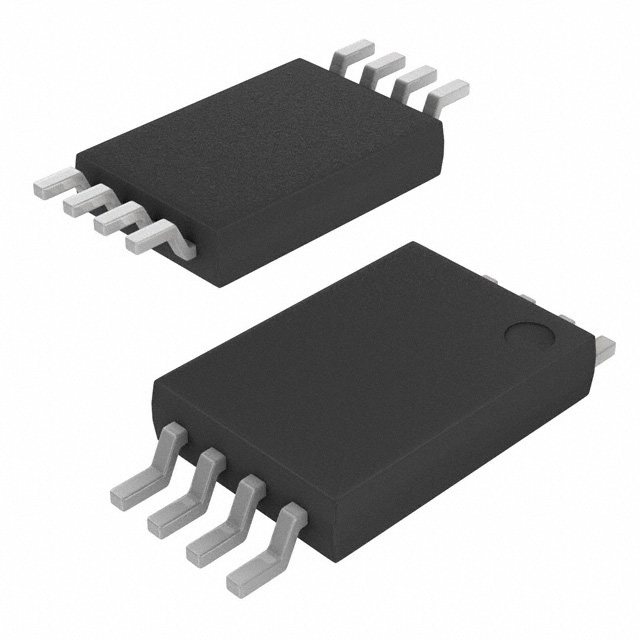
The AT34C02-10TC is a 2Kbit I2C EEPROM memory IC manufactured by Microchip Technology in 8-TSSOP surface mount packaging. This part is classified as obsolete and operates within a 4.5V to 5.5V supply voltage range with a 400 kHz I2C clock frequency. Due to its obsolete status, direct replacement with active production alternatives is necessary for new designs and ongoing procurement requirements.
Substiute Parts
Key Parameters
| Parameter | Value |
|---|---|
| Memory Size | 2Kbit |
| Memory Organization | 256 x 8 |
| Memory Interface | I2C |
| Clock Frequency | 400 kHz |
| Access Time | 900 ns |
| Write Cycle Time | 10 ms |
| Voltage Supply Range | 4.5V ~ 5.5V |
| Operating Temperature | 0°C ~ 70°C |
| Package Type | 8-TSSOP |
| Mounting Type | Surface Mount |
| Product Status | Obsolete |
| RoHS Status | RoHS non-compliant |
Substitute Part Grouping Explanation
Substitution eligibility for the AT34C02-10TC is determined by the following critical parameters:
- Memory Capacity: Must be 2Kbit with 256 x 8 organization
- Interface Protocol: Must support I2C communication
- Clock Frequency: Must support 400 kHz operation
- Package: Must be 8-TSSOP form factor
- Voltage Compatibility: Supply voltage range must encompass or be compatible with 4.5V ~ 5.5V operation
- Access Time: Must meet or exceed 900 ns specification
- Write Cycle Time: Must meet or exceed 10 ms specification
Substitute parts are grouped into three categories based on their relationship to the original specification:
Direct Substitutes maintain full electrical and mechanical compatibility with the AT34C02-10TC while offering active product status and improved compliance certifications.
Upgrade Substitutes provide enhanced operating temperature ranges, faster write cycle times, or lower supply voltage minimums while maintaining core functional parameters.
Manufacturer Recommended Substitutes are sourced from alternative manufacturers (Rohm Semiconductor, STMicroelectronics) and provide equivalent or superior electrical performance with active production status.
Parameter Comparison
| Part Number | Manufacturer | Memory Size | Clock Frequency | Access Time | Write Cycle Time | Voltage Supply | Operating Temperature | Product Status | RoHS Status |
|---|---|---|---|---|---|---|---|---|---|
| AT34C02-10TC | Microchip Technology | 2Kbit | 400 kHz | 900 ns | 10 ms | 4.5V ~ 5.5V | 0°C ~ 70°C | Obsolete | RoHS non-compliant |
| 24AA02/ST | Microchip Technology | 2Kbit | 400 kHz | 900 ns | 5 ms | 1.7V ~ 5.5V | 0°C ~ 70°C | Active | ROHS3 Compliant |
| 24C02CT/ST | Microchip Technology | 2Kbit | 400 kHz | 4.6 µs | 1.5 ms | 4.5V ~ 5.5V | 0°C ~ 70°C | Active | ROHS3 Compliant |
| 24C02C-E/ST | Microchip Technology | 2Kbit | 100 kHz | 4.6 µs | 1.5 ms | 4.5V ~ 5.5V | -40°C ~ 125°C | Active | ROHS3 Compliant |
| 24C02C-I/ST | Microchip Technology | 2Kbit | 400 kHz | 900 ns | 1 ms | 4.5V ~ 5.5V | -40°C ~ 85°C | Active | ROHS3 Compliant |
| 24C02CT-E/ST | Microchip Technology | 2Kbit | 100 kHz | 4.6 µs | 1.5 ms | 4.5V ~ 5.5V | -40°C ~ 125°C | Active | ROHS3 Compliant |
| BR24G02FVT-3GE2 | Rohm Semiconductor | 2Kbit | 400 kHz | Not specified | 5 ms | 1.6V ~ 5.5V | -40°C ~ 85°C | Active | ROHS3 Compliant |
| BR24T02FVT-WE2 | Rohm Semiconductor | 2Kbit | 400 kHz | Not specified | 5 ms | 1.6V ~ 5.5V | -40°C ~ 85°C | Active | ROHS3 Compliant |
| BR34E02FVT-3E2 | Rohm Semiconductor | 2Kbit | 400 kHz | Not specified | 5 ms | 1.7V ~ 5.5V | -40°C ~ 85°C | Active | ROHS3 Compliant |
| M24C02-FDW6TP | STMicroelectronics | 2Kbit | 400 kHz | 900 ns | 5 ms | 1.7V ~ 5.5V | -40°C ~ 85°C | Active | ROHS3 Compliant |
| M34E02-FDW6TP | STMicroelectronics | 2Kbit | 400 kHz | 900 ns | 5 ms | 1.7V ~ 5.5V | -40°C ~ 85°C | Active | ROHS3 Compliant |
Engineering Selection Recommendations
For Direct Replacement with Minimal Design Changes: The 24C02C-I/ST offers the closest electrical match to the AT34C02-10TC. It maintains 400 kHz I2C clock frequency, 900 ns access time, and 4.5V to 5.5V supply voltage compatibility. This part is active production status with ROHS3 compliance and an extended operating temperature range of -40°C to 85°C. The write cycle time is improved to 1 ms compared to the original 10 ms specification.
For Enhanced Supply Voltage Flexibility: The 24AA02/ST and M24C02-FDW6TP both support lower minimum supply voltages (1.7V) while maintaining 400 kHz operation and 900 ns access time. These parts are suitable for applications requiring operation across a wider voltage range. Both are active production with ROHS3 compliance.
For Extended Temperature Operation: The 24C02C-E/ST and 24C02CT-E/ST support operating temperatures from -40°C to 125°C, providing the widest thermal range among available substitutes. These parts operate at reduced I2C clock frequency (100 kHz) and should be selected only when extended temperature range is a design requirement.
For Manufacturer Diversity: Rohm Semiconductor (BR24G02FVT-3GE2, BR24T02FVT-WE2, BR34E02FVT-3E2) and STMicroelectronics (M24C02-FDW6TP, M34E02-FDW6TP) alternatives provide equivalent 2Kbit I2C EEPROM functionality with active production status and ROHS3 compliance. All support 400 kHz operation and extended temperature ranges. Selection among these options should be based on supply chain availability and existing vendor relationships.
Frequently Asked Questions (FAQ)
Q: Can the AT34C02-10TC be directly replaced with any of the listed substitutes?
A: The 24C02C-I/ST provides the most direct replacement, maintaining identical supply voltage range (4.5V ~ 5.5V), I2C clock frequency (400 kHz), and access time (900 ns). However, all listed substitutes are electrically compatible at the functional level due to matching 2Kbit capacity, 256 x 8 organization, and I2C interface protocol.
Q: What is the primary difference between Microchip Technology substitutes?
A: The 24AA02/ST supports lower minimum supply voltage (1.7V vs. 4.5V) and faster write cycle time (5 ms vs. 10 ms). The 24C02C variants offer extended operating temperature ranges and improved write cycle times but operate at reduced I2C clock frequency (100 kHz for the -E variant) or maintain 400 kHz operation with extended temperature range (24C02C-I/ST).
Q: Are the Rohm Semiconductor and STMicroelectronics parts pin-compatible?
A: All substitute parts maintain the 8-TSSOP package form factor with identical pinout for I2C EEPROM devices. Physical and electrical pin compatibility is maintained across all listed substitutes.
Q: What compliance advantages do the active production substitutes offer?
A: All active production substitutes are ROHS3 compliant, whereas the AT34C02-10TC is RoHS non-compliant. This compliance status is critical for applications subject to environmental regulations and procurement requirements mandating RoHS compliance.
Q: Which substitute offers the best performance improvement?
A: The 24C02C-I/ST and M34E02-FDW6TP both provide the most significant performance improvements: 400 kHz I2C operation, 900 ns access time, and write cycle times reduced to 1 ms and 5 ms respectively, compared to the original 10 ms specification.
Q: Can substitutes with 100 kHz I2C operation replace the 400 kHz AT34C02-10TC?
A: The 24C02C-E/ST and 24C02CT-E/ST operate at 100 kHz I2C frequency. These parts are functionally compatible but operate at reduced communication speed. Selection should be based on system I2C bus speed requirements and whether 100 kHz operation meets application timing constraints.
Alternative Parts

SJ6012L2TP
Littelfuse Inc.
6 Alternative Parts

JMK107BBJ476MA-RE
Taiyo Yuden
10 Alternative Parts

GMK107BBJ475MA-T
Taiyo Yuden
5 Alternative Parts
SJ6020N2ARP
Littelfuse Inc.
3 Alternative Parts
SJ6025R2ATP
Littelfuse Inc.
4 Alternative Parts

2474-05L
API Delevan Inc.
1 Alternative Parts

4590R-684K
API Delevan Inc.
1 Alternative Parts

CM6560R-334
API Delevan Inc.
1 Alternative Parts

CM6460-104
API Delevan Inc.
1 Alternative Parts

5526-12
API Delevan Inc.
1 Alternative Parts