



Request Quote
(Ships tomorrow)
APH-NP-BNCJ Equivalent & Substitute Parts
Part Overview
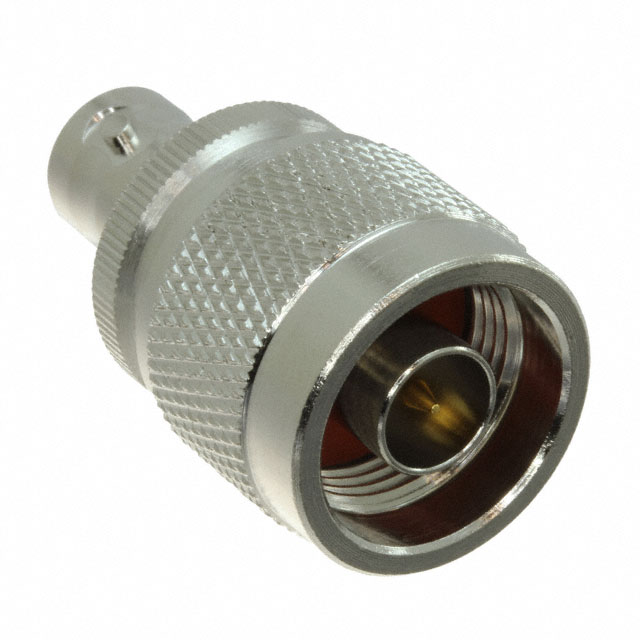
The APH-NP-BNCJ is a coaxial adapter connector manufactured by Amphenol RF that converts between BNC Jack (female socket) and N Plug (male pin) interfaces. This adapter operates at 50 Ohms impedance and supports frequencies up to 4 GHz, making it suitable for RF and microwave applications requiring series conversion between BNC and N connector types.
The APH-NP-BNCJ is classified as Obsolete. Identifying equivalent substitute parts is necessary to maintain system compatibility and ensure continued availability for applications currently utilizing this adapter configuration.
Substiute Parts
Key Parameters
| Parameter | Value |
|---|---|
| Adapter Type | Plug to Jack |
| Conversion Type | Between Series |
| Adapter Series | BNC to N |
| Center Gender | Female to Male |
| Impedance | 50 Ohms |
| Style | Straight |
| Mounting Type | Free Hanging (In-Line) |
| Fastening Type | Bayonet Lock, Threaded |
| Frequency - Max | 4 GHz |
| Operating Temperature | -65°C ~ 165°C |
| Body Material | Brass |
| Body Finish | Nickel |
| Center Contact Material | Phosphor Bronze |
| Center Contact Plating | Gold |
| Dielectric Material | Polytetrafluoroethylene (PTFE) |
| RoHS Status | RoHS Compliant |
| Moisture Sensitivity Level (MSL) | 1 (Unlimited) |
Substitute Part Grouping Explanation
Substitution of the APH-NP-BNCJ is determined by strict equivalence across the following critical parameters:
Mandatory Matching Parameters:
- Adapter Series: BNC to N conversion capability
- Impedance: 50 Ohms
- Frequency Maximum: 4 GHz or greater
- Mounting Type: Free Hanging (In-Line)
- Fastening Type: Bayonet Lock, Threaded
- Operating Temperature Range: -65°C ~ 165°C or wider
- Body Material and Finish: Brass with Nickel finish
- Center Contact Material and Plating: Phosphor Bronze with Gold plating
- Dielectric Material: Polytetrafluoroethylene (PTFE)
The substitute part 242121 meets all mandatory matching parameters. The primary distinction is the directional orientation of the adapter: APH-NP-BNCJ converts from BNC Jack to N Plug, while 242121 converts from N Plug to BNC Jack. Both configurations provide equivalent electrical and mechanical performance for BNC-to-N series conversion applications.
Parameter Comparison
| Parameter | APH-NP-BNCJ | 242121 |
|---|---|---|
| Manufacturer | Amphenol RF | Amphenol RF |
| Category | Coaxial Connectors (RF) | Coaxial Connectors (RF) |
| Adapter Type | Plug to Jack | Plug to Jack |
| Conversion Type | Between Series | Between Series |
| Adapter Series | BNC to N | BNC to N |
| Center Gender | Female to Male | Female to Male |
| Impedance | 50 Ohms | 50 Ohms |
| Style | Straight | Straight |
| Mounting Type | Free Hanging (In-Line) | Free Hanging (In-Line) |
| Fastening Type | Bayonet Lock, Threaded | Bayonet Lock, Threaded |
| Frequency - Max | 4 GHz | 4 GHz |
| Body Material | Brass | Brass |
| Body Finish | Nickel | Nickel |
| Center Contact Material | Phosphor Bronze | Phosphor Bronze |
| Center Contact Plating | Gold | Gold |
| Dielectric Material | Polytetrafluoroethylene (PTFE) | Polytetrafluoroethylene (PTFE) |
| Operating Temperature | -65°C ~ 165°C | -65°C ~ 165°C |
| RoHS Status | RoHS Compliant | ROHS3 Compliant |
| Moisture Sensitivity Level (MSL) | 1 (Unlimited) | 1 (Unlimited) |
| ECCN | EAR99 | EAR99 |
| HTSUS | 8536.69.4010 | 8536.69.4010 |
| Product Status | Obsolete | Active |
Engineering Selection Recommendations
The substitute part 242121 is the direct equivalent for APH-NP-BNCJ applications. Selection between these two parts is determined by product status and availability:
APH-NP-BNCJ: Classified as Obsolete with 733 pieces in stock. This part number should be reserved for legacy system maintenance where exact part number matching is required for documentation or traceability purposes.
242121: Classified as Active with 1139 pieces in stock. This part is the recommended selection for new designs, system upgrades, and replacement applications. The part carries ROHS3 Compliant certification, providing enhanced environmental compliance compared to the RoHS Compliant status of APH-NP-BNCJ. Both parts are REACH Affected and carry identical ECCN and HTSUS classifications.
The electrical and mechanical performance of both parts is equivalent across all specified parameters. The directional difference (BNC-to-N versus N-to-BNC) does not affect functional performance in applications requiring BNC-to-N series conversion, as both configurations provide identical impedance, frequency response, and environmental operating characteristics.
Frequently Asked Questions (FAQ)
Q: Can 242121 be used as a direct replacement for APH-NP-BNCJ?
A: Yes. Both parts provide equivalent electrical performance for BNC-to-N adapter applications. The parts differ in directional orientation: APH-NP-BNCJ converts from BNC Jack to N Plug, while 242121 converts from N Plug to BNC Jack. Both configurations deliver identical impedance (50 Ohms), frequency response (4 GHz maximum), and environmental specifications.
Q: What is the difference between RoHS Compliant and ROHS3 Compliant?
A: ROHS3 Compliant (242121) represents a more recent regulatory compliance standard compared to RoHS Compliant (APH-NP-BNCJ). Both parts meet environmental restrictions on hazardous substances. ROHS3 includes additional restricted substances and phthalate requirements. For new applications, 242121 is the preferred selection due to enhanced compliance status.
Q: Are the packaging formats interchangeable?
A: APH-NP-BNCJ is supplied without specified packaging, while 242121 is supplied in Bag packaging. Both parts are identical in electrical and mechanical specifications. Packaging format does not affect component performance or compatibility in circuit applications.
Q: What is the maximum operating frequency for these adapters?
A: Both APH-NP-BNCJ and 242121 support frequencies up to 4 GHz. This specification applies to the RF signal transmission capability of the adapter and is consistent across both part numbers.
Q: Can these adapters be used in high-temperature environments?
A: Yes. Both adapters operate across the temperature range of -65°C to 165°C. This range accommodates industrial, aerospace, and military applications requiring extended thermal performance.
Q: What materials are used in the center contact?
A: Both adapters use Phosphor Bronze as the center contact material with Gold plating. This combination provides reliable electrical conductivity and corrosion resistance for RF signal transmission.
Q: Are these adapters suitable for permanent installation?
A: Both adapters are classified as Free Hanging (In-Line) mounting type, indicating they are designed for in-line cable or connector applications. The Bayonet Lock and Threaded fastening types provide secure mechanical connection without requiring additional mounting hardware.
Alternative Parts

SJ6012L2TP
Littelfuse Inc.
6 Alternative Parts

JMK107BBJ476MA-RE
Taiyo Yuden
10 Alternative Parts

GMK107BBJ475MA-T
Taiyo Yuden
5 Alternative Parts
SJ6020N2ARP
Littelfuse Inc.
3 Alternative Parts
SJ6025R2ATP
Littelfuse Inc.
4 Alternative Parts

2474-05L
API Delevan Inc.
1 Alternative Parts

4590R-684K
API Delevan Inc.
1 Alternative Parts

CM6560R-334
API Delevan Inc.
1 Alternative Parts

CM6460-104
API Delevan Inc.
1 Alternative Parts

5526-12
API Delevan Inc.
1 Alternative Parts