


Request Quote
(Ships tomorrow)
AP1609SG-13 Equivalent & Substitute Parts
Part Overview
The AP1609SG-13 is a boost switching regulator IC manufactured by Diodes Incorporated, designed for positive adjustable output applications. This component operates as a step-up converter with a fixed switching frequency of 300kHz and supports output currents up to 2.4A. The part is classified as obsolete, making equivalent and substitute parts necessary for new designs and ongoing production requirements. Substitute parts must maintain functional compatibility across input voltage ranges, output voltage adjustability, and current delivery specifications while accommodating modern packaging and thermal requirements.
Substiute Parts
Key Parameters
| Parameter | Value |
|---|---|
| Function | Step-Up (Boost) |
| Output Configuration | Positive Adjustable |
| Input Voltage Range | 2.5V to 6V |
| Output Voltage Range | 3V to 17V |
| Output Current | 2.4A (Switch) |
| Switching Frequency | 300kHz |
| Package Type | 8-SOIC (0.154", 3.90mm Width) |
| Operating Temperature | -20°C to 80°C |
| RoHS Status | ROHS3 Compliant |
Substitute Part Grouping Explanation
Substitute parts for the AP1609SG-13 are selected based on the following critical parameters that determine functional equivalence:
Primary Substitution Criteria:
- Topology: Boost (step-up) switching regulator
- Output Type: Positive adjustable voltage
- Output Current Capability: Minimum 2.4A or greater
- Input Voltage Overlap: Minimum input voltage ≤ 2.5V; maximum input voltage ≥ 6V
- Output Voltage Range: Adjustable range must encompass 3V to 17V
- Mounting Type: Surface mount
- Regulatory Compliance: ROHS3 compliant
Identified Substitutes:
- PAM2421AECADJR (Diodes Incorporated) – Active product with enhanced specifications
- LM2700MTX-ADJ/NOPB (Texas Instruments) – Active product with extended operating temperature range
Both substitutes meet or exceed the electrical and mechanical requirements of the AP1609SG-13 while offering improved product status and availability.
Parameter Comparison
| Parameter | AP1609SG-13 | PAM2421AECADJR | LM2700MTX-ADJ/NOPB |
|---|---|---|---|
| Manufacturer | Diodes Incorporated | Diodes Incorporated | Texas Instruments |
| Function | Step-Up | Step-Up | Step-Up |
| Output Configuration | Positive Adjustable | Positive Adjustable | Positive Adjustable |
| Input Voltage (Min) | 2.5V | 2.7V | 2.2V |
| Input Voltage (Max) | 6V | 5.5V | 12V |
| Output Voltage (Min) | 3V | 2.7V | 1.26V |
| Output Voltage (Max) | 17V | 24V | 17.5V |
| Output Current | 2.4A | 3A | 2.55A |
| Switching Frequency | 300kHz | 520kHz | 600kHz, 1.25MHz |
| Operating Temperature | -20°C to 80°C (TA) | -40°C to 85°C (TA) | -40°C to 125°C (TJ) |
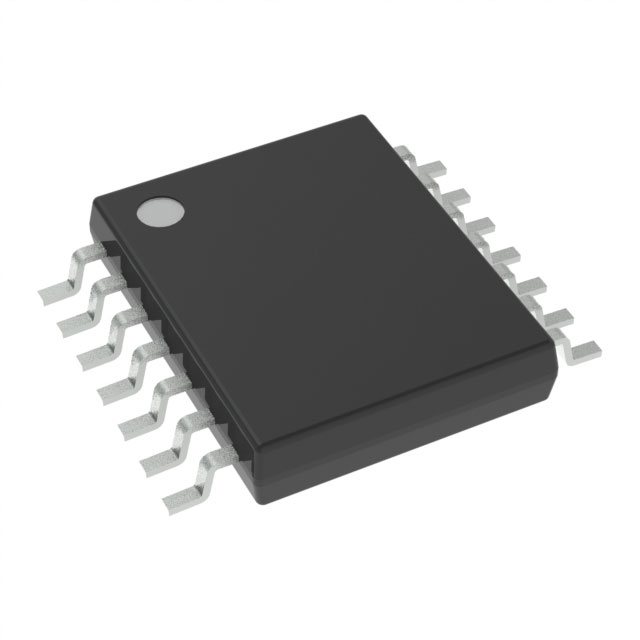
| Package / Case | 8-SOIC (0.154", 3.90mm Width) | 8-SOIC (0.154", 3.90mm Width) Exposed Pad | 14-TSSOP (0.173", 4.40mm Width) |
| Product Status | Obsolete | Active | Active |
| RoHS Status | ROHS3 Compliant | ROHS3 Compliant | ROHS3 Compliant |
| MSL Rating | 3 (168 Hours) | 1 (Unlimited) | 1 (Unlimited) |
Engineering Selection Recommendations
PAM2421AECADJR is the primary recommended substitute for the AP1609SG-13. This part maintains the same 8-SOIC package footprint with an exposed pad for improved thermal performance. The PAM2421AECADJR offers higher output current capability (3A vs. 2.4A), wider input voltage range (2.7V to 5.5V), and extended output voltage range (2.7V to 24V). The active product status ensures long-term availability and supply chain stability. MSL rating of 1 provides superior moisture handling compared to the original part's MSL 3 rating.
LM2700MTX-ADJ/NOPB serves as an alternative substitute when extended operating temperature range (-40°C to 125°C) or wider input voltage support (2.2V to 12V) is required. This Texas Instruments device operates at higher switching frequencies (600kHz or 1.25MHz) and provides output current of 2.55A. The 14-TSSOP package requires PCB layout modifications compared to the original 8-SOIC footprint. This substitute is suitable for applications demanding superior thermal performance or extended temperature operation.
Both substitutes maintain ROHS3 compliance and REACH unaffected status, ensuring regulatory alignment with the original AP1609SG-13.
Frequently Asked Questions (FAQ)
Q: Can the PAM2421AECADJR be used as a direct drop-in replacement for the AP1609SG-13?
A: The PAM2421AECADJR shares the same 8-SOIC package footprint and pinout compatibility with the AP1609SG-13, enabling direct PCB substitution. The exposed pad on the PAM2421AECADJR provides additional thermal dissipation capability. Electrical parameters are compatible across the specified input and output voltage ranges.
Q: What are the key differences between the two substitute parts?
A: The PAM2421AECADJR maintains the same package family (8-SOIC) as the original part, while the LM2700MTX-ADJ/NOPB uses a 14-TSSOP package requiring PCB layout changes. The LM2700MTX-ADJ/NOPB supports wider input voltage range (2.2V to 12V) and extended operating temperature (-40°C to 125°C). The PAM2421AECADJR offers higher output current (3A) and improved MSL rating (1 vs. 3).
Q: Are there any thermal considerations when substituting these parts?
A: The PAM2421AECADJR includes an exposed pad for enhanced thermal performance compared to the standard 8-SOIC package. The LM2700MTX-ADJ/NOPB operates at higher switching frequencies (600kHz or 1.25MHz), which may affect thermal characteristics and EMI performance. PCB thermal design should be evaluated based on the specific application's power dissipation requirements.
Q: Do these substitutes maintain the same output voltage adjustability?
A: All three parts support positive adjustable output voltage configuration. The PAM2421AECADJR and LM2700MTX-ADJ/NOPB both provide wider adjustable output voltage ranges (2.7V to 24V and 1.26V to 17.5V respectively) compared to the AP1609SG-13 (3V to 17V), ensuring compatibility with existing designs.
Q: What is the impact of different switching frequencies on circuit design?
A: The AP1609SG-13 operates at 300kHz, while substitutes operate at 520kHz (PAM2421AECADJR) or 600kHz/1.25MHz (LM2700MTX-ADJ/NOPB). Higher switching frequencies allow for smaller passive component values but may increase EMI considerations. Filter component selection and PCB layout should be re-evaluated for each substitute to maintain performance specifications.
Q: Are moisture sensitivity levels a concern for these substitutes?
A: The PAM2421AECADJR and LM2700MTX-ADJ/NOPB both carry MSL rating 1 (unlimited moisture sensitivity level), compared to the AP1609SG-13's MSL 3 (168 hours). This represents an improvement in handling and storage flexibility, reducing risk during manufacturing and logistics.
Alternative Parts

SJ6012L2TP
Littelfuse Inc.
6 Alternative Parts

JMK107BBJ476MA-RE
Taiyo Yuden
10 Alternative Parts

GMK107BBJ475MA-T
Taiyo Yuden
5 Alternative Parts
SJ6020N2ARP
Littelfuse Inc.
3 Alternative Parts
SJ6025R2ATP
Littelfuse Inc.
4 Alternative Parts

2474-05L
API Delevan Inc.
1 Alternative Parts

4590R-684K
API Delevan Inc.
1 Alternative Parts

CM6560R-334
API Delevan Inc.
1 Alternative Parts

CM6460-104
API Delevan Inc.
1 Alternative Parts

5526-12
API Delevan Inc.
1 Alternative Parts