


Request Quote
(Ships tomorrow)
AP1605SL-13 Equivalent & Substitute Parts
Part Overview
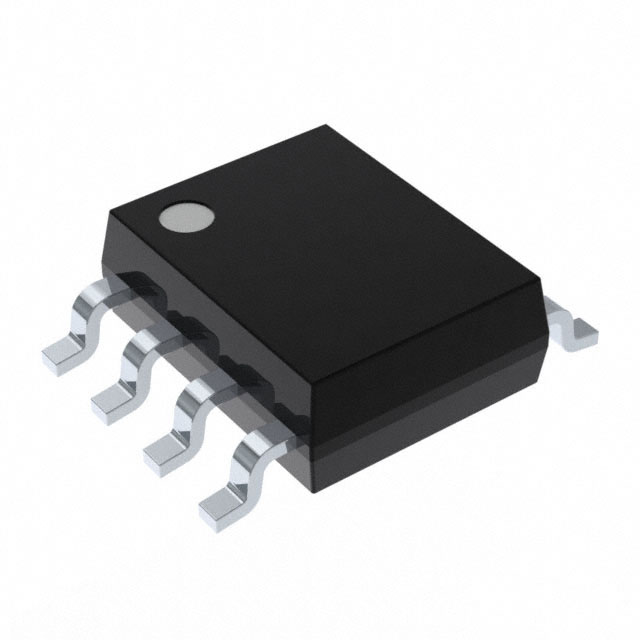
The AP1605SL-13 is a buck switching regulator IC manufactured by Diodes Incorporated, designed for step-down voltage conversion with positive adjustable output. This device delivers 3A output current across a 2.2V to 7V adjustable range from a 2.5V to 7V input supply, operating at 300kHz switching frequency in an 8-SOIC surface mount package.
The AP1605SL-13 is classified as obsolete. Identifying equivalent and substitute parts is necessary to maintain design continuity, ensure supply chain reliability, and support ongoing production or maintenance requirements for systems utilizing this regulator.
Substiute Parts
Key Parameters
| Parameter | Value |
|---|---|
| Manufacturer | Diodes Incorporated |
| Function | Step-Down (Buck) |
| Output Configuration | Positive Adjustable |
| Input Voltage Range | 2.5V to 7V |
| Output Voltage Range | 2.2V to 7V |
| Output Current | 3A |
| Switching Frequency | 300kHz |
| Package | 8-SOIC (0.154", 3.90mm Width) |
| Operating Temperature | -20°C to 85°C |
| RoHS Status | ROHS3 Compliant |
| Product Status | Obsolete |
Substitute Part Grouping Explanation
Substitution analysis for the AP1605SL-13 is constrained by critical functional and electrical parameters. The primary part is a buck (step-down) regulator with 3A output capacity. The listed substitute, MAX630ESA+T, is a boost (step-up) regulator with 525mA output capacity.
Substitution Logic:
The MAX630ESA+T cannot serve as a direct functional substitute due to fundamental topology differences:
- Topology Mismatch: AP1605SL-13 performs step-down conversion (buck); MAX630ESA+T performs step-up conversion (boost). These topologies serve opposite voltage conversion requirements.
- Output Current Capacity: AP1605SL-13 delivers 3A; MAX630ESA+T delivers 525mA. The substitute provides significantly reduced current capacity.
- Switching Frequency: AP1605SL-13 operates at 300kHz; MAX630ESA+T operates at 40kHz. Different frequency characteristics affect filtering and efficiency profiles.
- Operating Temperature Range: AP1605SL-13 operates -20°C to 85°C; MAX630ESA+T operates -40°C to 85°C. The substitute provides extended low-temperature operation.
Common Parameters:
- Package: Both use 8-SOIC (0.154", 3.90mm Width) surface mount
- Output Configuration: Both provide positive adjustable output
- Minimum Output Voltage: Both support 2.2V minimum
- RoHS Compliance: Both are ROHS3 compliant
- Mounting Type: Both are surface mount
Parameter Comparison
| Parameter | AP1605SL-13 | MAX630ESA+T |
|---|---|---|
| Manufacturer | Diodes Incorporated | Analog Devices Inc./Maxim Integrated |
| Function | Step-Down (Buck) | Step-Up (Boost) |
| Output Configuration | Positive Adjustable | Positive Adjustable |
| Input Voltage Range | 2.5V to 7V | 2.2V to 16.5V |
| Output Voltage Range | 2.2V to 7V | 2.2V to 18V |
| Output Current | 3A | 525mA (Switch) |
| Switching Frequency | 300kHz | 40kHz |
| Package | 8-SOIC (0.154", 3.90mm Width) | 8-SOIC (0.154", 3.90mm Width) |
| Operating Temperature | -20°C to 85°C | -40°C to 85°C |
| Product Status | Obsolete | Active |
| RoHS Status | ROHS3 Compliant | ROHS3 Compliant |
| Moisture Sensitivity Level | 3 (168 Hours) | 1 (Unlimited) |
Engineering Selection Recommendations
The MAX630ESA+T is listed as a substitute but does not provide functional equivalence to the AP1605SL-13 due to topology and current capacity differences. Selection of an alternative part requires alignment with the specific application requirements:
For Buck Regulation Applications: Applications requiring step-down voltage conversion with 3A output current cannot use the MAX630ESA+T. Alternative buck regulators with equivalent current capacity and input/output voltage specifications must be evaluated.
For Boost Regulation Applications: If boost conversion is required, the MAX630ESA+T is suitable for applications with output current requirements up to 525mA and input voltages up to 16.5V.
Compliance Considerations: Both parts maintain ROHS3 compliance and are suitable for regulated environments. The MAX630ESA+T offers improved moisture sensitivity characteristics (MSL 1 vs. MSL 3) and extended low-temperature operation (-40°C vs. -20°C minimum).
Product Status: The AP1605SL-13 is obsolete; the MAX630ESA+T is active. Active product status provides ongoing manufacturer support and supply availability.
Frequently Asked Questions (FAQ)
Q: Can the MAX630ESA+T directly replace the AP1605SL-13 in existing designs?
A: No. The MAX630ESA+T is a boost regulator while the AP1605SL-13 is a buck regulator. These topologies perform opposite voltage conversion functions and are not functionally interchangeable. Additionally, the MAX630ESA+T provides 525mA output current versus 3A for the AP1605SL-13.
Q: Why is a boost regulator listed as a substitute for a buck regulator?
A: The substitute relationship is based on shared package form factor (8-SOIC), common output configuration (positive adjustable), and overlapping minimum output voltage specification (2.2V). However, these similarities do not establish functional equivalence. Application-specific requirements determine actual substitutability.
Q: What are the key parameters that determine substitutability for the AP1605SL-13?
A: Critical parameters include topology (buck vs. boost), output current capacity (3A requirement), input voltage range (2.5V to 7V), output voltage range (2.2V to 7V), and package form factor (8-SOIC). Any substitute must match or exceed these specifications for the intended application.
Q: Is the MAX630ESA+T suitable for low-temperature applications?
A: The MAX630ESA+T operates from -40°C to 85°C, providing extended low-temperature capability compared to the AP1605SL-13 (-20°C to 85°C). For applications requiring operation below -20°C, the MAX630ESA+T offers improved temperature range coverage.
Q: What is the significance of the different switching frequencies?
A: The AP1605SL-13 operates at 300kHz while the MAX630ESA+T operates at 40kHz. Higher switching frequency typically enables smaller passive component sizing but may increase switching losses. Lower frequency reduces switching losses but requires larger filtering components. Frequency selection depends on application power budget and size constraints.
Q: Are both parts RoHS compliant?
A: Yes. Both the AP1605SL-13 and MAX630ESA+T are ROHS3 compliant and suitable for regulated manufacturing environments.
Alternative Parts

SJ6012L2TP
Littelfuse Inc.
6 Alternative Parts

JMK107BBJ476MA-RE
Taiyo Yuden
10 Alternative Parts

GMK107BBJ475MA-T
Taiyo Yuden
5 Alternative Parts
SJ6020N2ARP
Littelfuse Inc.
3 Alternative Parts
SJ6025R2ATP
Littelfuse Inc.
4 Alternative Parts

2474-05L
API Delevan Inc.
1 Alternative Parts

4590R-684K
API Delevan Inc.
1 Alternative Parts

CM6560R-334
API Delevan Inc.
1 Alternative Parts

CM6460-104
API Delevan Inc.
1 Alternative Parts

5526-12
API Delevan Inc.
1 Alternative Parts