


Request Quote
(Ships tomorrow)
AOZ1240AI Equivalent & Substitute Parts
Part Overview
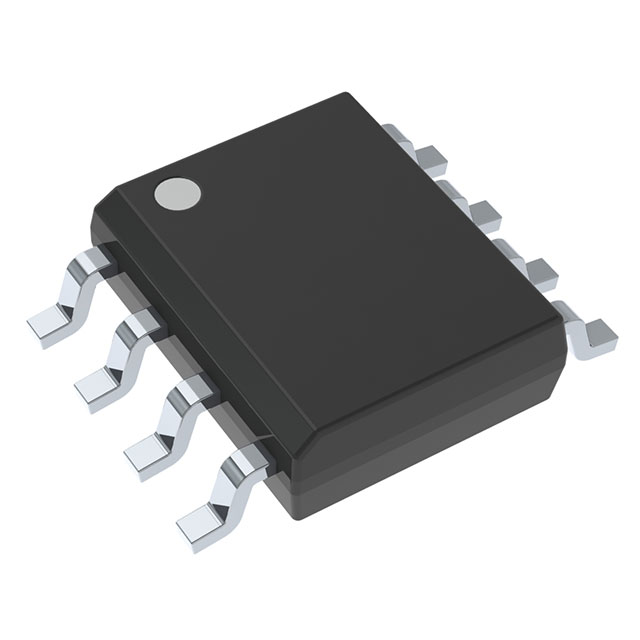
The AOZ1240AI is a buck switching regulator IC from Alpha & Omega Semiconductor Inc., designed for step-down voltage conversion with positive adjustable output. It delivers 2A output current across an input voltage range of 4.5V to 32V, with adjustable output from 0.8V to 32V. The device is housed in an 8-SOIC package and operates across the industrial temperature range of -40°C to 85°C.
The AOZ1240AI has reached obsolete product status. Identifying equivalent substitute parts is necessary to maintain design continuity, ensure supply chain reliability, and support ongoing production requirements for applications currently utilizing this regulator.
Substiute Parts
Key Parameters
| Parameter | Value |
|---|---|
| Function | Step-Down (Buck) |
| Output Configuration | Positive Adjustable |
| Voltage - Input Range | 4.5V to 32V |
| Voltage - Output Range | 0.8V to 32V |
| Current - Output | 2A |
| Switching Frequency | 370kHz |
| Package / Case | 8-SOIC (0.154", 3.90mm Width) |
| Operating Temperature | -40°C to 85°C |
| RoHS Status | ROHS3 Compliant |
Substitute Part Grouping Explanation
Substitute parts for the AOZ1240AI are identified based on the following critical parameters that determine functional compatibility:
- Package compatibility: Identical 8-SOIC (0.154", 3.90mm Width) form factor for direct PCB layout replacement
- Output configuration: Positive adjustable topology matching the original design
- Voltage specifications: Input and output voltage ranges that encompass or match the original operating envelope
- Current rating: Output current capability sufficient for the application
- Temperature range: Operating temperature specification of -40°C to 85°C
- Regulatory compliance: ROHS3 compliance and equivalent certifications
The TPS5402DR from Texas Instruments meets these substitution criteria within the defined electrical and mechanical parameters.
Parameter Comparison
| Parameter | AOZ1240AI | TPS5402DR | Compatibility Notes |
|---|---|---|---|
| Manufacturer | Alpha & Omega Semiconductor Inc. | Texas Instruments | Different manufacturer |
| Function | Step-Down | Step-Down | Matched |
| Output Configuration | Positive Adjustable | Positive Adjustable | Matched |
| Voltage - Input (Min) | 4.5V | 4.6V | TPS5402DR accepts lower minimum input |
| Voltage - Input (Max) | 32V | 28V | AOZ1240AI accepts higher maximum input |
| Voltage - Output (Min) | 0.8V | 0.8V | Matched |
| Voltage - Output (Max) | 32V | 26.04V | AOZ1240AI supports higher maximum output |
| Current - Output | 2A | 1.7A | TPS5402DR rated 0.3A lower |
| Switching Frequency | 370kHz | 50kHz to 1.1MHz | TPS5402DR frequency is programmable within range |
| Operating Temperature | -40°C to 85°C | -40°C to 85°C | Matched |
| Package / Case | 8-SOIC (0.154", 3.90mm Width) | 8-SOIC (0.154", 3.90mm Width) | Matched - Direct PCB replacement |
| RoHS Status | ROHS3 Compliant | ROHS3 Compliant | Matched |
| Product Status | Obsolete | Active | TPS5402DR actively manufactured |
Engineering Selection Recommendations
The TPS5402DR qualifies as a substitute for the AOZ1240AI based on the following engineering criteria:
Regulatory and Compliance Alignment: Both devices maintain ROHS3 compliance and equivalent certifications (REACH Unaffected, ECCN EAR99, HTSUS 8542.39.0001), ensuring regulatory continuity in applications subject to environmental and trade compliance requirements.
Package and Form Factor: Identical 8-SOIC packaging enables direct PCB layout compatibility without redesign, reducing implementation risk and manufacturing complexity.
Functional Topology: Both devices implement positive adjustable buck regulation with matching output configuration and temperature operating range (-40°C to 85°C), supporting equivalent thermal and functional performance in target applications.
Supply Chain Status: The TPS5402DR maintains active product status with substantial inventory availability (36,100 pcs), providing reliable long-term supply compared to the obsolete AOZ1240AI.
Parameter Deviations: The TPS5402DR exhibits lower maximum input voltage (28V vs. 32V), lower maximum output voltage (26.04V vs. 32V), and reduced output current rating (1.7A vs. 2A). Applications operating within these reduced specifications will function equivalently. Applications requiring the full 2A output current or maximum 32V input/output specifications require design verification or alternative part selection.
Frequently Asked Questions (FAQ)
Q: Can the TPS5402DR directly replace the AOZ1240AI in all applications?
A: Direct replacement is possible for applications operating within the TPS5402DR specifications: input voltage up to 28V, output voltage up to 26.04V, and output current up to 1.7A. Applications requiring the full 2A output current or higher voltage specifications require design review and potential circuit modifications.
Q: Are there package compatibility concerns with the TPS5402DR?
A: No. Both devices use identical 8-SOIC (0.154", 3.90mm Width) packaging, enabling direct PCB footprint compatibility without layout changes or component repositioning.
Q: What is the impact of the TPS5402DR's programmable switching frequency range?
A: The TPS5402DR operates across 50kHz to 1.1MHz, compared to the AOZ1240AI's fixed 370kHz. The TPS5402DR's frequency can be configured within this range through external components. Applications sensitive to specific switching frequency characteristics require frequency configuration verification.
Q: Does the TPS5402DR maintain equivalent regulatory compliance?
A: Yes. Both devices are ROHS3 compliant with matching REACH, ECCN, and HTSUS classifications, ensuring equivalent regulatory status for supply chain and environmental compliance purposes.
Q: What is the significance of the AOZ1240AI's obsolete status?
A: Obsolete status indicates the manufacturer has discontinued production and support. The TPS5402DR's active status ensures ongoing availability, technical support, and manufacturing continuity for new designs and production requirements.
Q: Are there thermal or reliability differences between the two devices?
A: Both devices operate across identical temperature ranges (-40°C to 85°C) and share equivalent moisture sensitivity levels (MSL 1 - Unlimited). Thermal performance depends on application-specific load conditions and PCB thermal design rather than inherent device differences.
Alternative Parts

SJ6012L2TP
Littelfuse Inc.
6 Alternative Parts

JMK107BBJ476MA-RE
Taiyo Yuden
10 Alternative Parts

GMK107BBJ475MA-T
Taiyo Yuden
5 Alternative Parts
SJ6020N2ARP
Littelfuse Inc.
3 Alternative Parts
SJ6025R2ATP
Littelfuse Inc.
4 Alternative Parts

2474-05L
API Delevan Inc.
1 Alternative Parts

4590R-684K
API Delevan Inc.
1 Alternative Parts

CM6560R-334
API Delevan Inc.
1 Alternative Parts

CM6460-104
API Delevan Inc.
1 Alternative Parts

5526-12
API Delevan Inc.
1 Alternative Parts