


Request Quote
(Ships tomorrow)
AM26LS32PC Equivalent & Substitute Parts
Part Overview
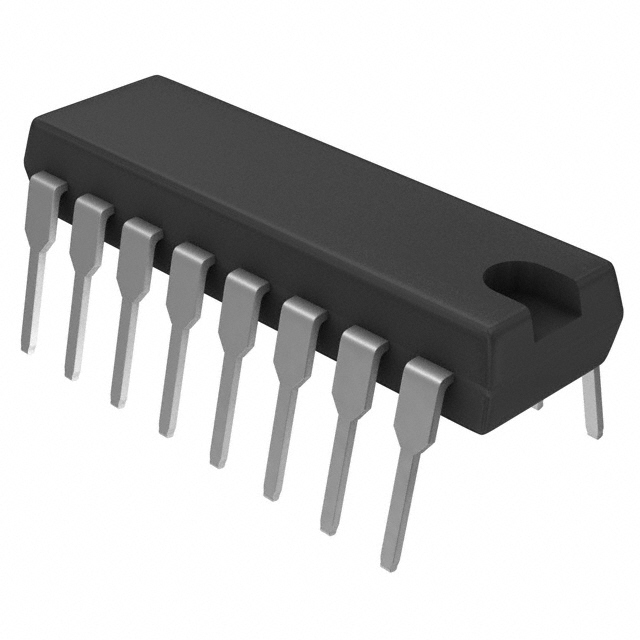
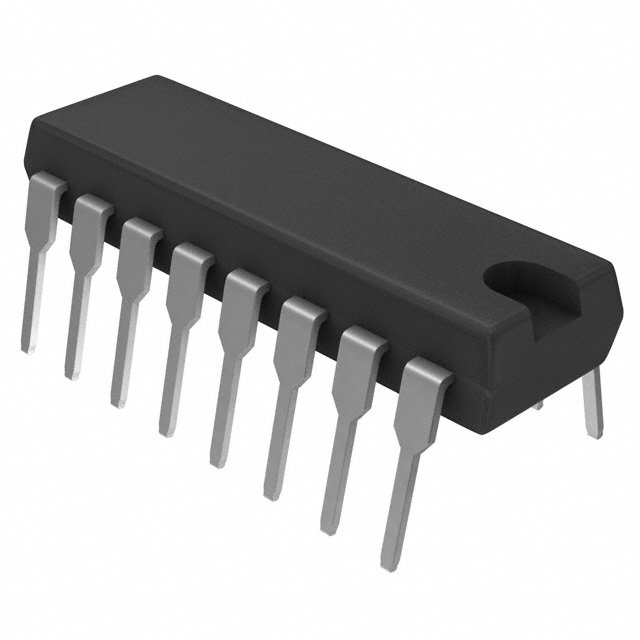
The AM26LS32PC is a RS422/RS423 receiver IC manufactured by Texas Instruments, housed in a 16-pin DIP package for through-hole mounting. This component functions as a 0/4 receiver interface for serial communication applications. The AM26LS32PC is classified as obsolete, making equivalent substitute parts necessary for new designs and ongoing production requirements. Active alternatives with compatible electrical and mechanical specifications are available to ensure design continuity.
Substiute Parts
Key Parameters
| Parameter | Value |
|---|---|
| Manufacturer Part Number | AM26LS32PC |
| Manufacturer | Texas Instruments |
| Category | Interface |
| Type | Receiver |
| Protocol | RS422, RS423 |
| Number of Drivers/Receivers | 0/4 |
| Receiver Hysteresis | 100 mV |
| Voltage - Supply | 4.5V ~ 5.5V |
| Operating Temperature | 0°C ~ 70°C |
| Mounting Type | Through Hole |
| Package / Case | 16-DIP (0.300", 7.62mm) |
| Supplier Device Package | 16-PDIP |
| Product Status | Obsolete |
| RoHS Status | RoHS non-compliant |
| Moisture Sensitivity Level (MSL) | 1 (Unlimited) |
Substitute Part Grouping Explanation
Substitute parts for the AM26LS32PC are qualified based on the following critical parameters:
- Protocol Compatibility: Both substitute parts maintain RS422 and RS423 protocol support, ensuring functional equivalence in serial communication applications.
- Receiver Configuration: All parts maintain the 0/4 receiver configuration (4 receivers, 0 drivers).
- Package Compatibility: All parts use the 16-DIP (0.300", 7.62mm) through-hole package, enabling direct PCB footprint compatibility.
- Operating Temperature Range: All parts operate within the 0°C ~ 70°C range, maintaining thermal compatibility.
- Supply Voltage Range: Substitute parts operate within 4.75V ~ 5.25V, which is a subset of the original 4.5V ~ 5.5V range, ensuring compatibility in standard 5V supply applications.
- Receiver Hysteresis: Variations in hysteresis (50 mV to 120 mV) fall within acceptable operational tolerances for RS422/RS423 receiver applications.
The AM26LS32ACN and SN75ALS193N are both active products with current manufacturing status and improved compliance certifications, making them suitable replacements for the obsolete AM26LS32PC.
Parameter Comparison
| Parameter | AM26LS32PC (Original) | AM26LS32ACN (Substitute) | SN75ALS193N (Substitute) |
|---|---|---|---|
| Manufacturer | Texas Instruments | Texas Instruments | Texas Instruments |
| Type | Receiver | Receiver | Receiver |
| Protocol | RS422, RS423 | RS422, RS423 | RS422, RS423 |
| Number of Drivers/Receivers | 0/4 | 0/4 | 0/4 |
| Receiver Hysteresis | 100 mV | 50 mV | 120 mV |
| Voltage - Supply | 4.5V ~ 5.5V | 4.75V ~ 5.25V | 4.75V ~ 5.25V |
| Operating Temperature | 0°C ~ 70°C | 0°C ~ 70°C | 0°C ~ 70°C |
| Mounting Type | Through Hole | Through Hole | Through Hole |
| Package / Case | 16-DIP (0.300", 7.62mm) | 16-DIP (0.300", 7.62mm) | 16-DIP (0.300", 7.62mm) |
| Product Status | Obsolete | Active | Active |
| RoHS Status | RoHS non-compliant | ROHS3 Compliant | ROHS3 Compliant |
| Moisture Sensitivity Level (MSL) | 1 (Unlimited) | Not Applicable | Not Applicable |
Engineering Selection Recommendations
AM26LS32ACN is the primary substitute for the AM26LS32PC. Both parts share the same base product number (AM26LS32) and are manufactured by Texas Instruments. The AM26LS32ACN is an active product with ROHS3 compliance, addressing regulatory requirements for new designs. The reduced receiver hysteresis (50 mV versus 100 mV) provides improved noise margin in RS422/RS423 communication links. The narrower supply voltage range (4.75V ~ 5.25V) is compatible with standard 5V regulated supplies.
SN75ALS193N is an alternative substitute from the Texas Instruments 75ALS series. This part is also an active product with ROHS3 compliance. The receiver hysteresis specification (120 mV) is closer to the original AM26LS32PC specification, which may be advantageous in applications with marginal signal integrity. The SN75ALS193N maintains full protocol and package compatibility.
Both substitute parts eliminate the RoHS non-compliance issue of the obsolete AM26LS32PC and provide active product status with ongoing manufacturer support.
Frequently Asked Questions (FAQ)
Q: Can the AM26LS32ACN directly replace the AM26LS32PC without PCB modifications?
A: Yes. Both parts use the 16-DIP (0.300", 7.62mm) through-hole package with identical pinout compatibility. No PCB layout changes are required for direct substitution.
Q: What is the functional difference between the AM26LS32ACN and SN75ALS193N?
A: Both parts function as RS422/RS423 receivers with 0/4 configuration. The primary difference is receiver hysteresis: AM26LS32ACN specifies 50 mV, while SN75ALS193N specifies 120 mV. Both values are within acceptable operational tolerances for RS422/RS423 applications. Selection depends on specific signal integrity requirements in the target application.
Q: Is the narrower supply voltage range of the substitute parts (4.75V ~ 5.25V) a limitation?
A: No. The narrower range is a subset of the original specification and is fully compatible with standard 5V regulated power supplies used in most industrial and commercial applications. Applications requiring operation below 4.75V or above 5.25V would require design review.
Q: Why is the AM26LS32PC classified as obsolete?
A: The AM26LS32PC is no longer in active production. Texas Instruments has transitioned to the AM26LS32ACN as the current product offering, which includes improved compliance certifications and manufacturing support.
Q: Are both substitute parts RoHS compliant?
A: Yes. Both AM26LS32ACN and SN75ALS193N are ROHS3 compliant, addressing environmental and regulatory requirements for new designs and production.
Q: What is the difference in receiver hysteresis between the three parts?
A: Receiver hysteresis determines the voltage difference between rising and falling threshold levels. The AM26LS32PC specifies 100 mV, AM26LS32ACN specifies 50 mV, and SN75ALS193N specifies 120 mV. All values are within acceptable ranges for RS422/RS423 receiver operation. Lower hysteresis (50 mV) provides tighter threshold control; higher hysteresis (120 mV) provides greater noise immunity.
Alternative Parts

SJ6012L2TP
Littelfuse Inc.
6 Alternative Parts

JMK107BBJ476MA-RE
Taiyo Yuden
10 Alternative Parts

GMK107BBJ475MA-T
Taiyo Yuden
5 Alternative Parts
SJ6020N2ARP
Littelfuse Inc.
3 Alternative Parts
SJ6025R2ATP
Littelfuse Inc.
4 Alternative Parts

2474-05L
API Delevan Inc.
1 Alternative Parts

4590R-684K
API Delevan Inc.
1 Alternative Parts

CM6560R-334
API Delevan Inc.
1 Alternative Parts

CM6460-104
API Delevan Inc.
1 Alternative Parts

5526-12
API Delevan Inc.
1 Alternative Parts