


Request Quote
(Ships tomorrow)
AM26LS32AMJ Equivalent & Substitute Parts
Part Overview
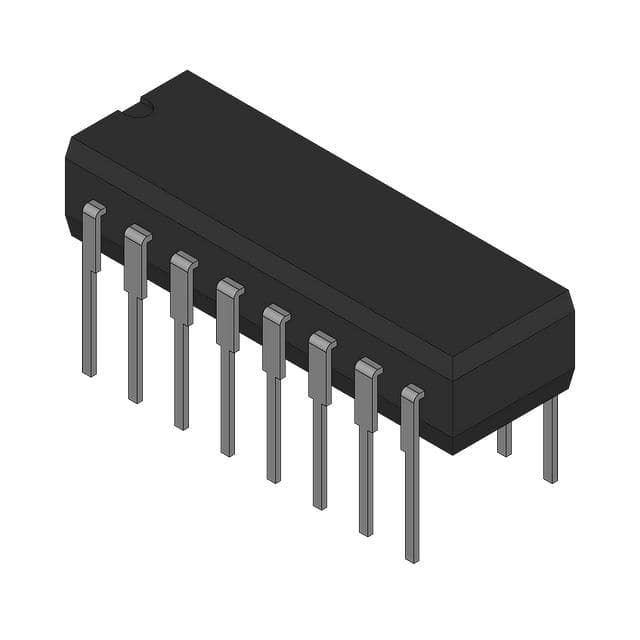
The AM26LS32AMJ is a half-duplex receiver IC for RS422 and RS423 serial communication protocols, manufactured by Texas Instruments. This 16-pin CDIP package device functions as a 0/4 receiver, providing signal reception capabilities for industrial and commercial interface applications. The part is currently in active production status with 2000 units available in new original inventory.
The AM26LS32AMJ requires alternative component identification due to supply chain considerations, design flexibility, or application-specific requirements. Substitute parts must maintain functional equivalence in protocol support, receiver configuration, and electrical operating parameters while accommodating differences in package type, hysteresis characteristics, and temperature ratings.
Substiute Parts
Key Parameters
| Parameter | Value | Significance for Substitution |
|---|---|---|
| Protocol Support | RS422, RS423 | Core functional requirement; substitute must support identical protocols |
| Receiver Configuration | 0/4 (Half-Duplex) | Defines signal direction and channel count; must match exactly |
| Receiver Hysteresis | 50 mV | Affects noise immunity and signal detection threshold |
| Supply Voltage Range | 4.5V ~ 5.5V | Determines power supply compatibility |
| Operating Temperature | -55°C ~ 125°C | Defines environmental operating limits |
| Package Type | 16-CDIP (0.300", 7.62mm) | Physical form factor; affects PCB layout and mounting |
| Mounting Type | Through Hole | Assembly method compatibility |
| RoHS Compliance | ROHS3 Compliant | Environmental and regulatory requirement |
Substitute Part Grouping Explanation
Substitution logic for the AM26LS32AMJ is based on the following critical parameters:
Protocol Compatibility: The substitute part must support RS422 and RS423 protocols identically. This is a non-negotiable requirement for functional equivalence.
Receiver Configuration: The 0/4 half-duplex receiver architecture must be maintained. This specifies that the device functions as a receiver only (0 drivers) with 4 receiver channels, operating in half-duplex mode.
Electrical Operating Range: Supply voltage and temperature operating ranges define the application environment. Substitutes with narrower ranges may not be suitable for all deployment scenarios.
Package and Mounting: While 16-CDIP and 16-DIP packages share the same pin count and 0.300" pitch, they represent different physical form factors. CDIP (ceramic) and DIP (plastic) packages have different thermal and mechanical characteristics but maintain pin-compatible footprints for through-hole mounting.
Receiver Hysteresis: This parameter affects input signal detection sensitivity. Variations in hysteresis (50 mV vs. 120 mV) impact noise immunity and may require circuit-level evaluation.
Product Status and Compliance: Active production status and ROHS3 compliance ensure long-term availability and regulatory alignment. Obsolete parts present supply risk.
Parameter Comparison
| Parameter | AM26LS32AMJ | SN75ALS195N | Compatibility Notes |
|---|---|---|---|
| Manufacturer | Texas Instruments | Texas Instruments | Same manufacturer ensures consistent design philosophy |
| Category | Interface | Interface | Identical functional category |
| Protocol | RS422, RS423 | RS422, RS423 | Protocol support is identical |
| Receiver Configuration | 0/4 Half-Duplex | 0/4 | Receiver count matches; duplex mode differs |
| Receiver Hysteresis | 50 mV | 120 mV | SN75ALS195N has higher hysteresis; affects noise immunity |
| Supply Voltage | 4.5V ~ 5.5V | 4.75V ~ 5.25V | SN75ALS195N has narrower voltage range |
| Operating Temperature | -55°C ~ 125°C | 0°C ~ 70°C | AM26LS32AMJ supports extended temperature range |
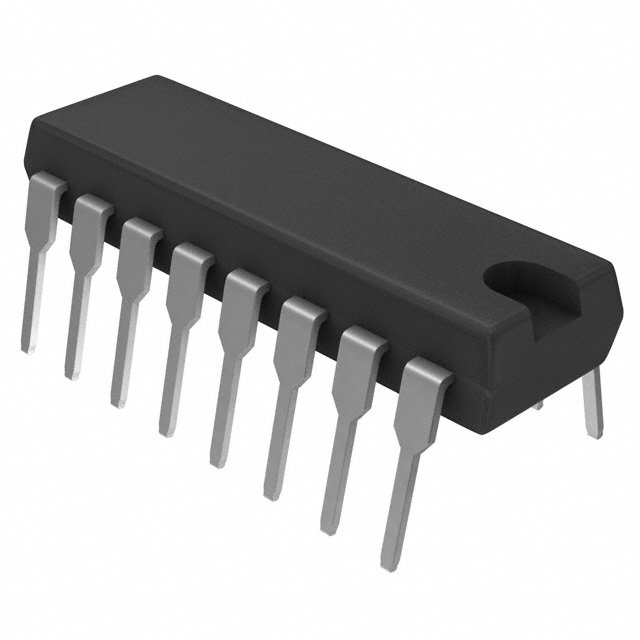
| Package Type | 16-CDIP | 16-DIP (16-PDIP) | Different package materials; pin-compatible footprint |
| Mounting Type | Through Hole | Through Hole | Both use through-hole assembly |
| Product Status | Active | Obsolete | AM26LS32AMJ offers better long-term availability |
| RoHS Compliance | ROHS3 Compliant | ROHS3 Compliant | Both meet environmental standards |
Engineering Selection Recommendations
Primary Selection: The AM26LS32AMJ is the recommended choice for new designs and applications requiring extended operating temperature range (-55°C to 125°C). Active production status ensures sustained component availability and supply chain stability. ROHS3 compliance supports regulatory requirements across global markets.
Substitute Consideration: The SN75ALS195N functions as a protocol-equivalent receiver for RS422/RS423 applications within its specified operating envelope. However, substitution requires evaluation of the following constraints:
Temperature Range Limitation: The SN75ALS195N operates only from 0°C to 70°C, making it unsuitable for applications requiring the extended -55°C to 125°C range of the AM26LS32AMJ. Applications limited to commercial temperature ranges (0°C to 70°C) may proceed with substitution.
Supply Voltage Range: The narrower 4.75V to 5.25V range of the SN75ALS195N requires verification that system power supplies remain within this tighter specification. The AM26LS32AMJ accommodates 4.5V to 5.5V, providing greater margin.
Receiver Hysteresis Difference: The SN75ALS195N exhibits 120 mV hysteresis compared to the AM26LS32AMJ's 50 mV. This higher hysteresis increases noise immunity but may affect sensitivity to low-amplitude signals. Circuit-level signal characteristics must be evaluated.
Product Status Risk: The obsolete status of SN75ALS195N indicates discontinued production. Substitution should be considered only when AM26LS32AMJ availability is constrained and application requirements align with the SN75ALS195N's operating parameters.
Package Consideration: Both devices use through-hole mounting with identical 0.300" (7.62mm) pitch. The CDIP ceramic package of the AM26LS32AMJ and DIP plastic package of the SN75ALS195N are physically interchangeable on standard PCB layouts, though thermal characteristics differ slightly.
Frequently Asked Questions (FAQ)
Q: Can the SN75ALS195N directly replace the AM26LS32AMJ in all applications?
A: Direct replacement is possible only when the application operates within the SN75ALS195N's constraints: supply voltage 4.75V to 5.25V, operating temperature 0°C to 70°C, and where the 120 mV receiver hysteresis is acceptable. Applications requiring extended temperature range or wider voltage tolerance require the AM26LS32AMJ.
Q: What is the significance of the receiver hysteresis difference between these parts?
A: Receiver hysteresis defines the voltage difference between the rising and falling signal thresholds. The AM26LS32AMJ's 50 mV hysteresis provides finer signal discrimination, while the SN75ALS195N's 120 mV hysteresis offers greater noise immunity. Selection depends on signal quality and noise environment in the specific application.
Q: Are the 16-CDIP and 16-DIP packages pin-compatible?
A: Yes, both packages maintain identical pin count (16 pins) and 0.300" (7.62mm) pitch, making them footprint-compatible for through-hole PCB mounting. However, CDIP (ceramic) and DIP (plastic) packages have different thermal properties and mechanical characteristics. Verify thermal performance requirements for your application.
Q: Why is the AM26LS32AMJ listed as active while the SN75ALS195N is obsolete?
A: Product status reflects manufacturing lifecycle. Active status indicates current production and long-term availability. Obsolete status indicates discontinued production, creating supply uncertainty. For new designs, active parts are preferred to ensure component availability throughout the product lifecycle.
Q: What does the 0/4 receiver configuration mean?
A: The notation 0/4 indicates zero drivers and four receivers. This device functions exclusively as a receiver with four independent receiver channels, suitable for half-duplex RS422/RS423 communication where signal reception only is required.
Q: Can I use the SN75ALS195N in an industrial application requiring -40°C operation?
A: No. The SN75ALS195N operates only from 0°C to 70°C and cannot be used at -40°C. The AM26LS32AMJ, rated for -55°C to 125°C, is required for this application.
Q: Are both parts RoHS compliant?
A: Yes, both the AM26LS32AMJ and SN75ALS195N are ROHS3 compliant, meeting environmental and regulatory requirements for lead-free manufacturing and hazardous substance restrictions.
Alternative Parts

SJ6012L2TP
Littelfuse Inc.
6 Alternative Parts

JMK107BBJ476MA-RE
Taiyo Yuden
10 Alternative Parts

GMK107BBJ475MA-T
Taiyo Yuden
5 Alternative Parts
SJ6020N2ARP
Littelfuse Inc.
3 Alternative Parts
SJ6025R2ATP
Littelfuse Inc.
4 Alternative Parts

2474-05L
API Delevan Inc.
1 Alternative Parts

4590R-684K
API Delevan Inc.
1 Alternative Parts

CM6560R-334
API Delevan Inc.
1 Alternative Parts

CM6460-104
API Delevan Inc.
1 Alternative Parts

5526-12
API Delevan Inc.
1 Alternative Parts