


Request Quote
(Ships tomorrow)
AISC-0402F-70NJ-T Equivalent & Substitute Parts
Part Overview
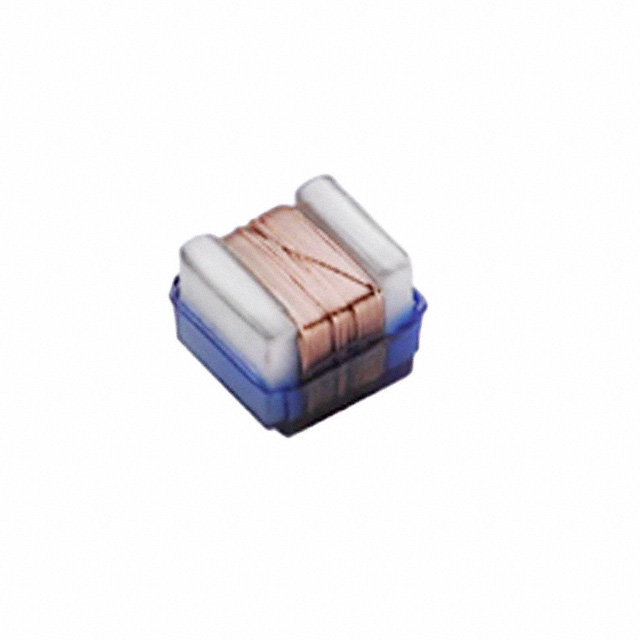
The AISC-0402F-70NJ-T is a 70 nH unshielded drum core wirewound inductor manufactured by Abracon LLC, rated for 820 mA continuous current with a maximum DC resistance of 120 mOhm. This component is designed for surface mount applications in the 0402 package form factor. The part is currently listed as obsolete, making identification of suitable substitute components necessary for ongoing production and maintenance applications.
Substiute Parts
Key Parameters
| Parameter | Value |
|---|---|
| Inductance | 70 nH |
| Tolerance | ±5% |
| Current Rating | 820 mA |
| DC Resistance (Max) | 120 mOhm |
| Core Material | Ferrite |
| Shielding | Unshielded |
| Operating Temperature Range | -40°C to 85°C |
| Self Resonant Frequency | 1.3 GHz |
| Package | 0402 (Nonstandard) |
| Mounting Type | Surface Mount |
| RoHS Status | ROHS3 Compliant |
Substitute Part Grouping Explanation
Substitution eligibility for the AISC-0402F-70NJ-T is determined by the following critical parameters:
Inductance Value: The substitute must maintain inductance within the ±5% tolerance band of the original specification (70 nH ±5% = 66.5 nH to 74.6 nH).
Current Rating: The substitute must support the required current load. The original part is rated for 820 mA; substitutes with lower current ratings may not be suitable for equivalent electrical performance under full load conditions.
DC Resistance: The substitute's maximum DC resistance must not exceed the original specification of 120 mOhm to maintain equivalent power dissipation characteristics.
Core Material and Shielding: Both the original and substitute employ unshielded drum core construction with ferrite or ceramic core materials, ensuring electromagnetic compatibility in the intended application.
Package and Mounting: Surface mount 0402 package compatibility is required for mechanical and assembly compatibility.
Operating Temperature Range: The substitute must support the specified operating temperature range of -40°C to 85°C minimum.
Compliance: Both parts must maintain ROHS3 compliance and equivalent regulatory status.
The identified substitute AISC-0402HP-68NJ-T meets the inductance tolerance requirement (68 nH is within ±5% of 70 nH) and maintains core compatibility. However, the reduced current rating (320 mA versus 820 mA) and increased DC resistance (950 mOhm versus 120 mOhm) represent significant electrical parameter deviations that must be evaluated against specific circuit requirements.
Parameter Comparison
| Parameter | AISC-0402F-70NJ-T (Main) | AISC-0402HP-68NJ-T (Substitute) |
|---|---|---|
| Inductance | 70 nH | 68 nH |
| Tolerance | ±5% | ±5% |
| Current Rating (Amps) | 820 mA | 320 mA |
| DC Resistance (Max) | 120 mOhm | 950 mOhm |
| Core Material | Ferrite | Ceramic |
| Shielding | Unshielded | Unshielded |
| Operating Temperature Range | -40°C to 85°C | -40°C to 125°C |
| Self Resonant Frequency | 1.3 GHz | 1.84 GHz |
| Package | 0402 (Nonstandard) | 0402 (1005 Metric) |
| Mounting Type | Surface Mount | Surface Mount |
| Product Status | Obsolete | Active |
| RoHS Status | ROHS3 Compliant | ROHS3 Compliant |
Engineering Selection Recommendations
The AISC-0402HP-68NJ-T is the manufacturer-recommended substitute for the obsolete AISC-0402F-70NJ-T. Both components maintain ROHS3 compliance and equivalent regulatory status (REACH Unaffected, ECCN EAR99).
The substitute offers extended operating temperature range (-40°C to 125°C versus -40°C to 85°C) and higher self-resonant frequency (1.84 GHz versus 1.3 GHz), providing improved performance margins in high-frequency applications.
Critical design consideration: The substitute exhibits significantly reduced current rating (320 mA versus 820 mA) and substantially increased DC resistance (950 mOhm versus 120 mOhm). These electrical parameter changes result in approximately 7.9 times greater power dissipation at equivalent current levels. Circuit designs operating at or near the original 820 mA specification cannot use this substitute without thermal and performance re-evaluation.
The inductance values (70 nH versus 68 nH) remain within the ±5% tolerance specification, ensuring inductance compatibility for frequency-dependent circuit functions.
Frequently Asked Questions (FAQ)
Q: Can AISC-0402HP-68NJ-T directly replace AISC-0402F-70NJ-T in all applications?
A: Direct replacement is not universally applicable. While inductance values are compatible within tolerance, the substitute's reduced current rating (320 mA) and increased DC resistance (950 mOhm) require circuit-level evaluation. Applications operating at currents exceeding 320 mA or with strict power dissipation budgets must be re-analyzed.
Q: What is the inductance tolerance compatibility between these parts?
A: Both parts specify ±5% tolerance. The 70 nH original and 68 nH substitute differ by approximately 2.9%, which falls within the combined tolerance band and is acceptable for most frequency-dependent circuit functions.
Q: Are the package dimensions compatible?
A: Both components use 0402 surface mount packages. The original specifies a nonstandard 0402 variant (1.10mm × 0.60mm × 0.70mm max height), while the substitute uses the standard 0402 (1005 Metric) form factor (1.00mm × 0.55mm × 0.60mm max height). Physical dimensions are similar and compatible with standard 0402 assembly processes.
Q: What is the impact of increased DC resistance on circuit performance?
A: The substitute's 950 mOhm maximum DC resistance versus the original's 120 mOhm represents an approximately 7.9-fold increase. At 320 mA (the substitute's maximum rating), power dissipation is approximately 97 mW. At the original part's 820 mA rating, the substitute would dissipate approximately 656 mW, creating thermal management concerns. Circuit designs must account for this increased resistive loss.
Q: Do both parts meet current compliance requirements?
A: Yes. Both AISC-0402F-70NJ-T and AISC-0402HP-68NJ-T are ROHS3 compliant, REACH unaffected, and classified as EAR99 for export control purposes.
Q: What is the difference in core material between these inductors?
A: The original uses ferrite core material, while the substitute uses ceramic core material. Both are unshielded drum core constructions. Ceramic cores typically exhibit different frequency response and temperature stability characteristics compared to ferrite cores, which may affect circuit performance in frequency-dependent applications.
Alternative Parts

SJ6012L2TP
Littelfuse Inc.
6 Alternative Parts

JMK107BBJ476MA-RE
Taiyo Yuden
10 Alternative Parts

GMK107BBJ475MA-T
Taiyo Yuden
5 Alternative Parts
SJ6020N2ARP
Littelfuse Inc.
3 Alternative Parts
SJ6025R2ATP
Littelfuse Inc.
4 Alternative Parts

2474-05L
API Delevan Inc.
1 Alternative Parts

4590R-684K
API Delevan Inc.
1 Alternative Parts

CM6560R-334
API Delevan Inc.
1 Alternative Parts

CM6460-104
API Delevan Inc.
1 Alternative Parts

5526-12
API Delevan Inc.
1 Alternative Parts