


Request Quote
(Ships tomorrow)
ADS7863ADBQ Equivalent & Substitute Parts
Part Overview
The ADS7863ADBQ is a 12-bit Analog to Digital Converter manufactured by Texas Instruments, designed for data acquisition applications requiring simultaneous sampling across multiple input channels. This Surface Mount device operates across a wide supply voltage range (2.7V to 5.5V) and supports both differential and pseudo-differential input configurations through its dual SAR architecture.
The ADS7863ADBQ maintains Active product status and is ROHS3 compliant, making it suitable for new designs. Identifying equivalent substitute parts becomes necessary when addressing inventory constraints, supply chain disruptions, or design flexibility requirements while maintaining identical electrical and mechanical performance specifications.
Substiute Parts
Key Parameters
| Parameter | Value |
|---|---|
| Resolution | 12 Bit |
| Sampling Rate | 2M Samples Per Second |
| Number of Inputs | 4, 6 |
| Input Type | Differential, Pseudo-Differential |
| Data Interface | SPI |
| Architecture | SAR (Successive Approximation Register) |
| Number of A/D Converters | 2 |
| Voltage Supply Range (Analog & Digital) | 2.7V ~ 5.5V |
| Operating Temperature Range | -40°C ~ 125°C |
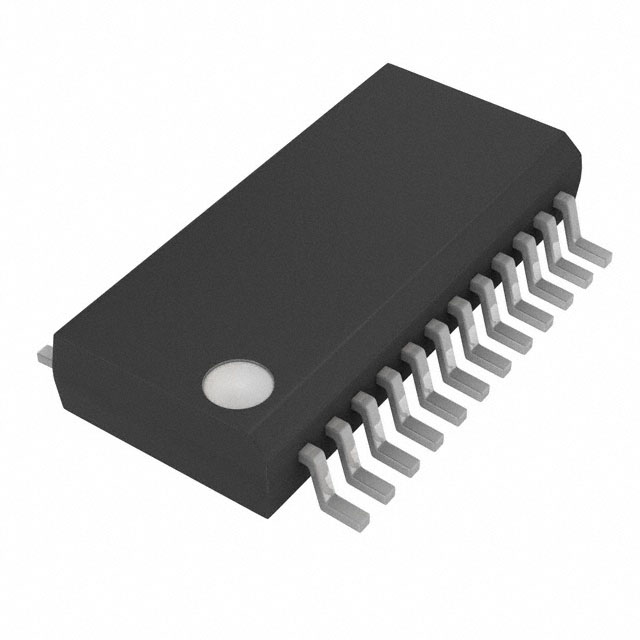
| Package Type | 24-SSOP (0.154", 3.90mm Width) |
| Mounting Type | Surface Mount |
| RoHS Status | ROHS3 Compliant |
| MSL Rating | 3 (168 Hours) |
Substitute Part Grouping Explanation
Substitution eligibility for the ADS7863ADBQ is determined by strict parametric equivalence across all electrical and mechanical specifications. The substitute part ADS7863IDBQ qualifies as a direct equivalent based on the following criteria:
Matching Parameters:
- 12-bit resolution and 2M samples per second sampling rate
- Identical input configuration: 4 or 6 channels with differential and pseudo-differential support
- Dual SAR architecture with 2 A/D converters
- SPI data interface and MUX-S/H-ADC configuration
- Matching supply voltage range: 2.7V to 5.5V for both analog and digital supplies
- Identical operating temperature range: -40°C to 125°C
- Same package specification: 24-SSOP with 0.154" (3.90mm) width
- Surface Mount mounting type
- Equivalent compliance certifications: ROHS3, REACH Unaffected, EAR99
The primary distinction between these parts lies in product lifecycle status, not functional capability.
Parameter Comparison
| Parameter | ADS7863ADBQ | ADS7863IDBQ |
|---|---|---|
| Manufacturer | Texas Instruments | Texas Instruments |
| Resolution (Bits) | 12 | 12 |
| Sampling Rate (Per Second) | 2M | 2M |
| Number of Inputs | 4, 6 | 4, 6 |
| Input Type | Differential, Pseudo-Differential | Differential, Pseudo-Differential |
| Data Interface | SPI | SPI |
| Architecture | SAR | SAR |
| Number of A/D Converters | 2 | 2 |
| Voltage Supply Range (Analog) | 2.7V ~ 5.5V | 2.7V ~ 5.5V |
| Voltage Supply Range (Digital) | 2.7V ~ 5.5V | 2.7V ~ 5.5V |
| Operating Temperature Range | -40°C ~ 125°C | -40°C ~ 125°C |
| Package / Case | 24-SSOP (0.154", 3.90mm Width) | 24-SSOP (0.154", 3.90mm Width) |
| Mounting Type | Surface Mount | Surface Mount |
| RoHS Status | ROHS3 Compliant | ROHS3 Compliant |
| MSL Rating | 3 (168 Hours) | 3 (168 Hours) |
| Product Status | Active | Not For New Designs |
Engineering Selection Recommendations
ADS7863ADBQ is the recommended selection for new design implementations. This part maintains Active product status from Texas Instruments, ensuring continued manufacturer support, availability, and compliance with current industry standards. The Active designation indicates this device is in full production and recommended for new applications.
ADS7863IDBQ serves as a functional equivalent for existing designs or applications where inventory availability of the primary part is constrained. While electrically and mechanically identical to the ADS7863ADBQ, its Not For New Designs status indicates it is in mature lifecycle phase. This part remains suitable for replacement, repair, or continuation of existing production runs where design changes are not feasible.
Both parts carry identical ROHS3 compliance and REACH Unaffected certifications, confirming environmental and regulatory equivalence. Selection between these parts should be based on design phase (new versus existing) and supply chain requirements rather than technical performance considerations.
Frequently Asked Questions (FAQ)
Q: Can ADS7863IDBQ be used as a direct replacement for ADS7863ADBQ in new designs?
A: From a functional and electrical standpoint, yes. Both parts are parametrically identical across all specified characteristics including resolution, sampling rate, input configuration, supply voltage, temperature range, and package type. However, the ADS7863IDBQ carries a Not For New Designs designation, meaning Texas Instruments does not recommend it for new applications. New designs should specify ADS7863ADBQ to ensure long-term manufacturer support and availability.
Q: Are there any differences in pin configuration or package dimensions between these parts?
A: No. Both the ADS7863ADBQ and ADS7863IDBQ use identical 24-SSOP packaging with 0.154" (3.90mm) width. Pin configuration, spacing, and all mechanical specifications are identical, enabling direct PCB-level substitution without layout modifications.
Q: What is the significance of the product status difference?
A: Product status reflects the device's position in its lifecycle. Active status (ADS7863ADBQ) indicates the part is in full production with ongoing manufacturer support. Not For New Designs status (ADS7863IDBQ) indicates the part is in mature phase and may have limited availability or support for new applications, though it remains suitable for existing designs or replacement scenarios.
Q: Do both parts meet the same compliance and certification requirements?
A: Yes. Both ADS7863ADBQ and ADS7863IDBQ are ROHS3 compliant and REACH Unaffected, with identical MSL ratings of 3 (168 Hours). They carry the same ECCN (EAR99) and HTSUS classifications, confirming equivalent regulatory and environmental compliance.
Q: Can these parts be used interchangeably in existing production?
A: Yes, from a technical perspective. Both parts are electrically and mechanically equivalent. However, design documentation and component specifications should be updated to reflect any substitution, and inventory management should account for the different product status designations when planning long-term supply strategies.
Alternative Parts

SJ6012L2TP
Littelfuse Inc.
6 Alternative Parts

JMK107BBJ476MA-RE
Taiyo Yuden
10 Alternative Parts

GMK107BBJ475MA-T
Taiyo Yuden
5 Alternative Parts
SJ6020N2ARP
Littelfuse Inc.
3 Alternative Parts
SJ6025R2ATP
Littelfuse Inc.
4 Alternative Parts

2474-05L
API Delevan Inc.
1 Alternative Parts

4590R-684K
API Delevan Inc.
1 Alternative Parts

CM6560R-334
API Delevan Inc.
1 Alternative Parts

CM6460-104
API Delevan Inc.
1 Alternative Parts

5526-12
API Delevan Inc.
1 Alternative Parts