


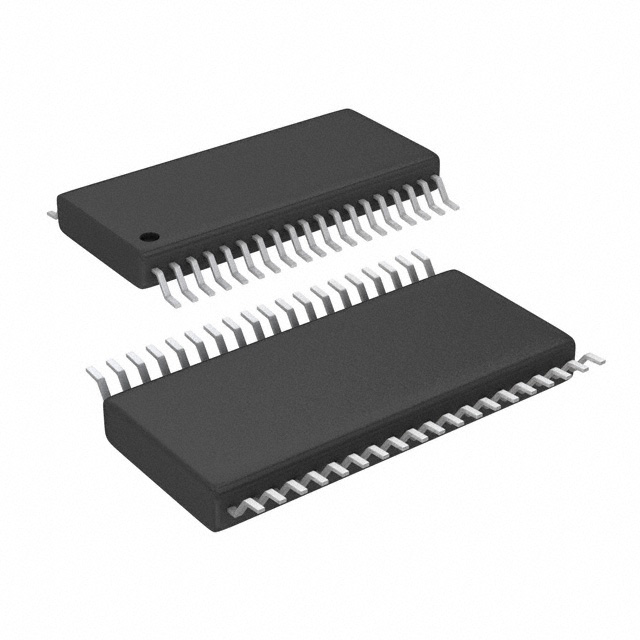
Request Quote
(Ships tomorrow)
ADS7825PB Equivalent & Substitute Parts
Part Overview
The ADS7825PB is a 16-bit Analog to Digital Converter manufactured by Texas Instruments, designed for data acquisition applications requiring 4 single-ended inputs with a 40 kHz sampling rate. The device operates with both SPI and parallel data interfaces and features a 1:1 Sample-and-Hold to ADC ratio with external or internal reference capability.
The ADS7825PB is classified as obsolete. Locating equivalent or substitute components is necessary for new designs, production continuity, and system upgrades where this legacy device is no longer readily available or supported by the manufacturer.
Substiute Parts
Key Parameters
| Parameter | Value |
|---|---|
| Resolution | 16 Bit |
| Number of Inputs | 4 |
| Input Type | Single Ended |
| Sampling Rate | 40 kHz |
| Architecture | SAR (Successive Approximation Register) |
| Data Interface | SPI, Parallel |
| Reference Type | External, Internal |
| Analog Supply Voltage | 5V |
| Digital Supply Voltage | 5V |
| Operating Temperature Range | -40°C to 85°C |
| Package Type | 28-DIP (Through Hole) |
| RoHS Status | ROHS3 Compliant |
Substitute Part Grouping Explanation
Substitution of the ADS7825PB is based on the following core electrical and mechanical parameters:
Primary Substitution Criteria:
- Resolution: 16-bit ADC capability
- Input Configuration: Minimum 4 inputs supporting single-ended conversion
- Architecture: SAR-based analog-to-digital conversion
- Reference Support: External and internal reference capability
- Supply Voltage Compatibility: 5V analog supply operation
- Data Interface: SPI protocol support for digital communication
- Compliance: ROHS3 and REACH compliance maintained
Secondary Considerations:
- Sampling rate must meet or exceed application requirements
- Operating temperature range must encompass the specified -40°C to 85°C minimum
- Package type may differ (surface mount acceptable for new designs)
The ADS8684IDBT qualifies as a direct substitute based on these criteria, with enhanced specifications in sampling rate, temperature range, and supply voltage flexibility.
Parameter Comparison
| Parameter | ADS7825PB | ADS8684IDBT | Compatibility Notes |
|---|---|---|---|
| Resolution | 16 Bit | 16 Bit | Matched |
| Number of Inputs | 4 | 4 | Matched |
| Input Type | Single Ended | Differential, Single Ended | Substitute supports both modes |
| Sampling Rate (Per Second) | 40 kHz | 500 kHz | Substitute exceeds requirement |
| Architecture | SAR | SAR | Matched |
| Data Interface | SPI, Parallel | SPI | SPI interface matched; parallel interface not available |
| Reference Type | External, Internal | External, Internal | Matched |
| Voltage - Supply, Analog | 5V | 5V | Matched |
| Voltage - Supply, Digital | 5V | 1.65V to 5.25V | Substitute offers wider range |
| Operating Temperature Range | -40°C to 85°C | -40°C to 125°C | Substitute exceeds requirement |
| Package Type | 28-DIP (Through Hole) | 38-TSSOP (Surface Mount) | Different package; requires PCB redesign |
| RoHS Status | ROHS3 Compliant | ROHS3 Compliant | Matched |
| Moisture Sensitivity Level | 3 (168 Hours) | 2 (1 Year) | Substitute has lower MSL |
Engineering Selection Recommendations
The ADS8684IDBT is the manufacturer-recommended substitute for the obsolete ADS7825PB. Both devices maintain ROHS3 compliance and REACH unaffected status, ensuring regulatory alignment.
Key Considerations for Selection:
The ADS8684IDBT provides enhanced performance specifications including 500 kHz sampling rate versus 40 kHz, extended operating temperature range to 125°C, and flexible digital supply voltage (1.65V to 5.25V). The substitute supports both differential and single-ended input modes, providing greater application flexibility than the single-ended only ADS7825PB.
The primary design constraint is package transition from 28-DIP through-hole to 38-TSSOP surface mount. This requires PCB layout modification and updated assembly processes. The ADS8684IDBT's lower moisture sensitivity level (MSL 2) provides improved handling and storage characteristics compared to the original device (MSL 3).
For applications requiring parallel interface operation, the ADS8684IDBT does not provide this functionality. In such cases, alternative substitutes or legacy component sourcing may be necessary.
Frequently Asked Questions (FAQ)
Q: Can the ADS8684IDBT directly replace the ADS7825PB without circuit modifications?
A: The ADS8684IDBT is electrically compatible for core ADC functions (16-bit resolution, 4 inputs, SAR architecture, SPI interface, 5V analog supply). However, the package change from 28-DIP to 38-TSSOP requires PCB redesign. Applications using the parallel interface must implement alternative solutions, as the substitute supports SPI only.
Q: What is the impact of the higher sampling rate (500 kHz vs. 40 kHz)?
A: The increased sampling rate is a performance enhancement that does not create compatibility issues. Applications designed for 40 kHz operation will function correctly with the ADS8684IDBT. The higher sampling rate enables support for faster signal acquisition if future requirements change.
Q: Are there supply voltage compatibility concerns?
A: The ADS7825PB requires fixed 5V digital supply. The ADS8684IDBT accepts 1.65V to 5.25V digital supply, providing greater flexibility. Both devices require 5V analog supply. Existing 5V supply designs are fully compatible with the substitute.
Q: How does the package change affect procurement and assembly?
A: The transition from through-hole (28-DIP) to surface mount (38-TSSOP) requires updated PCB layout, assembly equipment, and handling procedures. The ADS8684IDBT's lower moisture sensitivity level (MSL 2 versus MSL 3) improves storage and handling margins, reducing risk during manufacturing.
Q: Is the ADS8684IDBT suitable for extended temperature applications?
A: Yes. The ADS8684IDBT operates to 125°C, exceeding the ADS7825PB's 85°C maximum. Applications requiring operation beyond 85°C benefit from this extended range.
Q: What happens if parallel interface operation is required?
A: The ADS8684IDBT does not support parallel interface operation. Applications dependent on parallel data output must evaluate alternative 16-bit ADC devices or implement SPI-to-parallel conversion logic.
Alternative Parts

SJ6012L2TP
Littelfuse Inc.
6 Alternative Parts

JMK107BBJ476MA-RE
Taiyo Yuden
10 Alternative Parts

GMK107BBJ475MA-T
Taiyo Yuden
5 Alternative Parts
SJ6020N2ARP
Littelfuse Inc.
3 Alternative Parts
SJ6025R2ATP
Littelfuse Inc.
4 Alternative Parts

2474-05L
API Delevan Inc.
1 Alternative Parts

4590R-684K
API Delevan Inc.
1 Alternative Parts

CM6560R-334
API Delevan Inc.
1 Alternative Parts

CM6460-104
API Delevan Inc.
1 Alternative Parts

5526-12
API Delevan Inc.
1 Alternative Parts