


Request Quote
(Ships tomorrow)
AD7621ASTZRL Equivalent & Substitute Parts
Part Overview
The AD7621ASTZRL is a 16-bit Analog to Digital Converter (ADC) manufactured by Analog Devices Inc., part of the PulSAR® series. This SAR (Successive Approximation Register) architecture device features a single differential input with a 3 MHz sampling rate and operates from 2.37V to 2.63V supply voltage. The device is housed in a 48-LQFP package and is currently in active production status. Finding equivalent or substitute parts may be necessary due to inventory constraints, packaging requirements, or application-specific performance needs.
Substiute Parts
Key Parameters
| Parameter | Value |
|---|---|
| Manufacturer | Analog Devices Inc. |
| Category | Data Acquisition |
| Number of Bits | 16 |
| Sampling Rate (Per Second) | 3M |
| Number of Inputs | 1 |
| Input Type | Differential |
| Architecture | SAR |
| Reference Type | External, Internal |
| Voltage - Supply, Analog | 2.37V ~ 2.63V |
| Voltage - Supply, Digital | 2.37V ~ 2.63V |
| Operating Temperature | -40°C ~ 85°C |
| Package / Case | 48-LQFP (7x7) |
| Mounting Type | Surface Mount |
| RoHS Status | ROHS3 Compliant |
| Product Status | Active |
Substitute Part Grouping Explanation
Substitute parts for the AD7621ASTZRL are identified based on the following core electrical and mechanical parameters:
- Resolution: 16-bit ADC architecture maintained across all substitutes
- Converter Type: SAR (Successive Approximation Register) architecture
- Number of Inputs: Single input channel
- Manufacturer: Analog Devices Inc. (PulSAR® series)
- Supply Voltage Compatibility: Operating within similar low-voltage ranges (2.37V–2.63V or 2.375V–2.625V)
- Reference Configuration: External and/or Internal reference support
- Operating Temperature Range: -40°C to 85°C
- Compliance: ROHS3 compliant, active product status
- Mounting: Surface mount technology
The two identified substitutes—AD7626BCPZ and AD7985BCPZ—share the core 16-bit SAR architecture and single-input configuration. However, they differ in sampling rate, input type, package form factor, and data interface options, which may affect suitability depending on application requirements.
Parameter Comparison
| Parameter | AD7621ASTZRL | AD7626BCPZ | AD7985BCPZ |
|---|---|---|---|
| Manufacturer | Analog Devices Inc. | Analog Devices Inc. | Analog Devices Inc. |
| Series | PulSAR® | PulSAR® | PulSAR® |
| Number of Bits | 16 | 16 | 16 |
| Sampling Rate (Per Second) | 3M | 10M | 2.5M |
| Number of Inputs | 1 | 1 | 1 |
| Input Type | Differential | Differential | Pseudo-Differential |
| Data Interface | SPI, Parallel, DSP | LVDS - Serial | SPI, DSP |
| Configuration | S/H-ADC | ADC | S/H-ADC |
| Architecture | SAR | SAR | SAR |
| Reference Type | External, Internal | External, Internal | External, Internal |
| Voltage - Supply, Analog | 2.37V ~ 2.63V | 5V | 2.375V ~ 2.625V |
| Voltage - Supply, Digital | 2.37V ~ 2.63V | 2.37V ~ 2.63V | 2.375V ~ 2.625V |
| Operating Temperature | -40°C ~ 85°C | -40°C ~ 85°C | -40°C ~ 85°C |
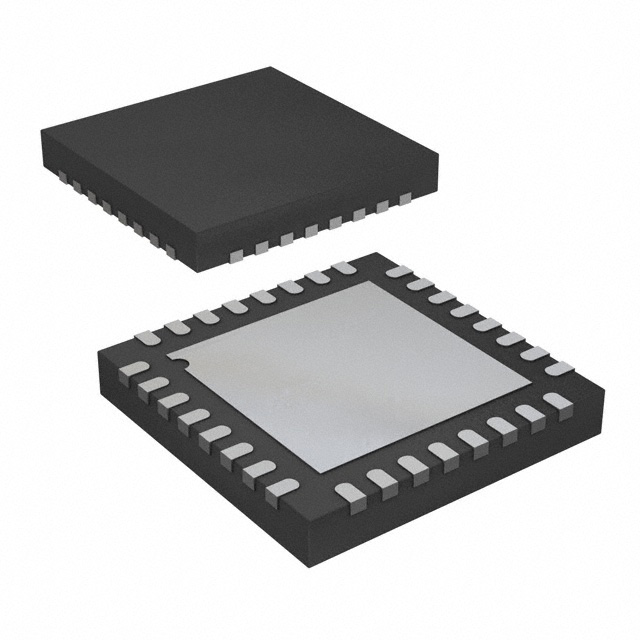
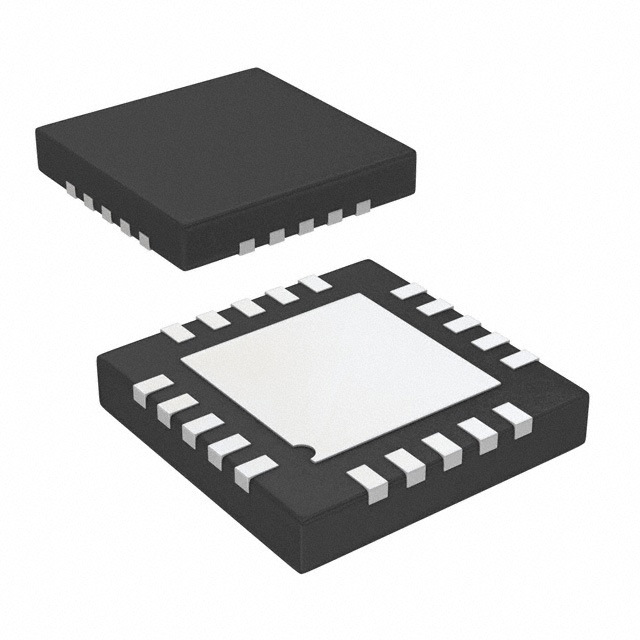
| Package / Case | 48-LQFP (7x7) | 32-WFQFN Exposed Pad, CSP (5x5) | 20-WFQFN Exposed Pad, CSP (4x4) |
| Mounting Type | Surface Mount | Surface Mount | Surface Mount |
| RoHS Status | ROHS3 Compliant | ROHS3 Compliant | ROHS3 Compliant |
| Product Status | Active | Active | Active |
| Moisture Sensitivity Level (MSL) | 3 (168 Hours) | 3 (168 Hours) | 3 (168 Hours) |
Engineering Selection Recommendations
AD7621ASTZRL (Original Part)
- Recommended for applications requiring parallel and DSP data interface options with a 48-pin package footprint
- Maintains full differential input configuration with integrated sample-and-hold architecture
- Suitable for designs with established PCB layouts and pin compatibility requirements
AD7626BCPZ
- Applicable when higher sampling rates (10 MHz) are required
- Requires redesign consideration due to different package form factor (32-LFCSP vs. 48-LQFP) and pin configuration
- Note: Analog supply voltage requirement is 5V, differing from the original part's 2.37V–2.63V specification
- Data interface limited to LVDS serial communication; parallel and DSP interfaces are not available
- Smaller package footprint (5x5 mm) may be advantageous for space-constrained applications
AD7985BCPZ
- Applicable when lower sampling rates (2.5 MHz) are acceptable
- Requires PCB redesign due to different package form factor (20-LFCSP vs. 48-LQFP)
- Input type is pseudo-differential rather than fully differential
- Maintains SPI and DSP interface compatibility with the original part
- Smallest package footprint (4x4 mm) for minimal board space requirements
- Supply voltage specification (2.375V–2.625V) is closely aligned with the original part
All three parts maintain ROHS3 compliance, active product status, and identical operating temperature ranges, ensuring regulatory and lifecycle consistency.
Frequently Asked Questions (FAQ)
Q: Can AD7626BCPZ directly replace AD7621ASTZRL in existing designs? A: No. While both are 16-bit SAR ADCs from Analog Devices, the AD7626BCPZ has a different package (32-LFCSP vs. 48-LQFP), different pin configuration, and different data interface (LVDS serial only vs. SPI/Parallel/DSP). Additionally, the analog supply voltage requirement differs (5V vs. 2.37V–2.63V). PCB redesign is required.
Q: Can AD7985BCPZ directly replace AD7621ASTZRL in existing designs? A: No. The AD7985BCPZ uses a different package (20-LFCSP vs. 48-LQFP) and has a different pin configuration. The input type is pseudo-differential rather than fully differential. PCB redesign is required. However, it maintains SPI and DSP interface compatibility and similar supply voltage specifications.
Q: What is the key difference in sampling rate between these parts? A: The AD7621ASTZRL operates at 3 MHz, the AD7985BCPZ at 2.5 MHz, and the AD7626BCPZ at 10 MHz. Selection depends on application bandwidth requirements.
Q: Are all three parts RoHS compliant? A: Yes. All three parts are ROHS3 compliant with identical moisture sensitivity levels (MSL 3, 168 hours).
Q: What is the primary advantage of AD7985BCPZ over AD7621ASTZRL? A: The AD7985BCPZ offers a significantly smaller package footprint (4x4 mm vs. 7x7 mm), which is beneficial for space-constrained applications. It maintains compatible data interfaces (SPI, DSP) and similar supply voltage specifications.
Q: What is the primary advantage of AD7626BCPZ over AD7621ASTZRL? A: The AD7626BCPZ provides a higher sampling rate (10 MHz vs. 3 MHz), enabling applications requiring greater bandwidth. It also offers a smaller package footprint (5x5 mm vs. 7x7 mm).
Q: Why does AD7626BCPZ require 5V analog supply while the others require 2.37V–2.63V? A: This is a fundamental design difference in the AD7626BCPZ architecture. Applications using this substitute must provide separate 5V analog supply conditioning, which may impact power distribution design.
Q: Are there any interface compatibility concerns when substituting these parts? A: Yes. The AD7621ASTZRL supports SPI, Parallel, and DSP interfaces. The AD7626BCPZ supports only LVDS serial. The AD7985BCPZ supports SPI and DSP. Interface compatibility must be verified against application requirements before substitution.
Alternative Parts

SJ6012L2TP
Littelfuse Inc.
6 Alternative Parts

JMK107BBJ476MA-RE
Taiyo Yuden
10 Alternative Parts

GMK107BBJ475MA-T
Taiyo Yuden
5 Alternative Parts
SJ6020N2ARP
Littelfuse Inc.
3 Alternative Parts
SJ6025R2ATP
Littelfuse Inc.
4 Alternative Parts

2474-05L
API Delevan Inc.
1 Alternative Parts

4590R-684K
API Delevan Inc.
1 Alternative Parts

CM6560R-334
API Delevan Inc.
1 Alternative Parts

CM6460-104
API Delevan Inc.
1 Alternative Parts

5526-12
API Delevan Inc.
1 Alternative Parts