


Request Quote
(Ships tomorrow)
AD744JR Equivalent & Substitute Parts
Part Overview
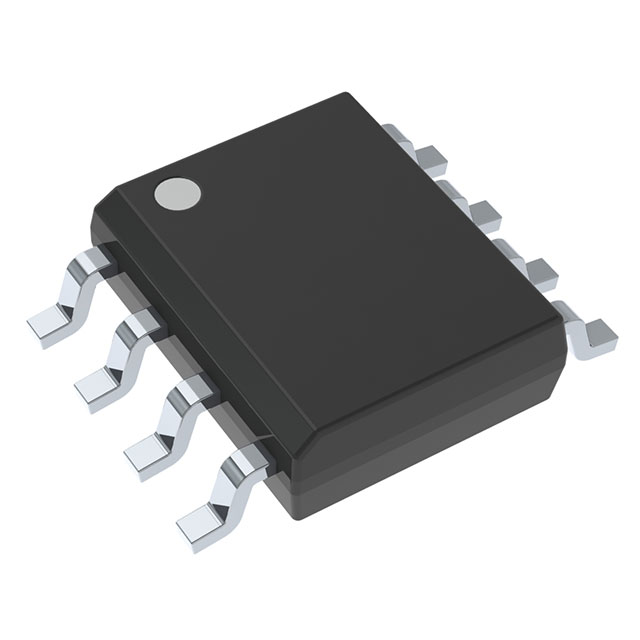
The AD744JR is a J-FET input operational amplifier manufactured by Analog Devices Inc., housed in an 8-SOIC surface mount package. This device is classified as obsolete, indicating it is no longer in active production. The AD744JR was designed for applications requiring low input bias current and high slew rate performance in a compact form factor. Due to its obsolete status, identifying equivalent and substitute components is necessary for design continuity, system maintenance, and procurement of replacement units for existing applications.
Substiute Parts
Key Parameters
| Parameter | Value | Unit |
|---|---|---|
| Amplifier Type | J-FET | — |
| Number of Circuits | 1 | — |
| Slew Rate | 75 | V/µs |
| -3dB Bandwidth | 13 | MHz |
| Current - Input Bias | 30 | pA |
| Voltage - Input Offset | 300 | µV |
| Current - Supply | 3.5 | mA |
| Current - Output / Channel | 25 | mA |
| Voltage - Supply Span (Min) | 9 | V |
| Voltage - Supply Span (Max) | 36 | V |
| Operating Temperature | 0 to 70 | °C |
| Package / Case | 8-SOIC (0.154", 3.90mm Width) | — |
| Mounting Type | Surface Mount | — |
Substitute Part Grouping Explanation
Substitution of the AD744JR is determined by electrical and mechanical compatibility across the following critical parameters:
Electrical Compatibility Criteria:
- Amplifier topology (J-FET input architecture)
- Single circuit configuration
- Slew rate performance (75 V/µs minimum)
- Bandwidth characteristics (-3dB Bandwidth 13 MHz minimum)
- Input bias current specifications (30 pA maximum)
- Input offset voltage (300 µV maximum)
- Supply current requirements (3.5 mA nominal)
- Output current capability (25 mA per channel minimum)
- Supply voltage range (9 V to 36 V)
- Operating temperature range (0°C to 70°C minimum)
Mechanical Compatibility Criteria:
- 8-SOIC surface mount package
- 0.154" (3.90mm) package width
- Pin-for-pin compatibility
Substitute parts are classified into two categories:
Direct Equivalent: Parts that maintain identical electrical specifications and product status transition from obsolete to active production.
Similar Substitute: Parts that satisfy the core electrical requirements within acceptable tolerance but may differ in specific performance metrics, amplifier classification, or operating temperature range.
Parameter Comparison
| Parameter | AD744JR (Main) | AD744JRZ (Direct Equivalent) | OPA602AU (Similar Substitute) |
|---|---|---|---|
| Manufacturer | Analog Devices Inc. | Analog Devices Inc. | Texas Instruments |
| Product Status | Obsolete | Active | Active |
| Amplifier Type | J-FET | J-FET | General Purpose |
| Number of Circuits | 1 | 1 | 1 |
| Slew Rate (V/µs) | 75 | 75 | 35 |
| Bandwidth (MHz) | 13 | 13 | 6.5 |
| Current - Input Bias (pA) | 30 | 30 | 2 |
| Voltage - Input Offset (µV) | 300 | 300 | 1000 |
| Current - Supply (mA) | 3.5 | 3.5 | 3 |
| Current - Output / Channel (mA) | 25 | 25 | 20 |
| Voltage - Supply Span Min (V) | 9 | 9 | 10 |
| Voltage - Supply Span Max (V) | 36 | 36 | 36 |
| Operating Temperature (°C) | 0 to 70 | 0 to 70 | -25 to 85 |
| Package / Case | 8-SOIC | 8-SOIC | 8-SOIC |
| Mounting Type | Surface Mount | Surface Mount | Surface Mount |
| RoHS Status | Not specified | ROHS3 Compliant | ROHS3 Compliant |
| Moisture Sensitivity Level | 1 (Unlimited) | 1 (Unlimited) | 3 (168 Hours) |
Engineering Selection Recommendations
AD744JRZ - Direct Equivalent Substitution
The AD744JRZ is the primary substitute for the obsolete AD744JR. Both devices are manufactured by Analog Devices Inc. and share identical electrical specifications across all measured parameters. The AD744JRZ maintains the same J-FET amplifier topology, slew rate (75 V/µs), bandwidth (13 MHz), input bias current (30 pA), and supply voltage range (9 V to 36 V). The critical distinction is product status: AD744JRZ is in active production, ensuring long-term availability and supply chain continuity. Both devices feature identical moisture sensitivity levels (MSL 1, Unlimited) and are housed in the same 8-SOIC surface mount package. The AD744JRZ carries ROHS3 compliance certification, meeting current environmental regulatory requirements. Pin-for-pin compatibility is confirmed, allowing direct replacement without circuit modification.
OPA602AU - Similar Substitute
The OPA602AU, manufactured by Texas Instruments, functions as a similar substitute when direct equivalents are unavailable or when application requirements permit performance trade-offs. This device shares the same 8-SOIC surface mount package and maintains compatibility with the 9 V to 36 V supply voltage range (with minimum supply increased to 10 V). The OPA602AU is classified as a general-purpose amplifier rather than a J-FET input device, resulting in measurable differences in key performance metrics. Slew rate is reduced to 35 V/µs (compared to 75 V/µs), and bandwidth is 6.5 MHz (compared to 13 MHz). Input bias current is superior at 2 pA (compared to 30 pA), while input offset voltage is higher at 1 mV (compared to 300 µV). Output current capability is 20 mA per channel (compared to 25 mA). The OPA602AU supports an extended operating temperature range (-25°C to 85°C) and carries ROHS3 compliance. Moisture sensitivity level is MSL 3 (168 Hours), requiring controlled storage conditions. The OPA602AU is suitable for applications where reduced slew rate and bandwidth are acceptable, and where the superior input bias current characteristics provide system-level advantages.
Frequently Asked Questions (FAQ)
Q: Can the AD744JRZ be used as a direct replacement for the AD744JR without circuit modifications?
A: Yes. The AD744JRZ is pin-for-pin compatible with the AD744JR and maintains identical electrical specifications. No circuit modifications are required. The primary difference is product status: AD744JRZ is in active production, while AD744JR is obsolete.
Q: What are the key differences between the AD744JRZ and OPA602AU?
A: The AD744JRZ and OPA602AU differ in amplifier topology, slew rate, bandwidth, and input offset voltage. The AD744JRZ is a J-FET input amplifier with 75 V/µs slew rate and 13 MHz bandwidth. The OPA602AU is a general-purpose amplifier with 35 V/µs slew rate and 6.5 MHz bandwidth. The OPA602AU offers superior input bias current (2 pA vs. 30 pA) but higher input offset voltage (1 mV vs. 300 µV). Selection depends on application-specific performance requirements.
Q: Is the OPA602AU suitable for all applications currently using the AD744JR?
A: The OPA602AU is suitable for applications where reduced slew rate (35 V/µs) and bandwidth (6.5 MHz) are acceptable. Applications requiring the full 75 V/µs slew rate or 13 MHz bandwidth should use the AD744JRZ. The OPA602AU's superior input bias current may provide advantages in high-impedance input circuits.
Q: What is the significance of the moisture sensitivity level (MSL) difference between these devices?
A: The AD744JR and AD744JRZ both have MSL 1 (Unlimited), indicating no moisture sensitivity restrictions during storage and handling. The OPA602AU has MSL 3 (168 Hours), requiring controlled storage conditions and limiting the time the device can be exposed to ambient humidity before soldering. MSL 3 devices require more stringent handling procedures and storage in dry-pack conditions.
Q: Are all three devices available in the same 8-SOIC package?
A: Yes. The AD744JR, AD744JRZ, and OPA602AU are all housed in 8-SOIC surface mount packages with 0.154" (3.90mm) width. Package dimensions are identical, ensuring mechanical compatibility on printed circuit boards.
Q: What is the supply voltage compatibility across these devices?
A: The AD744JR and AD744JRZ support 9 V to 36 V supply voltage range. The OPA602AU supports 10 V to 36 V, requiring a minimum 1 V higher supply voltage. Circuits designed for 9 V operation cannot use the OPA602AU without modification.
Q: Which substitute should be selected for new designs?
A: For new designs, the AD744JRZ is the recommended choice, as it maintains the full performance specifications of the original AD744JR while offering active production status and ROHS3 compliance. The OPA602AU should be considered only when specific application requirements align with its performance characteristics and when supply voltage constraints permit 10 V minimum operation.
Alternative Parts

SJ6012L2TP
Littelfuse Inc.
6 Alternative Parts

JMK107BBJ476MA-RE
Taiyo Yuden
10 Alternative Parts

GMK107BBJ475MA-T
Taiyo Yuden
5 Alternative Parts
SJ6020N2ARP
Littelfuse Inc.
3 Alternative Parts
SJ6025R2ATP
Littelfuse Inc.
4 Alternative Parts

2474-05L
API Delevan Inc.
1 Alternative Parts

4590R-684K
API Delevan Inc.
1 Alternative Parts

CM6560R-334
API Delevan Inc.
1 Alternative Parts

CM6460-104
API Delevan Inc.
1 Alternative Parts

5526-12
API Delevan Inc.
1 Alternative Parts