


Request Quote
(Ships tomorrow)
AD7397ARZ Equivalent & Substitute Parts
Part Overview
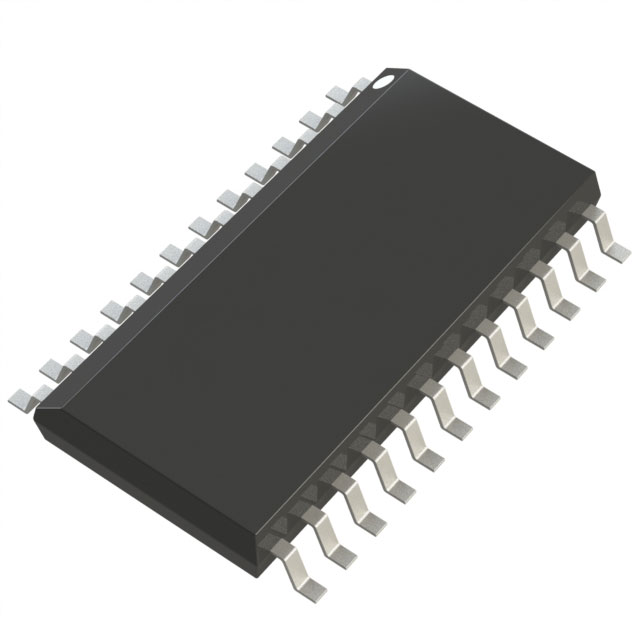
The AD7397ARZ is a 10-bit digital-to-analog converter (DAC) manufactured by Analog Devices Inc., featuring dual voltage output channels in a 24-SOIC surface mount package. This component is designed for data acquisition applications requiring parallel data interface and external voltage reference configuration. The part maintains active product status with full RoHS3 compliance and REACH unaffected designation. Substitute parts are identified when equivalent functional performance can be achieved within the allowed electrical and mechanical parameters of this product category, particularly when package constraints or supply availability necessitate alternative solutions.
Substiute Parts
Key Parameters
| Parameter | Value |
|---|---|
| Manufacturer Part Number | AD7397ARZ |
| Manufacturer | Analog Devices Inc. |
| Category | Data Acquisition |
| Number of Bits | 10 |
| Number of D/A Converters | 2 |
| Output Type | Voltage - Buffered |
| Data Interface | Parallel |
| Reference Type | External |
| Voltage - Supply, Analog | 2.7V ~ 5.5V |
| Voltage - Supply, Digital | 2.7V ~ 5.5V |
| Package / Case | 24-SOIC (0.295", 7.50mm Width) |
| Mounting Type | Surface Mount |
| Operating Temperature | -40°C ~ 125°C |
| RoHS Status | ROHS3 Compliant |
| Product Status | Active |
Substitute Part Grouping Explanation
Substitution of the AD7397ARZ with the AD5313RBRUZ is permissible based on the following alignment of critical electrical parameters:
- Resolution Match: Both devices provide 10-bit digital-to-analog conversion
- Channel Configuration: Both feature dual D/A converters (2 channels)
- Output Configuration: Both deliver buffered voltage output
- Supply Voltage Compatibility: Both operate within overlapping supply ranges (2.7V ~ 5.5V for AD7397ARZ; 2.5V ~ 5.5V for AD5313RBRUZ)
- Compliance Alignment: Both maintain RoHS3 compliance and REACH unaffected status
- Manufacturer Consistency: Both manufactured by Analog Devices Inc.
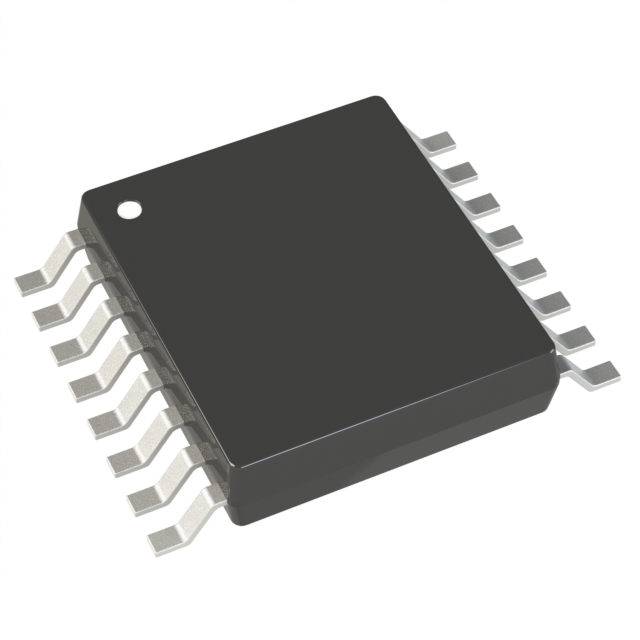
The primary distinction lies in package form factor (24-SOIC versus 16-TSSOP), data interface capability (parallel versus SPI/DSP), and reference configuration flexibility (external only versus external/internal options). These differences require circuit-level evaluation for compatibility determination.
Parameter Comparison
| Parameter | AD7397ARZ | AD5313RBRUZ |
|---|---|---|
| Manufacturer Part Number | AD7397ARZ | AD5313RBRUZ |
| Number of Bits | 10 | 10 |
| Number of D/A Converters | 2 | 2 |
| Output Type | Voltage - Buffered | Voltage - Buffered |
| Voltage - Supply, Analog | 2.7V ~ 5.5V | 2.5V ~ 5.5V |
| Voltage - Supply, Digital | 2.7V ~ 5.5V | 2.5V ~ 5.5V |
| Package / Case | 24-SOIC | 16-TSSOP |
| Mounting Type | Surface Mount | Surface Mount |
| Operating Temperature | -40°C ~ 125°C | -40°C ~ 105°C |
| RoHS Status | ROHS3 Compliant | ROHS3 Compliant |
| Product Status | Active | Active |
Engineering Selection Recommendations
Selection between AD7397ARZ and AD5313RBRUZ must account for the following factors derived from provided specifications:
AD7397ARZ is the primary selection when parallel data interface architecture is required by the application circuit design. The 24-SOIC package accommodates designs with established PCB layouts for this form factor. The extended operating temperature range to 125°C supports applications in elevated thermal environments.
AD5313RBRUZ serves as an alternative when SPI or DSP serial interface compatibility is acceptable or preferred. The 16-TSSOP package provides reduced board footprint and lower moisture sensitivity (MSL 1 versus MSL 3). The internal reference option eliminates external reference component requirements in certain configurations. The reduced operating temperature maximum (105°C) must be verified against application thermal specifications.
Both parts maintain identical RoHS3 compliance and REACH unaffected status, ensuring regulatory alignment across substitution scenarios.
Frequently Asked Questions (FAQ)
Q: Can AD5313RBRUZ directly replace AD7397ARZ in existing designs?
A: Direct replacement requires circuit-level compatibility assessment. The primary constraints are data interface type (parallel versus SPI/DSP) and package footprint (24-SOIC versus 16-TSSOP). PCB layout modifications are necessary for package conversion.
Q: What are the key electrical differences between these parts?
A: Both devices provide 10-bit dual-channel buffered voltage output. The AD5313RBRUZ offers faster settling time (7µs versus 70µs), superior INL/DNL specifications, and flexible reference configuration (internal or external). The AD7397ARZ requires external reference and operates at parallel data rates.
Q: Are there supply voltage compatibility concerns?
A: The AD7397ARZ operates from 2.7V minimum, while the AD5313RBRUZ operates from 2.5V minimum. Both support 5.5V maximum. Applications operating below 2.7V require the AD5313RBRUZ. Applications above 105°C require the AD7397ARZ.
Q: How does package selection affect board design?
A: The 24-SOIC package (AD7397ARZ) is 7.50mm wide, while the 16-TSSOP package (AD5313RBRUZ) is 4.40mm wide. The TSSOP variant reduces board area but requires PCB layout redesign. Moisture sensitivity differs (MSL 3 versus MSL 1), affecting storage and reflow process requirements.
Q: Are both parts suitable for production use?
A: Both parts maintain active product status with full RoHS3 compliance and REACH unaffected designation, confirming suitability for current production applications.
Alternative Parts

SJ6012L2TP
Littelfuse Inc.
6 Alternative Parts

JMK107BBJ476MA-RE
Taiyo Yuden
10 Alternative Parts

GMK107BBJ475MA-T
Taiyo Yuden
5 Alternative Parts
SJ6020N2ARP
Littelfuse Inc.
3 Alternative Parts
SJ6025R2ATP
Littelfuse Inc.
4 Alternative Parts

2474-05L
API Delevan Inc.
1 Alternative Parts

4590R-684K
API Delevan Inc.
1 Alternative Parts

CM6560R-334
API Delevan Inc.
1 Alternative Parts

CM6460-104
API Delevan Inc.
1 Alternative Parts

5526-12
API Delevan Inc.
1 Alternative Parts