


Request Quote
(Ships tomorrow)
93C86CT-I/MC EEPROM Memory IC Equivalent & Substitute Parts
Part Overview
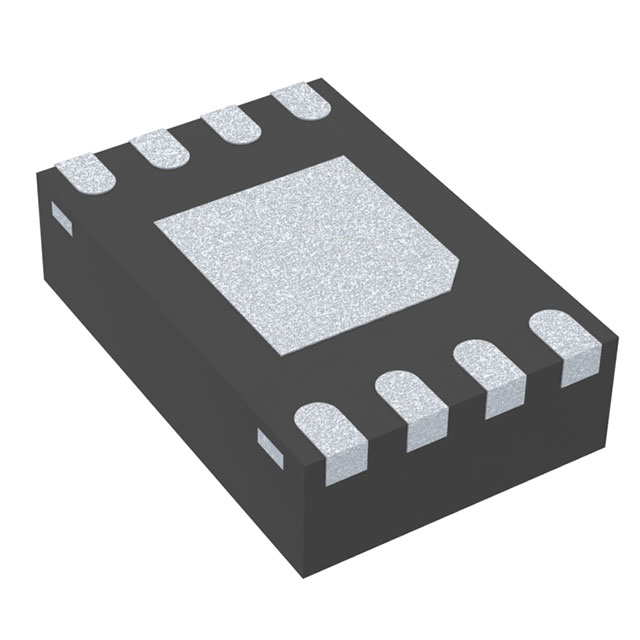
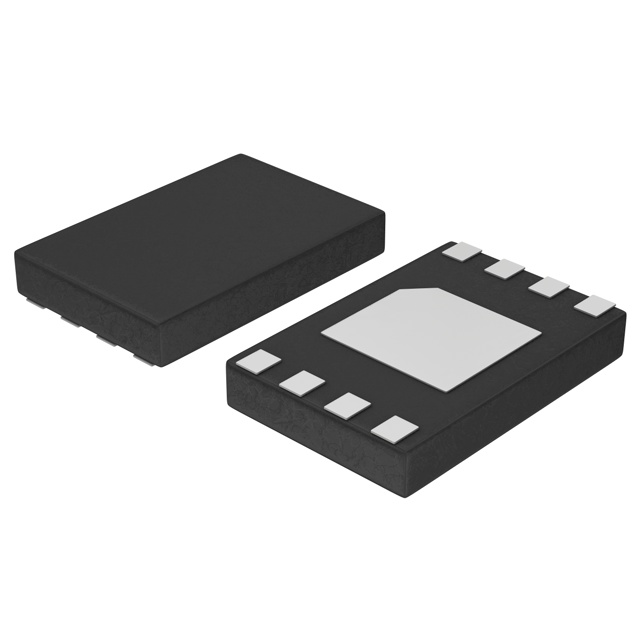
The 93C86CT-I/MC is a 16Kbit EEPROM memory integrated circuit manufactured by Microchip Technology, designed for non-volatile data storage applications requiring Microwire serial interface communication. This device operates at 3 MHz clock frequency with a 2ms write cycle time and is housed in an 8-DFN (2x3) surface mount package. The part is currently in active production status with verified programmability through DiGi-Electronics. Substitute parts are identified when equivalent memory capacity, interface protocol, and electrical specifications align within acceptable operational parameters, enabling design flexibility and supply chain alternatives.
Substiute Parts
Key Parameters
| Parameter | Value |
|---|---|
| Memory Size | 16Kbit |
| Memory Organization | 2K x 8, 1K x 16 |
| Memory Interface | Microwire |
| Clock Frequency | 3 MHz |
| Voltage Supply Range | 4.5V ~ 5.5V |
| Write Cycle Time | 2ms |
| Operating Temperature | -40°C ~ 85°C |
| Package Type | 8-VFDFN Exposed Pad |
| Mounting Type | Surface Mount |
| RoHS Status | ROHS3 Compliant |
Substitute Part Grouping Explanation
Substitution eligibility for the 93C86CT-I/MC is determined by the following critical parameters:
Memory Capacity & Organization: Substitute parts must provide 16Kbit total capacity with 2K x 8 or 1K x 16 organization to maintain functional equivalence in data storage and addressing schemes.
Serial Interface Protocol: The Microwire interface is mandatory for direct pin-level compatibility and software protocol compatibility without firmware modification.
Voltage Supply Range: The main part operates within 4.5V ~ 5.5V. Substitute parts with extended voltage ranges (such as 1.8V ~ 5.5V) are acceptable as they encompass the primary operating window and provide additional design flexibility for lower-voltage applications.
Clock Frequency: The main part operates at 3 MHz. Substitute parts with equal or higher clock frequencies (4 MHz or greater) maintain backward compatibility and do not introduce timing constraints.
Operating Temperature Range: The -40°C ~ 85°C specification must be met or exceeded by substitute parts to ensure reliability across the intended application environment.
Package Compatibility: Surface mount packages with 8-pin DFN or UDFN configurations with exposed pads in 2x3 footprints are mechanically and electrically compatible.
Compliance Standards: RoHS3 compliance and REACH unaffected status are required to meet regulatory requirements.
Parameter Comparison
| Parameter | 93C86CT-I/MC (Microchip) | CAT93C86BHU4I-GT3 (onsemi) |
|---|---|---|
| Manufacturer | Microchip Technology | onsemi |
| Memory Size | 16Kbit | 16Kbit |
| Memory Organization | 2K x 8, 1K x 16 | 2K x 8, 1K x 16 |
| Memory Interface | Microwire | Microwire |
| Clock Frequency | 3 MHz | 4 MHz |
| Voltage Supply Range | 4.5V ~ 5.5V | 1.8V ~ 5.5V |
| Write Cycle Time | 2ms | Not specified |
| Operating Temperature | -40°C ~ 85°C | -40°C ~ 85°C |
| Package Type | 8-VFDFN Exposed Pad | 8-UFDFN Exposed Pad |
| RoHS Status | ROHS3 Compliant | ROHS3 Compliant |
| REACH Status | REACH Unaffected | REACH Unaffected |
| Product Status | Active | Active |
Engineering Selection Recommendations
Primary Part (93C86CT-I/MC): Select this Microchip Technology device when verified programmability through DiGi-Electronics is required and supply is available. This part carries confirmed programmability status and is suitable for production environments where vendor verification is a qualification requirement.
Substitute Part (CAT93C86BHU4I-GT3): The onsemi CAT93C86BHU4I-GT3 is functionally equivalent and suitable for applications where the extended voltage supply range (1.8V ~ 5.5V) provides design advantages for multi-voltage systems. The higher clock frequency (4 MHz) ensures backward compatibility with the 3 MHz primary part. Both parts maintain identical memory capacity, organization, and Microwire interface protocol. Both achieve ROHS3 compliance and REACH unaffected status. Note that programmability verification through DiGi-Electronics is not available for the onsemi substitute.
Selection between these parts should be based on supply availability, cost considerations, and whether the extended voltage range of the onsemi device provides system-level benefits.
Frequently Asked Questions (FAQ)
Q: Can the CAT93C86BHU4I-GT3 directly replace the 93C86CT-I/MC without PCB modifications?
A: The CAT93C86BHU4I-GT3 uses an 8-UFDFN package while the primary part uses 8-VFDFN. Both are 8-pin DFN packages with 2x3 footprints and exposed pads. Verify PCB footprint compatibility with your design documentation before substitution. Pin assignments for Microwire interface devices are standardized, but physical package dimensions should be confirmed.
Q: What is the impact of the 4 MHz clock frequency on the onsemi substitute compared to the 3 MHz primary part?
A: The higher clock frequency of the onsemi device (4 MHz) is backward compatible with systems designed for 3 MHz operation. The substitute will not introduce timing violations in applications using the primary part's 3 MHz specification. No firmware or software modifications are required.
Q: Does the extended voltage range (1.8V ~ 5.5V) of the onsemi part affect compatibility?
A: The extended voltage range is a superset of the primary part's 4.5V ~ 5.5V specification. The onsemi device operates correctly within the primary part's voltage window and provides additional flexibility for applications requiring lower supply voltages. No compatibility issues arise from this extended range.
Q: Are there any differences in write cycle time between these parts?
A: The primary part specifies a 2ms write cycle time. The onsemi substitute does not provide a published write cycle time specification in the available data. For applications with strict write cycle time requirements, contact the manufacturer for detailed timing specifications before final design approval.
Q: What are the compliance and regulatory considerations for substitution?
A: Both parts are ROHS3 compliant and REACH unaffected, meeting current regulatory requirements for electronic components in most markets. No additional compliance actions are required when substituting between these parts.
Q: Is programmability verification important for my application?
A: The primary Microchip part carries DiGi-Electronics verified programmability status. The onsemi substitute does not have this verification. If your manufacturing process requires pre-qualified programmable devices through specific vendors, the primary part is the appropriate choice. For general applications, both parts support standard Microwire programming protocols.
Alternative Parts

SJ6012L2TP
Littelfuse Inc.
6 Alternative Parts

JMK107BBJ476MA-RE
Taiyo Yuden
10 Alternative Parts

GMK107BBJ475MA-T
Taiyo Yuden
5 Alternative Parts
SJ6020N2ARP
Littelfuse Inc.
3 Alternative Parts
SJ6025R2ATP
Littelfuse Inc.
4 Alternative Parts

2474-05L
API Delevan Inc.
1 Alternative Parts

4590R-684K
API Delevan Inc.
1 Alternative Parts

CM6560R-334
API Delevan Inc.
1 Alternative Parts

CM6460-104
API Delevan Inc.
1 Alternative Parts

5526-12
API Delevan Inc.
1 Alternative Parts