


Request Quote
(Ships tomorrow)
93C76C-E/ST EEPROM Memory IC Equivalent & Substitute Parts
Part Overview
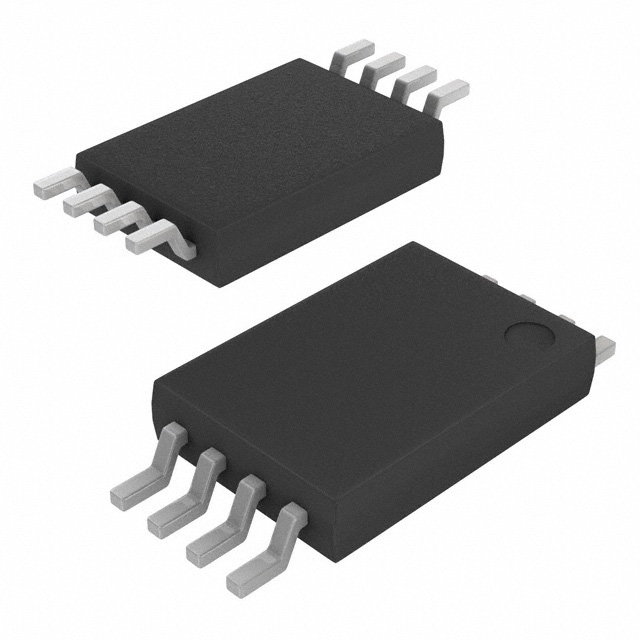
The 93C76C-E/ST is an 8Kbit EEPROM memory integrated circuit manufactured by Microchip Technology, designed for non-volatile data storage applications requiring Microwire serial interface communication. This device operates at 3 MHz clock frequency with a 2ms write cycle time and is housed in an 8-TSSOP surface mount package. The part is currently in active production status and ROHS3 compliant, making it suitable for modern electronic applications requiring reliable memory storage with extended temperature range operation from -40°C to 125°C.
Substitute parts become necessary when the primary part experiences supply constraints, extended lead times, or when design flexibility permits selection from qualified alternatives that meet the same functional and electrical requirements.
Substiute Parts
Key Parameters
| Parameter | Value |
|---|---|
| Memory Type | Non-Volatile EEPROM |
| Memory Size | 8Kbit |
| Memory Organization | 1K x 8, 512 x 16 |
| Memory Interface | Microwire |
| Clock Frequency | 3 MHz |
| Write Cycle Time | 2ms |
| Supply Voltage Range | 4.5V ~ 5.5V |
| Operating Temperature | -40°C ~ 125°C |
| Package Type | 8-TSSOP (0.173", 4.40mm Width) |
| Mounting Type | Surface Mount |
| RoHS Status | ROHS3 Compliant |
Substitute Part Grouping Explanation
Substitution eligibility for the 93C76C-E/ST is determined by strict alignment of the following critical parameters:
- Memory capacity: 8Kbit (non-negotiable)
- Memory interface protocol: Microwire serial interface (non-negotiable)
- Memory organization: 1K x 8 or 512 x 16 configuration (non-negotiable)
- Package type: 8-TSSOP surface mount form factor (non-negotiable)
- Operating temperature range: -40°C to 125°C minimum (non-negotiable)
- Supply voltage compatibility: Must support the application voltage requirements
- Clock frequency: Must meet or exceed application timing requirements
- RoHS compliance: ROHS3 status required for regulatory alignment
The CAV93C76YE-GT3 from onsemi qualifies as a direct substitute based on matching memory capacity, Microwire interface, memory organization, identical package type, and equivalent operating temperature range. Both devices maintain ROHS3 compliance and support the required electrical specifications for Microwire EEPROM applications.
Parameter Comparison
| Parameter | 93C76C-E/ST (Microchip) | CAV93C76YE-GT3 (onsemi) |
|---|---|---|
| Manufacturer | Microchip Technology | onsemi |
| Memory Type | Non-Volatile EEPROM | Non-Volatile EEPROM |
| Memory Size | 8Kbit | 8Kbit |
| Memory Organization | 1K x 8, 512 x 16 | 1K x 8, 512 x 16 |
| Memory Interface | Microwire | Microwire |
| Clock Frequency | 3 MHz | 2 MHz |
| Supply Voltage Range | 4.5V ~ 5.5V | 2.5V ~ 5.5V |
| Operating Temperature | -40°C ~ 125°C | -40°C ~ 125°C |
| Package Type | 8-TSSOP | 8-TSSOP |
| Mounting Type | Surface Mount | Surface Mount |
| Packaging Format | Tube | Tape & Reel (TR) |
| Product Status | Active | Active |
| RoHS Status | ROHS3 Compliant | ROHS3 Compliant |
| Qualification | Not specified | AEC-Q100 |
Engineering Selection Recommendations
Both the 93C76C-E/ST and CAV93C76YE-GT3 are active production devices with ROHS3 compliance, qualifying them for equivalent functional application in Microwire EEPROM memory circuits. The CAV93C76YE-GT3 carries AEC-Q100 automotive qualification, making it suitable for applications requiring automotive-grade component certification.
The primary electrical difference is the clock frequency specification: the 93C76C-E/ST operates at 3 MHz while the CAV93C76YE-GT3 operates at 2 MHz. Applications requiring the full 3 MHz clock frequency must verify that the 2 MHz substitute meets timing requirements. The CAV93C76YE-GT3 supports a wider supply voltage range (2.5V to 5.5V) compared to the 93C76C-E/ST (4.5V to 5.5V), providing greater flexibility in low-voltage applications.
Packaging format differs between the two parts: the 93C76C-E/ST is supplied in tube packaging while the CAV93C76YE-GT3 is supplied in tape and reel format. This distinction affects procurement and assembly processes but does not impact electrical or functional compatibility.
Frequently Asked Questions (FAQ)
Q: Can the CAV93C76YE-GT3 directly replace the 93C76C-E/ST in existing designs?
A: Yes, provided the application clock frequency requirement does not exceed 2 MHz. Both devices share identical memory capacity (8Kbit), Microwire interface protocol, memory organization (1K x 8, 512 x 16), 8-TSSOP package type, and operating temperature range (-40°C to 125°C). Pin-to-pin compatibility is maintained.
Q: What is the significance of the clock frequency difference between these parts?
A: The 93C76C-E/ST specifies 3 MHz maximum clock frequency while the CAV93C76YE-GT3 specifies 2 MHz. Applications operating at or below 2 MHz experience no functional impact. Applications requiring 3 MHz operation must retain the 93C76C-E/ST or identify alternative parts with matching frequency specifications.
Q: Does the wider supply voltage range of the CAV93C76YE-GT3 affect compatibility?
A: The CAV93C76YE-GT3 supports 2.5V to 5.5V operation while the 93C76C-E/ST requires 4.5V to 5.5V. In applications operating within the 4.5V to 5.5V range, both parts are electrically compatible. The CAV93C76YE-GT3 offers additional flexibility for lower voltage applications.
Q: What is the impact of different packaging formats (tube vs. tape & reel)?
A: Packaging format affects procurement and assembly logistics but does not impact electrical performance or functional compatibility. Tube packaging (93C76C-E/ST) is typically used for lower-volume orders, while tape and reel format (CAV93C76YE-GT3) is standard for high-volume production assembly.
Q: Is the AEC-Q100 qualification of the CAV93C76YE-GT3 relevant to non-automotive applications?
A: AEC-Q100 qualification indicates automotive-grade reliability testing and is not required for non-automotive applications. However, it demonstrates additional quality assurance and reliability validation that may benefit any application requiring high reliability standards.
Q: Are there any compatibility concerns with the Microwire interface protocol between these parts?
A: No. Both devices implement the Microwire serial interface protocol identically, with matching memory organization (1K x 8, 512 x 16). Protocol-level compatibility is maintained across both parts.
Alternative Parts

SJ6012L2TP
Littelfuse Inc.
6 Alternative Parts

JMK107BBJ476MA-RE
Taiyo Yuden
10 Alternative Parts

GMK107BBJ475MA-T
Taiyo Yuden
5 Alternative Parts
SJ6020N2ARP
Littelfuse Inc.
3 Alternative Parts
SJ6025R2ATP
Littelfuse Inc.
4 Alternative Parts

2474-05L
API Delevan Inc.
1 Alternative Parts

4590R-684K
API Delevan Inc.
1 Alternative Parts

CM6560R-334
API Delevan Inc.
1 Alternative Parts

CM6460-104
API Delevan Inc.
1 Alternative Parts

5526-12
API Delevan Inc.
1 Alternative Parts