



Request Quote
(Ships tomorrow)
93C66CT-I/MC EEPROM Memory IC Equivalent & Substitute Parts
Part Overview
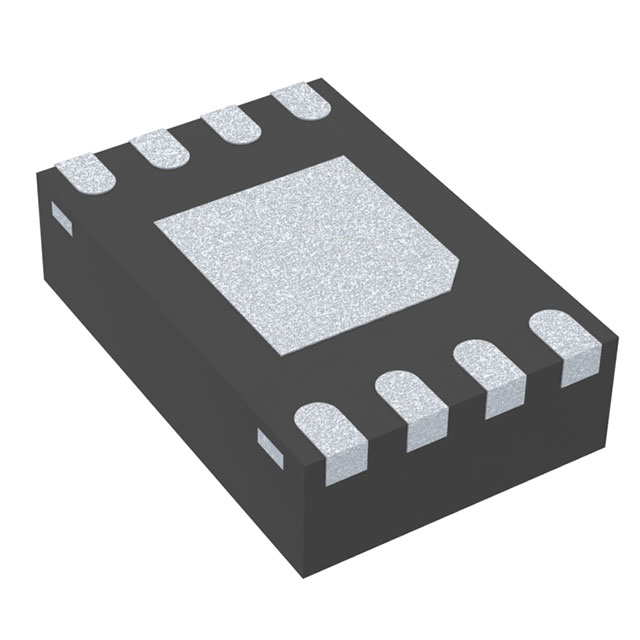
The 93C66CT-I/MC is a 4Kbit EEPROM memory integrated circuit manufactured by Microchip Technology, designed for non-volatile data storage applications requiring Microwire serial interface communication. This device operates across industrial temperature ranges (-40°C to 85°C) and is actively supported in production. Substitute parts may be required due to inventory constraints, packaging format preferences, or specific application voltage and frequency requirements.
Substiute Parts
Key Parameters
| Parameter | Specification |
|---|---|
| Memory Size | 4Kbit |
| Memory Organization | 512 x 8, 256 x 16 |
| Memory Interface | Microwire |
| Clock Frequency | 3 MHz |
| Voltage Supply Range | 4.5V ~ 5.5V |
| Operating Temperature | -40°C ~ 85°C |
| Package Type | 8-VFDFN Exposed Pad |
| Write Cycle Time | 2ms |
| RoHS Status | ROHS3 Compliant |
Substitute Part Grouping Explanation
Substitution eligibility for the 93C66CT-I/MC is determined by the following critical parameters:
Core Compatibility Requirements:
- Memory capacity: 4Kbit (non-negotiable)
- Memory organization: 512 x 8 or 256 x 16 (functional equivalence)
- Serial interface: Microwire protocol (mandatory for communication compatibility)
- Operating temperature range: -40°C to 85°C minimum (application requirement)
- Package footprint: 8-pin DFN form factor (2x3mm) (mechanical compatibility)
Allowable Variations:
- Voltage supply range: May exceed the original specification (wider range acceptable)
- Clock frequency: May differ from 3 MHz (application-dependent tolerance)
- Write cycle time: May vary within acceptable performance windows
- Packaging format: Cut Tape, Tape & Reel, or Digi-Reel formats are interchangeable
- Manufacturer: Different qualified manufacturers acceptable if all parameters align
Parameter Comparison
| Parameter | 93C66CT-I/MC (Main) | 93LC66CT-I/MC (Substitute) | M93C66-RMC6TG (Substitute) |
|---|---|---|---|
| Manufacturer | Microchip Technology | Microchip Technology | STMicroelectronics |
| Memory Size | 4Kbit | 4Kbit | 4Kbit |
| Memory Organization | 512 x 8, 256 x 16 | 512 x 8, 256 x 16 | 512 x 8, 256 x 16 |
| Memory Interface | Microwire | Microwire | Microwire |
| Clock Frequency | 3 MHz | 3 MHz | 1 MHz |
| Voltage Supply Range | 4.5V ~ 5.5V | 2.5V ~ 5.5V | 1.8V ~ 5.5V |
| Operating Temperature | -40°C ~ 85°C | -40°C ~ 85°C | -40°C ~ 85°C |
| Package / Case | 8-VFDFN Exposed Pad | 8-VFDFN Exposed Pad | 8-UFDFN Exposed Pad |
| Write Cycle Time | 2ms | 6ms | 5ms |
| Packaging Format | Cut Tape (CT) | Tape & Reel (TR) | Cut Tape (CT) & Digi-Reel |
| RoHS Status | ROHS3 Compliant | ROHS3 Compliant | ROHS3 Compliant |
| Product Status | Active | Active | Active |
Engineering Selection Recommendations
93LC66CT-I/MC (Microchip Technology)
This substitute maintains identical memory capacity, organization, and Microwire interface specifications. The extended voltage supply range (2.5V ~ 5.5V) provides broader application flexibility compared to the main part. Write cycle time increases from 2ms to 6ms, which may impact applications requiring rapid sequential write operations. Both devices carry ROHS3 compliance and active product status. Packaging format differs (Tape & Reel versus Cut Tape), which affects procurement and assembly workflows but does not impact electrical compatibility.
M93C66-RMC6TG (STMicroelectronics)
This substitute provides equivalent 4Kbit memory capacity and Microwire interface functionality. The significantly extended voltage supply range (1.8V ~ 5.5V) enables operation in low-power applications beyond the original specification. Clock frequency operates at 1 MHz versus the original 3 MHz, which may limit performance in timing-critical applications. Write cycle time is 5ms. Package designation differs (8-UFDFN versus 8-VFDFN), requiring verification of PCB footprint compatibility despite both being 2x3mm DFN form factors. ROHS3 compliance and active product status are maintained. DiGi-Electronics programmability verification status differs from the main part.
Frequently Asked Questions (FAQ)
Q: Can 93LC66CT-I/MC directly replace 93C66CT-I/MC in all applications?
A: Functional replacement is possible for applications where the 6ms write cycle time is acceptable. The extended voltage range (2.5V ~ 5.5V) provides compatibility with the original 4.5V ~ 5.5V specification. Packaging format change from Cut Tape to Tape & Reel does not affect electrical performance but may require assembly process adjustments.
Q: What are the limitations of M93C66-RMC6TG as a substitute?
A: The 1 MHz clock frequency is one-third the original specification, which may impact applications requiring 3 MHz Microwire communication speed. The 8-UFDFN package differs from the original 8-VFDFN, necessitating PCB footprint verification despite identical 2x3mm dimensions. Write cycle time extends to 5ms. These factors make this substitute suitable only for applications where reduced clock frequency and extended write time are tolerable.
Q: Are all three parts pin-compatible?
A: All three devices use 8-pin DFN packages with 2x3mm footprints and Microwire interface pinouts. However, the package designations differ (VFDFN versus UFDFN), requiring confirmation that PCB layouts accommodate both variants before substitution.
Q: What voltage range should I consider for substitute selection?
A: The original 93C66CT-I/MC operates at 4.5V ~ 5.5V. Both substitutes support this range and extend it lower: 93LC66CT-I/MC to 2.5V and M93C66-RMC6TG to 1.8V. Select based on your application's actual supply voltage requirements.
Q: How does write cycle time affect application performance?
A: The original part specifies 2ms write cycle time. Substitutes increase this to 5ms or 6ms. Applications performing sequential EEPROM writes must account for these longer cycle times in timing budgets. Non-time-critical applications are unaffected.
Q: Are there compliance or certification differences between these parts?
A: All three parts maintain ROHS3 compliance and active product status. DiGi-Electronics programmability verification differs: the main part and 93LC66CT-I/MC are verified; M93C66-RMC6TG is not verified. This distinction may be relevant for programming and testing workflows.
Alternative Parts

SJ6012L2TP
Littelfuse Inc.
6 Alternative Parts

JMK107BBJ476MA-RE
Taiyo Yuden
10 Alternative Parts

GMK107BBJ475MA-T
Taiyo Yuden
5 Alternative Parts
SJ6020N2ARP
Littelfuse Inc.
3 Alternative Parts
SJ6025R2ATP
Littelfuse Inc.
4 Alternative Parts

2474-05L
API Delevan Inc.
1 Alternative Parts

4590R-684K
API Delevan Inc.
1 Alternative Parts

CM6560R-334
API Delevan Inc.
1 Alternative Parts

CM6460-104
API Delevan Inc.
1 Alternative Parts

5526-12
API Delevan Inc.
1 Alternative Parts