


Request Quote
(Ships tomorrow)
Bourns 9250-126 Fixed Inductor: Equivalent & Substitute Parts
Part Overview
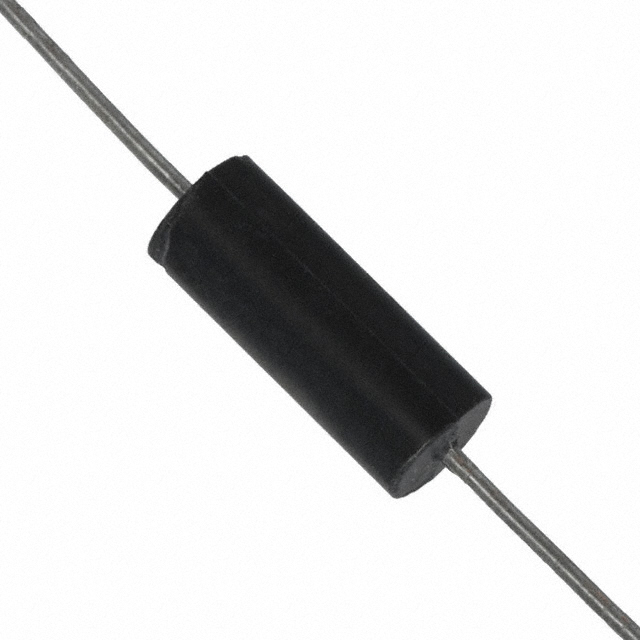
The Bourns 9250-126 is a 12 mH shielded drum core wirewound inductor rated for 23 mA maximum current with 143 Ohm DC resistance. This component is classified as obsolete, making identification of functionally equivalent alternatives necessary for ongoing design support and procurement planning. The part operates across the temperature range of -55°C to 105°C and is designed for through-hole axial mounting applications.
Substiute Parts
Key Parameters
| Parameter | Value |
|---|---|
| Inductance | 12 mH |
| Inductance Tolerance | ±10% |
| Current Rating | 23 mA |
| DC Resistance (DCR) | 143 Ohm Max |
| Saturation Current (Isat) | 13 mA |
| Core Material | Ferrite |
| Shielding | Shielded |
| Q Factor @ 79 kHz | 30 |
| Self Resonant Frequency | 330 kHz |
| Operating Temperature Range | -55°C to 105°C |
| Mounting Type | Through Hole Axial |
| Package / Case | Axial |
| Size / Dimension | 0.162" Dia x 0.410" L (4.11mm x 10.41mm) |
Substitute Part Grouping Explanation
Substitution of the Bourns 9250-126 is determined by the following critical parameters:
Mandatory Matching Parameters:
- Inductance value: 12 mH
- Inductance tolerance: ±10%
- DC resistance: 143 Ohm Max
- Core material: Ferrite
- Shielding: Shielded
- Mounting type: Through Hole Axial
- Package / Case: Axial
Allowable Variation Parameters:
- Current rating: May exceed the original 23 mA specification
- Saturation current: May exceed the original 13 mA specification
- Operating temperature range: May exceed the original -55°C to 105°C range
- Self resonant frequency: May differ from the original 330 kHz
- Physical dimensions: May vary within mechanical compatibility constraints
- Product status: Active alternatives are preferred over obsolete parts
The API Delevan 4307-126K meets all mandatory matching parameters while providing enhanced current handling capability (46 mA vs. 23 mA) and extended temperature range (-55°C to 125°C).
Parameter Comparison
| Parameter | Bourns 9250-126 | API Delevan 4307-126K |
|---|---|---|
| Manufacturer | Bourns Inc. | API Delevan Inc. |
| Series | 9250 | 4307 |
| Product Status | Obsolete | Active |
| Inductance | 12 mH | 12 mH |
| Inductance Tolerance | ±10% | ±10% |
| Current Rating (Amps) | 23 mA | 46 mA |
| Saturation Current (Isat) | 13 mA | 13 mA |
| DC Resistance (DCR) | 143 Ohm Max | 143 Ohm Max |
| Core Material | Ferrite | Ferrite |
| Shielding | Shielded | Shielded |
| Q @ 79 kHz | 30 | 30 |
| Self Resonant Frequency | 330 kHz | 800 kHz |
| Operating Temperature Range | -55°C to 105°C | -55°C to 125°C |
| Inductance Frequency - Test | 79 kHz | 79 kHz |
| Mounting Type | Through Hole | Through Hole |
| Package / Case | Axial | Axial |
| Size / Dimension | 0.162" Dia x 0.410" L (4.11mm x 10.41mm) | 0.197" Dia x 0.447" L (5.00mm x 11.35mm) |
| Type | Drum Core, Wirewound | Molded |
| RoHS Status | RoHS non-compliant | RoHS non-compliant |
| REACH Status | REACH Unaffected | REACH Unaffected |
Engineering Selection Recommendations
The API Delevan 4307-126K is the designated substitute for the obsolete Bourns 9250-126. Selection is based on the following factors:
Product Status: The 4307-126K maintains active production status, ensuring long-term availability and supply chain continuity compared to the obsolete 9250-126.
Electrical Equivalence: Both inductors share identical inductance (12 mH), tolerance (±10%), DC resistance (143 Ohm Max), core material (Ferrite), and shielding characteristics. The Q factor at 79 kHz is equivalent at 30.
Current Handling: The 4307-126K provides doubled current rating capacity (46 mA vs. 23 mA), offering design margin improvement without compromising the saturation current specification (13 mA for both).
Temperature Performance: The 4307-126K extends the upper operating temperature limit to 125°C, compared to 105°C for the 9250-126, providing enhanced thermal headroom.
Compliance: Both parts maintain identical RoHS non-compliant and REACH Unaffected status, ensuring regulatory consistency in legacy designs.
Physical Considerations: The 4307-126K exhibits slightly larger dimensions (0.197" Dia x 0.447" L vs. 0.162" Dia x 0.410" L). PCB layout verification is required to confirm mechanical fit within existing footprints.
Frequently Asked Questions (FAQ)
Q: Can the API Delevan 4307-126K be used as a direct replacement for the Bourns 9250-126?
A: Yes, the 4307-126K meets all mandatory electrical specifications: 12 mH inductance, ±10% tolerance, 143 Ohm DC resistance, ferrite core, and shielded axial configuration. Physical dimensions are slightly larger and must be verified against PCB layout constraints.
Q: What are the key differences between these two inductors?
A: The primary differences are product status (active vs. obsolete), current rating (46 mA vs. 23 mA), operating temperature range (-55°C to 125°C vs. -55°C to 105°C), self resonant frequency (800 kHz vs. 330 kHz), and construction type (molded vs. drum core wirewound). Electrical core parameters remain identical.
Q: Are there any compliance or certification concerns with substitution?
A: Both inductors share identical RoHS non-compliant and REACH Unaffected status. No compliance divergence exists between the parts.
Q: Will the larger physical dimensions of the 4307-126K cause compatibility issues?
A: The 4307-126K is 0.035" larger in diameter and 0.037" longer than the 9250-126. PCB layout and mechanical clearance must be verified before implementation to ensure component fit within the available space.
Q: Is the higher current rating of the 4307-126K beneficial for my application?
A: The doubled current rating (46 mA vs. 23 mA) provides additional design margin and thermal performance headroom. If your circuit operates at or near the 23 mA specification of the original part, the 4307-126K offers improved reliability and reduced thermal stress.
Q: How do the saturation current specifications compare?
A: Both inductors specify identical saturation current (Isat) of 13 mA. This parameter is not affected by the substitution.
Q: What is the significance of the different self resonant frequencies?
A: The 4307-126K exhibits a higher self resonant frequency (800 kHz vs. 330 kHz), indicating improved high-frequency performance characteristics. This difference may be beneficial in applications operating near or above the original part's resonant frequency.
Alternative Parts

SJ6012L2TP
Littelfuse Inc.
6 Alternative Parts

JMK107BBJ476MA-RE
Taiyo Yuden
10 Alternative Parts

GMK107BBJ475MA-T
Taiyo Yuden
5 Alternative Parts
SJ6020N2ARP
Littelfuse Inc.
3 Alternative Parts
SJ6025R2ATP
Littelfuse Inc.
4 Alternative Parts

2474-05L
API Delevan Inc.
1 Alternative Parts

4590R-684K
API Delevan Inc.
1 Alternative Parts

CM6560R-334
API Delevan Inc.
1 Alternative Parts

CM6460-104
API Delevan Inc.
1 Alternative Parts

5526-12
API Delevan Inc.
1 Alternative Parts