


Request Quote
(Ships tomorrow)
Renesas Electronics 843023AGILF Clock/Frequency Synthesizer Equivalent & Substitute Parts
Part Overview
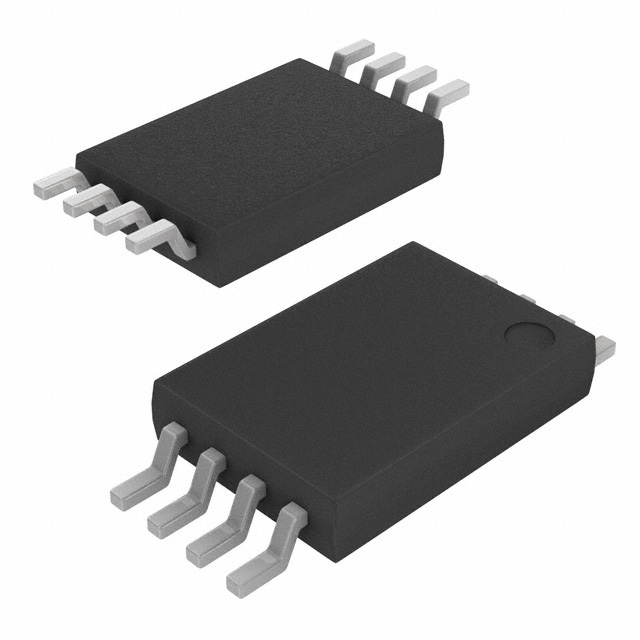
The Renesas Electronics 843023AGILF is a Clock/Frequency Synthesizer and Clock Generator IC operating at a maximum frequency of 320MHz in an 8-TSSOP surface mount package. This component is classified as Obsolete, making identification of functionally equivalent substitute parts essential for ongoing system support and new design implementations. The FemtoClock® series device provides LVPECL output with integrated PLL functionality and crystal input capability, designed for precision timing applications requiring compact packaging and low supply voltage operation.
Substiute Parts
Key Parameters
| Parameter | Value |
|---|---|
| Manufacturer Part Number | 843023AGILF |
| Manufacturer | Renesas Electronics Corporation |
| Category | Clock/Timing |
| Type | Clock/Frequency Synthesizer, Clock Generator |
| Series | FemtoClock® |
| Product Status | Obsolete |
| Frequency - Max | 320MHz |
| Output Type | LVPECL |
| Input Type | Crystal |
| PLL | Yes |
| Number of Circuits | 1 |
| Ratio - Input:Output | 1:1 |
| Differential - Input:Output | No/Yes |
| Voltage - Supply | 2.375V ~ 3.465V |
| Operating Temperature | -40°C ~ 85°C |
| Mounting Type | Surface Mount |
| Package / Case | 8-TSSOP (0.173", 4.40mm Width) |
| Moisture Sensitivity Level (MSL) | 1 (Unlimited) |
| REACH Status | REACH Unaffected |
Substitute Part Grouping Explanation
Substitution of the 843023AGILF is determined by the following critical parameters:
- Output Signal Type: LVPECL output compatibility is mandatory for direct substitution
- PLL Functionality: Integrated phase-locked loop required
- Input Capability: Crystal input support necessary for timing reference
- Supply Voltage Range: Operating voltage window must encompass or overlap the original specification (2.375V ~ 3.465V)
- Operating Temperature Range: Must support -40°C ~ 85°C minimum
- Mounting Technology: Surface mount requirement maintained
- Frequency Performance: Maximum frequency capability must meet or exceed 320MHz
The identified substitute part, 8V49NS0312NLGI, meets these substitution criteria through expanded capabilities in frequency range, input flexibility, and output options while maintaining core functional compatibility through LVPECL output support and PLL architecture.
Parameter Comparison
| Parameter | 843023AGILF (Main Part) | 8V49NS0312NLGI (Substitute) |
|---|---|---|
| Manufacturer | Renesas Electronics Corporation | Renesas Electronics Corporation |
| Category | Clock/Timing | Clock/Timing |
| Type | Clock/Frequency Synthesizer, Clock Generator | Clock Generator |
| Series | FemtoClock® | FemtoClock® NG |
| PLL | Yes | Yes |
| Output Type | LVPECL | LVDS, LVPECL |
| Input Type | Crystal | HCSL, LVCMOS, LVDSM, LVHSTL, LVPECL, Crystal |
| Frequency - Max | 320MHz | 1GHz |
| Number of Circuits | 1 | 1 |
| Voltage - Supply | 2.375V ~ 3.465V | 3.135V ~ 3.465V |
| Operating Temperature | -40°C ~ 85°C | -40°C ~ 85°C |
| Mounting Type | Surface Mount | Surface Mount |
| REACH Status | REACH Unaffected | REACH Unaffected |
Engineering Selection Recommendations
The 8V49NS0312NLGI serves as a direct functional substitute for the obsolete 843023AGILF based on the following engineering criteria:
Product Status Alignment: The substitute part maintains Active product status, ensuring continued availability and manufacturer support. The original part's Obsolete classification necessitates this transition.
Compliance and Certifications: Both components maintain REACH Unaffected status and EAR99 ECCN classification, preserving regulatory compliance across applications.
Functional Compatibility: The substitute retains LVPECL output capability and PLL architecture while expanding input flexibility through support of multiple signal standards (HCSL, LVCMOS, LVDSM, LVHSTL, LVPECL, Crystal). This expanded input capability ensures compatibility with existing crystal-based timing references.
Supply Voltage Consideration: The substitute's supply voltage range (3.135V ~ 3.465V) overlaps the upper portion of the original specification. Applications operating at the lower end of the original range (2.375V ~ 3.135V) require voltage regulation verification.
Frequency Performance: The substitute's 1GHz maximum frequency capability exceeds the original 320MHz specification, providing performance headroom for timing-critical applications.
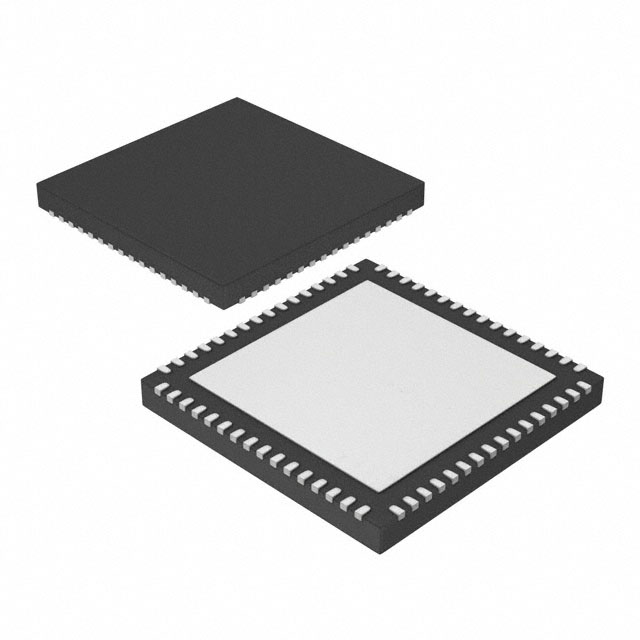
Package Transition: The substitute utilizes a 64-VFQFN package compared to the original 8-TSSOP, requiring PCB layout redesign and increased board real estate allocation.
Frequently Asked Questions (FAQ)
Q: Can the 8V49NS0312NLGI directly replace the 843023AGILF without circuit modifications?
A: Direct pin-for-pin replacement is not possible due to package differences (8-TSSOP versus 64-VFQFN). PCB layout redesign is required. However, functional substitution is achievable through proper signal routing and supply voltage management, provided the application supply voltage meets the 3.135V minimum requirement.
Q: What is the primary reason for substitution?
A: The 843023AGILF is classified as Obsolete. The 8V49NS0312NLGI is an Active product from the same manufacturer's FemtoClock® family, ensuring long-term availability and continued technical support.
Q: Are there supply voltage compatibility concerns?
A: The substitute requires a minimum supply voltage of 3.135V, compared to the original 2.375V minimum. Applications operating below 3.135V require external voltage regulation or alternative component selection.
Q: Does the substitute support crystal input like the original part?
A: Yes. The 8V49NS0312NLGI supports crystal input alongside multiple other input signal standards, maintaining compatibility with existing crystal-based timing architectures.
Q: What are the package implications for system redesign?
A: The substitute's 64-VFQFN package (9x9mm) represents a significant increase in pin count and footprint compared to the 8-TSSOP package. This requires complete PCB layout redesign, increased board area allocation, and updated assembly procedures.
Q: Is the substitute's expanded frequency capability (1GHz versus 320MHz) relevant for all applications?
A: The higher frequency capability provides performance margin for timing-critical applications. However, applications requiring only 320MHz operation do not require this additional capability and should verify that the substitute's programmability can be configured to match the original operating frequency.
Alternative Parts

SJ6012L2TP
Littelfuse Inc.
6 Alternative Parts

JMK107BBJ476MA-RE
Taiyo Yuden
10 Alternative Parts

GMK107BBJ475MA-T
Taiyo Yuden
5 Alternative Parts
SJ6020N2ARP
Littelfuse Inc.
3 Alternative Parts
SJ6025R2ATP
Littelfuse Inc.
4 Alternative Parts

2474-05L
API Delevan Inc.
1 Alternative Parts

4590R-684K
API Delevan Inc.
1 Alternative Parts

CM6560R-334
API Delevan Inc.
1 Alternative Parts

CM6460-104
API Delevan Inc.
1 Alternative Parts

5526-12
API Delevan Inc.
1 Alternative Parts