


Request Quote
(Ships tomorrow)
74LVC544APW,112 Equivalent & Substitute Parts
Part Overview
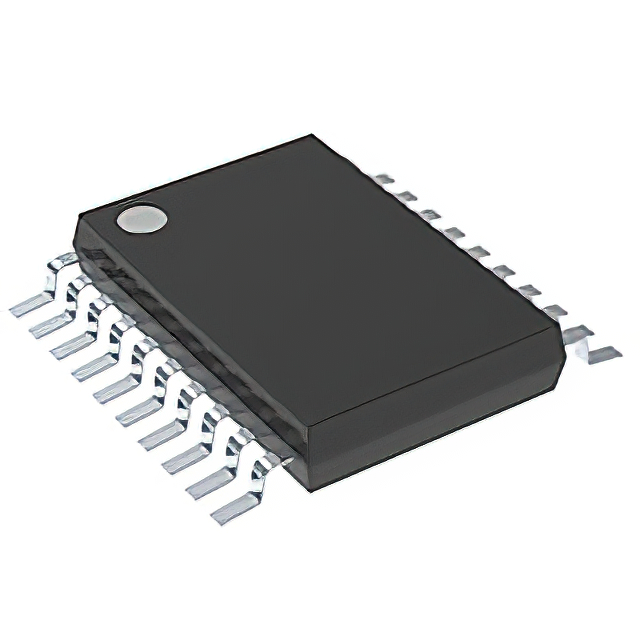
The 74LVC544APW,112 is a transceiver with inverting logic manufactured by NXP USA Inc., designed for 3-state output applications in 24-TSSOP surface mount packaging. This component operates across a supply voltage range of 1.2V to 3.6V with a single 8-bit inverting element and is classified as obsolete. Due to its obsolete product status, identifying functionally compatible alternatives is essential for ongoing system design and production continuity.
Substiute Parts
Key Parameters
| Parameter | Value |
|---|---|
| Manufacturer Part Number | 74LVC544APW,112 |
| Manufacturer | NXP USA Inc. |
| Logic Type | Transceiver, Inverting |
| Number of Elements | 1 |
| Number of Bits per Element | 8 |
| Output Type | 3-State |
| Current - Output High, Low | 24mA, 24mA |
| Voltage - Supply | 1.2V ~ 3.6V |
| Operating Temperature | -40°C ~ 125°C (TA) |
| Package / Case | 24-TSSOP (0.173", 4.40mm Width) |
| Mounting Type | Surface Mount |
| Product Status | Obsolete |
| RoHS Status | ROHS3 Compliant |
| Moisture Sensitivity Level (MSL) | 1 (Unlimited) |
Substitute Part Grouping Explanation
The SN74LVT574PWR from Texas Instruments serves as a functional alternative based on the following substitution criteria:
Common Electrical Parameters:
- Both components operate with 8-bit data width per element
- Both feature tri-state output capability for bus-oriented applications
- Both support surface mount technology in TSSOP packaging
- Both comply with ROHS3 and maintain MSL Level 1 rating
- Both operate within overlapping supply voltage ranges (2.7V ~ 3.6V for SN74LVT574PWR encompasses the upper range of 74LVC544APW,112)
Functional Compatibility Basis: The 74LVC544APW,112 is an inverting transceiver, while the SN74LVT574PWR is a D-type flip-flop with non-inverted tri-state output. Substitution is valid where the inverting logic function can be accommodated through external logic inversion or where the application permits non-inverted operation. Both components share the same 8-bit architecture and tri-state output structure essential for parallel data bus applications.
Parameter Comparison
| Parameter | 74LVC544APW,112 | SN74LVT574PWR |
|---|---|---|
| Manufacturer | NXP USA Inc. | Texas Instruments |
| Logic Type | Transceiver, Inverting | Flip Flop, D-Type |
| Number of Bits per Element | 8 | 8 |
| Output Type | 3-State | Tri-State, Non-Inverted |
| Current - Output High, Low | 24mA, 24mA | 32mA, 64mA |
| Voltage - Supply | 1.2V ~ 3.6V | 2.7V ~ 3.6V |
| Operating Temperature | -40°C ~ 125°C (TA) | -40°C ~ 85°C (TA) |
| Package / Case | 24-TSSOP | 20-TSSOP |
| Mounting Type | Surface Mount | Surface Mount |
| Product Status | Obsolete | Active |
| RoHS Status | ROHS3 Compliant | ROHS3 Compliant |
| Moisture Sensitivity Level (MSL) | 1 (Unlimited) | 1 (Unlimited) |
Engineering Selection Recommendations
The SN74LVT574PWR is an active product from Texas Instruments with current manufacturing support, making it suitable for new designs and production continuity where the 74LVC544APW,112 is no longer available. Both components maintain ROHS3 compliance and MSL Level 1 rating, ensuring equivalent environmental and regulatory standing.
Key considerations for selection:
- Package Transition: The SN74LVT574PWR uses 20-TSSOP packaging versus the 74LVC544APW,112's 24-TSSOP, requiring PCB layout modification.
- Temperature Range: The 74LVC544APW,112 supports extended temperature operation to 125°C, while the SN74LVT574PWR operates to 85°C. Applications requiring the full temperature range must evaluate thermal requirements.
- Supply Voltage Floor: The SN74LVT574PWR minimum supply voltage is 2.7V, compared to 1.2V for the 74LVC544APW,112. Low-voltage applications below 2.7V cannot use this substitute.
- Output Current: The SN74LVT574PWR provides higher output current capability (32mA/64mA versus 24mA/24mA), offering improved drive capability for bus applications.
- Logic Inversion: The SN74LVT574PWR provides non-inverted output. Applications dependent on inverting logic must implement external inversion or select alternative components.
Frequently Asked Questions (FAQ)
Q: Can the SN74LVT574PWR directly replace the 74LVC544APW,112 without circuit modification?
A: Direct replacement requires evaluation of three factors: (1) PCB layout compatibility with different TSSOP pin counts (24 versus 20), (2) logic inversion requirements—the substitute provides non-inverted output, and (3) operating temperature range—the substitute is limited to 85°C maximum. If all three factors are compatible with your application, direct substitution is feasible.
Q: What is the impact of the package change from 24-TSSOP to 20-TSSOP?
A: The 20-TSSOP package has fewer pins than the 24-TSSOP, requiring PCB redesign. Pin assignments differ between the two packages, necessitating schematic and layout verification before implementation.
Q: Are there supply voltage compatibility issues between these components?
A: The 74LVC544APW,112 operates from 1.2V to 3.6V, while the SN74LVT574PWR operates from 2.7V to 3.6V. Applications using supply voltages between 1.2V and 2.7V cannot use the SN74LVT574PWR as a substitute.
Q: How does the output current difference affect circuit performance?
A: The SN74LVT574PWR provides higher output current (32mA high, 64mA low) compared to the 74LVC544APW,112 (24mA both directions). This increased capability improves drive strength for bus applications and reduces propagation delay under load, generally benefiting system performance.
Q: What compliance certifications apply to both components?
A: Both the 74LVC544APW,112 and SN74LVT574PWR are ROHS3 compliant, REACH unaffected, and carry MSL Level 1 (unlimited moisture sensitivity). Both are classified under ECCN EAR99 and HTSUS 8542.39.0001.
Alternative Parts

SJ6012L2TP
Littelfuse Inc.
6 Alternative Parts

JMK107BBJ476MA-RE
Taiyo Yuden
10 Alternative Parts

GMK107BBJ475MA-T
Taiyo Yuden
5 Alternative Parts
SJ6020N2ARP
Littelfuse Inc.
3 Alternative Parts
SJ6025R2ATP
Littelfuse Inc.
4 Alternative Parts

2474-05L
API Delevan Inc.
1 Alternative Parts

4590R-684K
API Delevan Inc.
1 Alternative Parts

CM6560R-334
API Delevan Inc.
1 Alternative Parts

CM6460-104
API Delevan Inc.
1 Alternative Parts

5526-12
API Delevan Inc.
1 Alternative Parts