


Request Quote
(Ships tomorrow)
74LVC11D AND Gate IC Equivalent & Substitute Parts
Part Overview
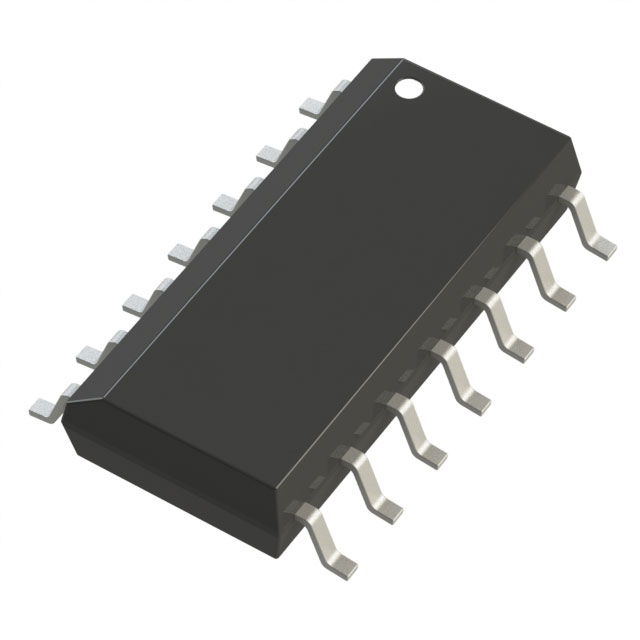
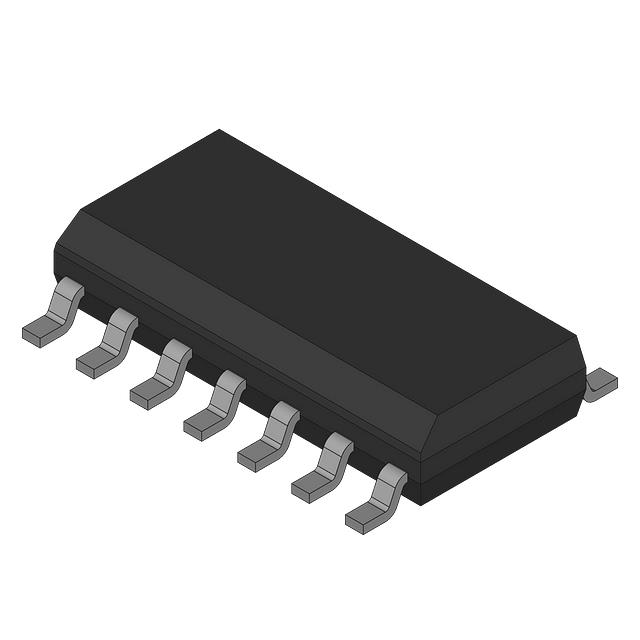
The 74LVC11D is a 3-channel AND gate logic IC manufactured by Nexperia USA Inc., housed in a 14-SO surface mount package. This component is classified as an active product and serves as a fundamental building block in digital logic circuits requiring AND gate functionality. Equivalent and substitute parts are identified when design requirements necessitate alternative sourcing, enhanced qualification levels, or different operational temperature ranges while maintaining functional compatibility.
Substiute Parts
Key Parameters
| Parameter | Value |
|---|---|
| Logic Type | AND Gate |
| Number of Circuits | 3 |
| Number of Inputs | 3 |
| Voltage - Supply | 1.2V ~ 3.6V |
| Current - Quiescent (Max) | 10 µA |
| Current - Output High, Low | 24mA, 24mA |
| Max Propagation Delay @ 3.3V, 50pF | 6.2ns |
| Operating Temperature | -40°C ~ 125°C |
| Package / Case | 14-SOIC (0.154", 3.90mm Width) |
| Mounting Type | Surface Mount |
| RoHS Status | ROHS3 Compliant |
Substitute Part Grouping Explanation
Substitution eligibility for the 74LVC11D is determined by the following critical parameters:
Functional Parameters: Logic type (AND Gate), number of circuits (3), and number of inputs (3) must be identical across all substitute parts.
Electrical Parameters: Supply voltage range, quiescent current, output current capabilities, input logic levels, and propagation delay determine functional interchangeability within the same logic family.
Package Compatibility: Physical package type (14-SOIC) and mounting method (Surface Mount) must match to ensure PCB layout compatibility.
Compliance & Qualification: RoHS status and product status (Active) establish baseline compliance requirements. Additional qualifications such as AEC-Q100 automotive certification represent enhanced reliability grades suitable for specific applications.
The 74LVC11D has two identified substitute parts: the 74LVC11D-Q100J (parametric equivalent with automotive qualification) and the 74LCX11M (similar logic IC from an alternative manufacturer with modified electrical specifications).
Parameter Comparison
| Parameter | 74LVC11D | 74LVC11D-Q100J | 74LCX11M |
|---|---|---|---|
| Manufacturer | Nexperia USA Inc. | Nexperia USA Inc. | Fairchild Semiconductor |
| Logic Type | AND Gate | AND Gate | AND Gate |
| Number of Circuits | 3 | 3 | 3 |
| Number of Inputs | 3 | 3 | 3 |
| Voltage - Supply | 1.2V ~ 3.6V | 1.2V ~ 3.6V | 2V ~ 3.6V |
| Current - Quiescent (Max) | 10 µA | 10 µA | 10 µA |
| Current - Output High, Low | 24mA, 24mA | 24mA, 24mA | 24mA, 24mA |
| Input Logic Level - Low | 0.12V ~ 0.8V | 0.12V ~ 0.8V | 0.7V ~ 0.8V |
| Input Logic Level - High | 1.08V ~ 2V | 1.08V ~ 2V | 1.7V ~ 2V |
| Max Propagation Delay @ 3.3V, 50pF | 6.2ns | 6.2ns | 6ns |
| Operating Temperature | -40°C ~ 125°C | -40°C ~ 125°C | -40°C ~ 85°C |
| Package / Case | 14-SOIC (0.154", 3.90mm Width) | 14-SOIC (0.154", 3.90mm Width) | 14-SOIC (0.154", 3.90mm Width) |
| Mounting Type | Surface Mount | Surface Mount | Surface Mount |
| RoHS Status | ROHS3 Compliant | ROHS3 Compliant | Not specified |
| Product Status | Active | Active | Active |
| Qualification | Standard | AEC-Q100 Automotive | Not specified |
Engineering Selection Recommendations
74LVC11D-Q100J: This part is a parametric equivalent to the 74LVC11D with identical electrical specifications and operating temperature range. The primary distinction is AEC-Q100 automotive qualification, which certifies enhanced reliability and traceability for automotive applications. Selection of this part is appropriate when automotive-grade components are contractually required or when supply chain traceability to automotive standards is mandated.
74LCX11M: This part functions as a logic-compatible substitute from Fairchild Semiconductor. Key differences include a narrower supply voltage range (2V ~ 3.6V versus 1.2V ~ 3.6V), modified input logic level thresholds, and a reduced maximum operating temperature (85°C versus 125°C). The 74LCX11M exhibits marginally faster propagation delay (6ns versus 6.2ns). This part is suitable for applications operating within the 2V ~ 3.6V supply range and maximum ambient temperature of 85°C. The narrower voltage range and temperature specification require explicit verification against circuit design requirements before selection.
Frequently Asked Questions (FAQ)
Q: Can the 74LVC11D-Q100J be used as a direct replacement for the 74LVC11D?
A: Yes. The 74LVC11D-Q100J is a parametric equivalent with identical electrical characteristics, supply voltage range, operating temperature range, and package specifications. The addition of AEC-Q100 automotive qualification does not alter functional performance; it certifies enhanced manufacturing and quality controls suitable for automotive environments.
Q: What are the limitations of using the 74LCX11M as a substitute?
A: The 74LCX11M has two operational constraints: the minimum supply voltage is 2V (versus 1.2V for the 74LVC11D), and the maximum operating temperature is 85°C (versus 125°C). Circuits designed to operate below 2V supply voltage or above 85°C ambient temperature are not compatible with this substitute. Input logic level thresholds also differ slightly, which may affect noise margin calculations in marginal signal conditions.
Q: Are all three parts pin-compatible?
A: Yes. All three parts use the 14-SOIC package with identical pinout and physical dimensions (0.154" width, 3.90mm). PCB layout and footprints are interchangeable.
Q: What is the significance of RoHS3 compliance?
A: RoHS3 compliance certifies that the component meets European Union restrictions on hazardous substances, specifically the absence of lead and other restricted materials. This is a regulatory requirement for many markets and supply chains. The 74LVC11D and 74LVC11D-Q100J both carry ROHS3 certification; the 74LCX11M specification does not explicitly state RoHS status.
Q: Which part should be selected for high-temperature applications?
A: The 74LVC11D or 74LVC11D-Q100J are suitable for operating temperatures up to 125°C. The 74LCX11M is limited to 85°C maximum and is not appropriate for high-temperature applications.
Q: Does the faster propagation delay of the 74LCX11M provide a performance advantage?
A: The 74LCX11M exhibits 6ns propagation delay compared to 6.2ns for the 74LVC11D. This 0.2ns difference is negligible in most digital logic applications and does not constitute a meaningful performance advantage. Selection should be based on voltage range and temperature requirements rather than this marginal timing difference.
Alternative Parts

SJ6012L2TP
Littelfuse Inc.
6 Alternative Parts

JMK107BBJ476MA-RE
Taiyo Yuden
10 Alternative Parts

GMK107BBJ475MA-T
Taiyo Yuden
5 Alternative Parts
SJ6020N2ARP
Littelfuse Inc.
3 Alternative Parts
SJ6025R2ATP
Littelfuse Inc.
4 Alternative Parts

2474-05L
API Delevan Inc.
1 Alternative Parts

4590R-684K
API Delevan Inc.
1 Alternative Parts

CM6560R-334
API Delevan Inc.
1 Alternative Parts

CM6460-104
API Delevan Inc.
1 Alternative Parts

5526-12
API Delevan Inc.
1 Alternative Parts