


Request Quote
(Ships tomorrow)
74HCT173D,652 Equivalent & Substitute Parts
Part Overview
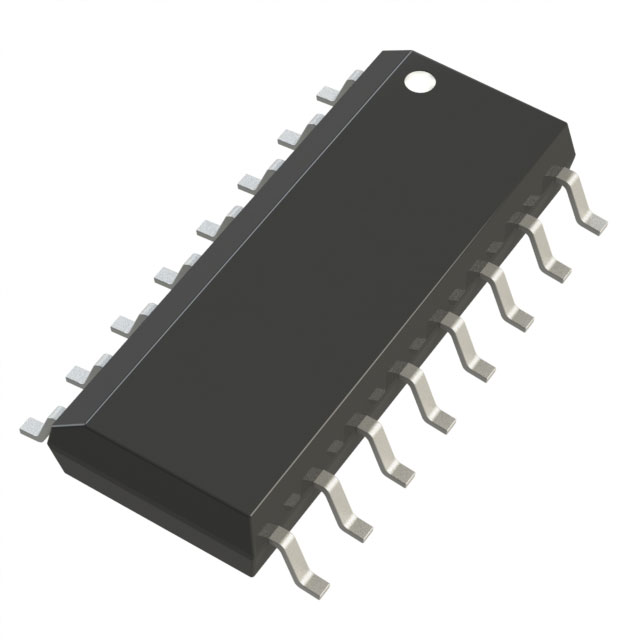
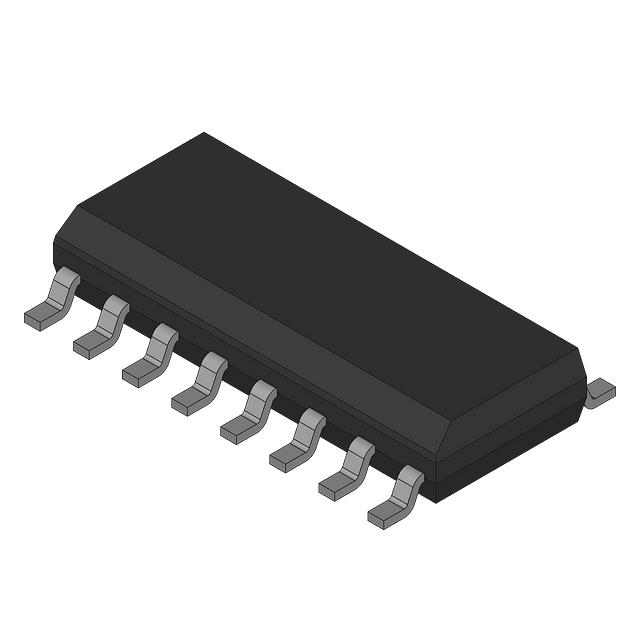
The 74HCT173D,652 is a D-Type flip-flop logic integrated circuit manufactured by Nexperia USA Inc., designed for 4-bit positive edge-triggered applications with tri-state, non-inverted outputs. This component operates within the 74HCT logic family and features a 16-SOIC surface mount package. The part is classified as obsolete, making equivalent and substitute parts necessary for ongoing design support and procurement continuity.
Substiute Parts
Key Parameters
| Parameter | Value |
|---|---|
| Manufacturer Part Number | 74HCT173D,652 |
| Manufacturer | Nexperia USA Inc. |
| Category | Logic |
| Type | D-Type Flip Flop |
| Number of Elements | 1 |
| Number of Bits per Element | 4 |
| Output Type | Tri-State, Non-Inverted |
| Trigger Type | Positive Edge |
| Clock Frequency | 80 MHz |
| Voltage Supply Range | 4.5V ~ 5.5V |
| Operating Temperature | -40°C ~ 125°C |
| Package / Case | 16-SOIC (0.154", 3.90mm Width) |
| Mounting Type | Surface Mount |
| Product Status | Obsolete |
Substitute Part Grouping Explanation
Substitute parts for the 74HCT173D,652 are identified based on strict electrical and mechanical compatibility criteria. The following parameters determine valid substitution:
Critical Matching Parameters:
- Logic family: 74HCT series
- Function: Master Reset D-Type flip-flop
- Configuration: 1 element, 4 bits per element
- Output type: Tri-State, Non-Inverted
- Trigger type: Positive Edge
- Package: 16-SOIC (0.154", 3.90mm Width)
- Voltage supply range: 4.5V ~ 5.5V
- Mounting type: Surface Mount
Acceptable Variation Parameters:
- Clock frequency: Substitute parts operating at 60 MHz remain compatible with applications designed for 80 MHz operation
- Propagation delay: Both main and substitute parts specify 40ns maximum delay at their respective voltage and load conditions
- Quiescent current: Variation from 4 µA to 8 µA is acceptable within the 74HCT logic family specifications
- Input capacitance: Variation from 4.6 pF to 10 pF does not affect functional compatibility
- Operating temperature range: Extended range (-55°C ~ 125°C) provides broader environmental coverage
Parameter Comparison
| Parameter | 74HCT173D,652 (Main) | CD74HCT173M (Substitute) | CD74HCT173M96 (Substitute) |
|---|---|---|---|
| Manufacturer | Nexperia USA Inc. | Harris Corporation | Harris Corporation |
| Type | D-Type Flip Flop | D-Type Flip Flop | D-Type Flip Flop |
| Number of Elements | 1 | 1 | 1 |
| Number of Bits per Element | 4 | 4 | 4 |
| Output Type | Tri-State, Non-Inverted | Tri-State, Non-Inverted | Tri-State, Non-Inverted |
| Trigger Type | Positive Edge | Positive Edge | Positive Edge |
| Clock Frequency | 80 MHz | 60 MHz | 60 MHz |
| Max Propagation Delay | 40ns @ 6V, 50pF | 40ns @ 4.5V, 50pF | 40ns @ 4.5V, 50pF |
| Current - Output High, Low | 6mA, 6mA | 6mA, 6mA | 6mA, 6mA |
| Voltage - Supply | 4.5V ~ 5.5V | 4.5V ~ 5.5V | 4.5V ~ 5.5V |
| Current - Quiescent (Iq) | 4 µA | 8 µA | 8 µA |
| Input Capacitance | 4.6 pF | 10 pF | 10 pF |
| Operating Temperature | -40°C ~ 125°C | -55°C ~ 125°C | -55°C ~ 125°C |
| Package / Case | 16-SOIC (0.154", 3.90mm Width) | 16-SOIC (0.154", 3.90mm Width) | 16-SOIC (0.154", 3.90mm Width) |
| Mounting Type | Surface Mount | Surface Mount | Surface Mount |
| RoHS Status | ROHS3 Compliant | RoHS non-compliant | RoHS non-compliant |
| Product Status | Obsolete | Obsolete | Obsolete |
Engineering Selection Recommendations
Both CD74HCT173M and CD74HCT173M96 are functionally equivalent substitutes for the 74HCT173D,652 based on electrical and mechanical parameters. Selection between these options depends on specific application requirements and compliance constraints:
CD74HCT173M (Tube Packaging): This substitute provides direct functional replacement with identical electrical characteristics. The extended operating temperature range (-55°C ~ 125°C) accommodates broader environmental conditions compared to the main part. However, this part is RoHS non-compliant, which may restrict use in applications requiring RoHS3 compliance.
CD74HCT173M96 (Bulk Packaging): This substitute offers the same electrical and functional characteristics as CD74HCT173M with bulk packaging configuration. It is also RoHS non-compliant and provides the extended operating temperature range. Bulk packaging may be advantageous for high-volume procurement scenarios.
Compliance Consideration: The main part (74HCT173D,652) is ROHS3 compliant, while both substitute parts are RoHS non-compliant. Applications subject to RoHS regulations must account for this difference in component selection and supply chain planning.
Frequently Asked Questions (FAQ)
Q: Can CD74HCT173M or CD74HCT173M96 be used as direct replacements for 74HCT173D,652?
A: Yes. Both substitute parts are electrically and mechanically compatible. They share identical logic family classification, function, output type, trigger type, package configuration, and voltage supply range. The 16-SOIC package dimensions and surface mount configuration are identical, enabling direct PCB-level substitution.
Q: What are the differences between CD74HCT173M and CD74HCT173M96?
A: The primary difference is packaging format. CD74HCT173M is supplied in tube packaging, while CD74HCT173M96 is supplied in bulk packaging. Electrical specifications and performance characteristics are identical between these two parts.
Q: Does the lower clock frequency of the substitute parts affect compatibility?
A: The substitute parts operate at 60 MHz compared to the main part's 80 MHz specification. This difference does not prevent substitution in applications designed for the 74HCT173D,652. The substitute parts will function correctly in circuits operating at or below 60 MHz. Applications requiring operation above 60 MHz should be evaluated against the substitute part's maximum frequency specification.
Q: Are there RoHS compliance implications when using substitute parts?
A: Yes. The 74HCT173D,652 is ROHS3 compliant, while CD74HCT173M and CD74HCT173M96 are RoHS non-compliant. Applications subject to RoHS regulations must account for this difference. Compliance requirements should be verified with procurement and regulatory teams before component selection.
Q: What is the significance of the extended operating temperature range in substitute parts?
A: The substitute parts specify an operating temperature range of -55°C ~ 125°C, compared to -40°C ~ 125°C for the main part. This extended lower temperature limit provides broader environmental coverage and may be beneficial for applications operating in extreme cold conditions.
Q: Are the propagation delay specifications equivalent between the main part and substitutes?
A: Both the main part and substitute parts specify a maximum propagation delay of 40ns. The main part specifies this delay at 6V with 50pF load, while substitute parts specify it at 4.5V with 50pF load. This difference reflects measurement conditions but does not affect functional compatibility within the specified voltage supply range of 4.5V ~ 5.5V.
Alternative Parts

SJ6012L2TP
Littelfuse Inc.
6 Alternative Parts

JMK107BBJ476MA-RE
Taiyo Yuden
10 Alternative Parts

GMK107BBJ475MA-T
Taiyo Yuden
5 Alternative Parts
SJ6020N2ARP
Littelfuse Inc.
3 Alternative Parts
SJ6025R2ATP
Littelfuse Inc.
4 Alternative Parts

2474-05L
API Delevan Inc.
1 Alternative Parts

4590R-684K
API Delevan Inc.
1 Alternative Parts

CM6560R-334
API Delevan Inc.
1 Alternative Parts

CM6460-104
API Delevan Inc.
1 Alternative Parts

5526-12
API Delevan Inc.
1 Alternative Parts