


Request Quote
(Ships tomorrow)
74HC93DB,118 Binary Counter - Equivalent & Substitute Parts
Part Overview
The 74HC93DB,118 is a 4-bit binary counter IC manufactured by NXP USA Inc., designed for digital logic applications requiring asynchronous reset and negative edge triggering. This surface mount component operates across a 2V to 6V supply range with a maximum count rate of 108 MHz and is rated for -40°C to 125°C operating temperatures.
The 74HC93DB,118 is classified as obsolete. Locating equivalent substitute parts is necessary to maintain design continuity, ensure supply chain availability, and support ongoing production or maintenance requirements for systems utilizing this component.
Substiute Parts
Key Parameters
| Parameter | Value |
|---|---|
| Logic Type | Binary Counter |
| Number of Elements | 1 |
| Number of Bits per Element | 4 |
| Direction | Up |
| Reset Type | Asynchronous |
| Trigger Type | Negative Edge |
| Count Rate | 108 MHz |
| Voltage Supply Range | 2V to 6V |
| Operating Temperature Range | -40°C to 125°C |
| Mounting Type | Surface Mount |
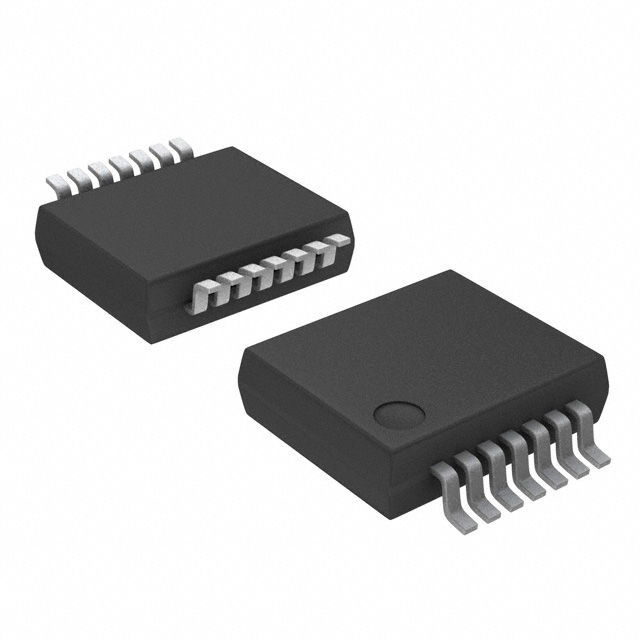
| Package | 14-SSOP (0.209", 5.30mm Width) |
| RoHS Status | ROHS3 Compliant |
| Moisture Sensitivity Level | 1 (Unlimited) |
Substitute Part Grouping Explanation
Substitute parts for the 74HC93DB,118 are qualified based on the following core electrical and mechanical parameters:
- Logic Type: Binary Counter
- Number of Elements: 1
- Number of Bits per Element: 4
- Direction: Up
- Reset Type: Asynchronous
- Trigger Type: Negative Edge
- Voltage Supply Range: 2V to 6V
- Mounting Type: Surface Mount
- Base Product Number: 74HC93 series
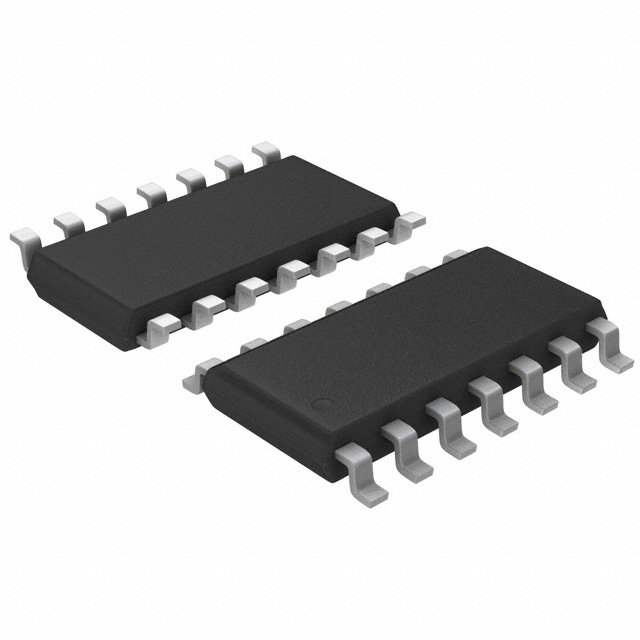
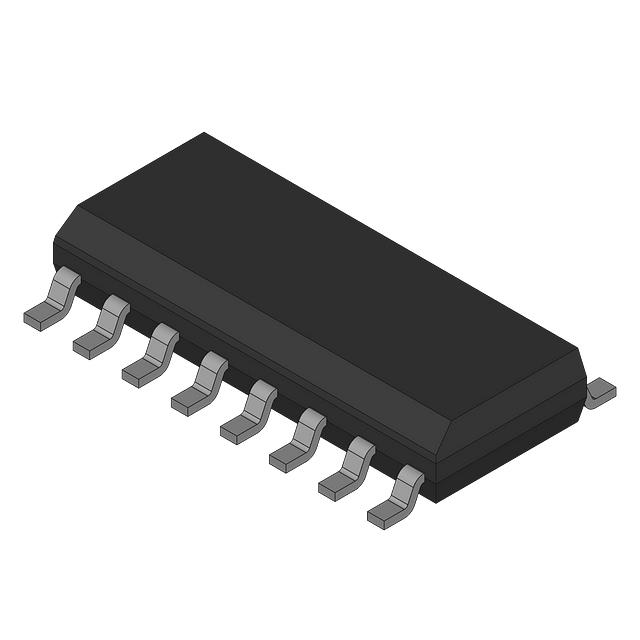
The substitute parts CD74HC93MT (Texas Instruments) and CD74HC93M96 (Harris Corporation) maintain functional equivalence through identical logic configuration, bit width, reset mechanism, and trigger characteristics. Both operate within the specified voltage range and support the same counter direction and element structure. Package variations (14-SOIC vs. 14-SSOP) represent mechanical differences that may require PCB layout adjustment but do not affect electrical functionality.
Parameter Comparison
| Parameter | 74HC93DB,118 (NXP) | CD74HC93MT (TI) | CD74HC93M96 (Harris) |
|---|---|---|---|
| Logic Type | Binary Counter | Binary Counter | Binary Counter |
| Number of Elements | 1 | 1 | 1 |
| Number of Bits per Element | 4 | 4 | 4 |
| Direction | Up | Up | Up |
| Reset Type | Asynchronous | Asynchronous | Asynchronous |
| Trigger Type | Negative Edge | Negative Edge | Negative Edge |
| Voltage Supply Range | 2V to 6V | 2V to 6V | 2V to 6V |
| Operating Temperature Range | -40°C to 125°C | -55°C to 125°C | -55°C to 125°C |
| Mounting Type | Surface Mount | Surface Mount | Surface Mount |
| Package / Case | 14-SSOP (0.209", 5.30mm Width) | 14-SOIC (0.154", 3.90mm Width) | 14-SOIC (0.154", 3.90mm Width) |
| Count Rate | 108 MHz | 35 MHz | 35 MHz |
| RoHS Status | ROHS3 Compliant | ROHS3 Compliant | RoHS Non-Compliant |
| Moisture Sensitivity Level | 1 (Unlimited) | 1 (Unlimited) | Not Specified |
Engineering Selection Recommendations
CD74HC93MT (Texas Instruments) is the primary substitute option. This part maintains full functional equivalence with the 74HC93DB,118 across all critical electrical parameters. The CD74HC93MT is ROHS3 compliant, matching the environmental compliance profile of the original part. The extended operating temperature range (-55°C to 125°C) provides additional margin for demanding applications. The 14-SOIC package requires PCB layout modification compared to the 14-SSOP footprint of the original part. The count rate specification of 35 MHz is lower than the 74HC93DB,118 (108 MHz); this difference must be evaluated against actual application timing requirements.
CD74HC93M96 (Harris Corporation) provides functional equivalence but carries two significant constraints. The part is classified as obsolete and is not RoHS compliant, which may conflict with regulatory or procurement requirements. The 14-SOIC package similarly requires PCB layout adjustment. This option is suitable only when RoHS compliance is not mandated and supply availability is confirmed.
Frequently Asked Questions (FAQ)
Q: Can CD74HC93MT be used as a direct replacement for 74HC93DB,118 without circuit modification?
A: CD74HC93MT maintains electrical equivalence but requires PCB layout modification due to package differences (14-SOIC vs. 14-SSOP). The pin configuration and electrical function are compatible; however, the physical footprint dimensions differ, necessitating PCB redesign.
Q: What is the significance of the count rate difference between 74HC93DB,118 (108 MHz) and the substitute parts (35 MHz)?
A: The count rate specification defines the maximum frequency at which the counter can reliably operate. The 74HC93DB,118 supports higher frequency operation. Substitutes are suitable only if the application's actual clock frequency does not exceed 35 MHz. Review circuit timing requirements to confirm compatibility.
Q: Are both substitute parts suitable for new designs?
A: CD74HC93MT is suitable for new designs, as it is ROHS3 compliant and available through active distribution channels. CD74HC93M96 is classified as obsolete and non-compliant with RoHS standards, making it unsuitable for new product development in regulated markets.
Q: What are the package considerations when substituting 74HC93DB,118?
A: The original part uses 14-SSOP packaging (0.209" width), while both substitutes use 14-SOIC packaging (0.154" width). This difference requires PCB footprint modification, component placement adjustment, and potential routing changes. Pin pitch and lead configuration differ between packages.
Q: Does the extended temperature range of the substitute parts provide additional benefit?
A: CD74HC93MT and CD74HC93M96 both support -55°C to 125°C operation, compared to the original part's -40°C to 125°C range. This extended lower temperature limit provides additional margin for applications operating in cold environments but does not affect performance in the original specification range.
Alternative Parts

SJ6012L2TP
Littelfuse Inc.
6 Alternative Parts

JMK107BBJ476MA-RE
Taiyo Yuden
10 Alternative Parts

GMK107BBJ475MA-T
Taiyo Yuden
5 Alternative Parts
SJ6020N2ARP
Littelfuse Inc.
3 Alternative Parts
SJ6025R2ATP
Littelfuse Inc.
4 Alternative Parts

2474-05L
API Delevan Inc.
1 Alternative Parts

4590R-684K
API Delevan Inc.
1 Alternative Parts

CM6560R-334
API Delevan Inc.
1 Alternative Parts

CM6460-104
API Delevan Inc.
1 Alternative Parts

5526-12
API Delevan Inc.
1 Alternative Parts