


Request Quote
(Ships tomorrow)
74ACTQ74PC Equivalent & Substitute Parts
Part Overview
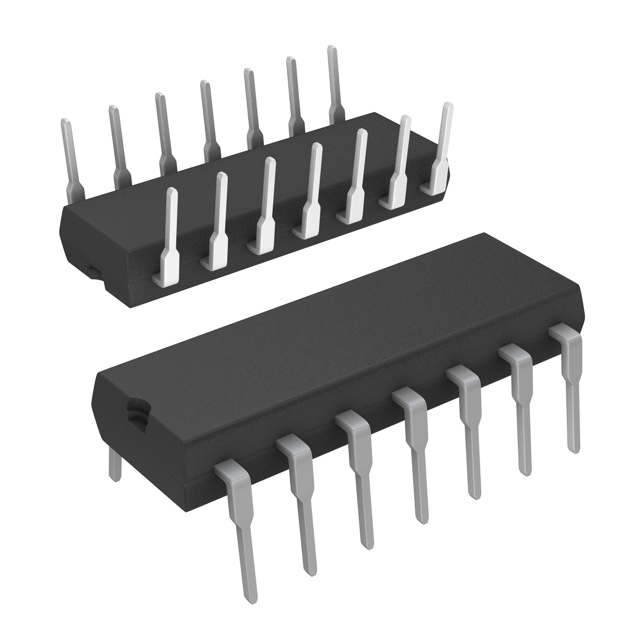
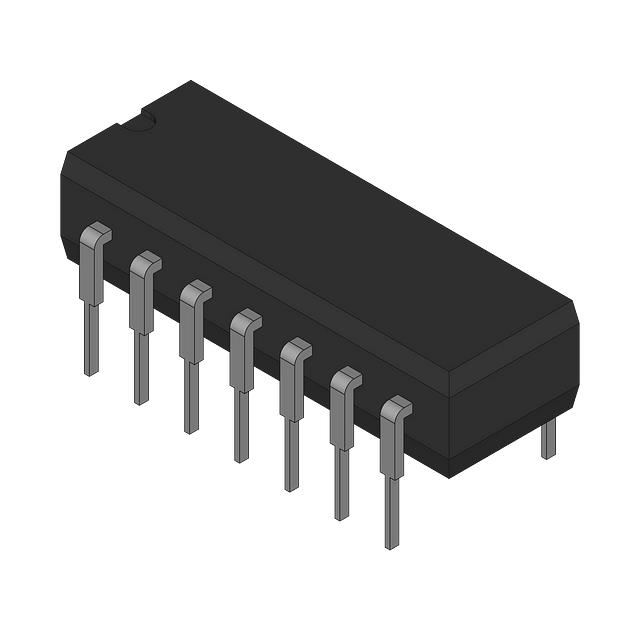
The 74ACTQ74PC is a dual D-type flip-flop logic integrated circuit manufactured by onsemi, housed in a 14-DIP package. This component functions as a 2-element D-type flip-flop with complementary outputs, positive edge triggering, and set/reset capabilities. The part is classified as obsolete, making equivalent substitute parts necessary for ongoing system maintenance, legacy design support, and component procurement.
Substiute Parts
Key Parameters
| Parameter | Value |
|---|---|
| Manufacturer Part Number | 74ACTQ74PC |
| Manufacturer | onsemi |
| Category | Logic |
| Type | D-Type Flip-Flop |
| Number of Elements | 2 |
| Number of Bits per Element | 1 |
| Output Type | Complementary |
| Trigger Type | Positive Edge |
| Function | Set(Preset) and Reset |
| Clock Frequency | 200 MHz |
| Max Propagation Delay @ 5V, 50pF | 8 ns |
| Voltage - Supply | 4.5V ~ 5.5V |
| Current - Output High, Low | 24mA, 24mA |
| Current - Quiescent (Iq) | 20 µA |
| Input Capacitance | 4.5 pF |
| Operating Temperature | -40°C ~ 85°C |
| Package / Case | 14-DIP (0.300", 7.62mm) |
| Mounting Type | Through Hole |
| Product Status | Obsolete |
Substitute Part Grouping Explanation
Substitution eligibility for the 74ACTQ74PC is determined by the following core parameters:
Functional Equivalence Requirements:
- Type: D-Type flip-flop
- Number of Elements: 2
- Number of Bits per Element: 1
- Output Type: Complementary
- Trigger Type: Positive Edge
- Function: Set(Preset) and Reset
Electrical Compatibility Requirements:
- Voltage Supply Range: 4.5V ~ 5.5V (primary operating range)
- Current Output Capability: 24mA minimum (both high and low)
- Output drive characteristics must support the same load conditions
Physical Compatibility Requirements:
- Package Type: 14-DIP or equivalent surface-mount alternative (14-SOIC)
- Pin configuration must maintain functional equivalence
Performance Considerations:
- Clock Frequency: Substitute parts must meet or exceed 200 MHz specification
- Propagation Delay: Substitute parts must not exceed 8 ns @ 5V, 50pF for critical timing applications
- Quiescent Current: Lower values indicate improved power efficiency
The three substitute parts listed below meet these core substitution criteria with variations in performance characteristics and product status.
Parameter Comparison
| Parameter | 74ACTQ74PC (onsemi) | CD74ACT74E (Harris) | SN74AC74DR (TI) | SN74ACT74N (TI) |
|---|---|---|---|---|
| Manufacturer | onsemi | Harris Corporation | Texas Instruments | Texas Instruments |
| Type | D-Type Flip-Flop | D-Type Flip-Flop | D-Type Flip-Flop | D-Type Flip-Flop |
| Number of Elements | 2 | 2 | 2 | 2 |
| Output Type | Complementary | Complementary | Complementary | Complementary |
| Trigger Type | Positive Edge | Positive Edge | Positive Edge | Positive Edge |
| Clock Frequency | 200 MHz | 85 MHz | 160 MHz | 210 MHz |
| Max Propagation Delay @ 5V, 50pF | 8 ns | 9.5 ns | 6 ns | 11 ns |
| Voltage - Supply | 4.5V ~ 5.5V | 4.5V ~ 5.5V | 2V ~ 6V | 4.5V ~ 5.5V |
| Current - Output High, Low | 24mA, 24mA | 24mA, 24mA | 24mA, 24mA | 24mA, 24mA |
| Current - Quiescent (Iq) | 20 µA | 4 µA | 2 µA | 2 µA |
| Input Capacitance | 4.5 pF | 10 pF | 3 pF | 3 pF |
| Operating Temperature | -40°C ~ 85°C | -55°C ~ 125°C | -40°C ~ 85°C | -40°C ~ 85°C |
| Package / Case | 14-DIP (0.300", 7.62mm) | 14-DIP (0.300", 7.62mm) | 14-SOIC (0.154", 3.90mm) | 14-DIP (0.300", 7.62mm) |
| Mounting Type | Through Hole | Through Hole | Surface Mount | Through Hole |
| Product Status | Obsolete | Obsolete | Active | Active |
| RoHS Status | Not specified | RoHS non-compliant | ROHS3 Compliant | ROHS3 Compliant |
Engineering Selection Recommendations
For Direct Through-Hole Replacement (Same Package):
SN74ACT74N (Texas Instruments) is the preferred substitute for the 74ACTQ74PC. Both parts use 14-DIP through-hole packaging, identical supply voltage range (4.5V ~ 5.5V), and equivalent output drive specifications (24mA). The SN74ACT74N is currently active in production with ROHS3 compliance, ensuring long-term availability and regulatory alignment. Propagation delay of 11 ns is acceptable for most applications where the original 8 ns specification is not critical. Quiescent current is significantly lower (2 µA vs. 20 µA), providing improved power efficiency.
For Extended Temperature Range Applications:
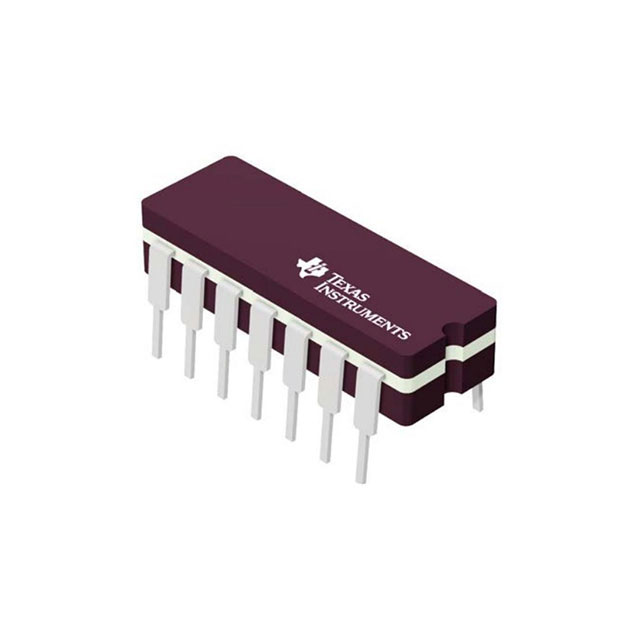
CD74ACT74E (Harris Corporation) offers an extended operating temperature range (-55°C ~ 125°C) compared to the 74ACTQ74PC (-40°C ~ 85°C). This part maintains 14-DIP through-hole packaging and identical supply voltage specifications. However, CD74ACT74E is obsolete and carries RoHS non-compliance status. Selection of this part is appropriate only when extended temperature operation is mandatory and alternative solutions are unavailable.
For Surface-Mount Applications:
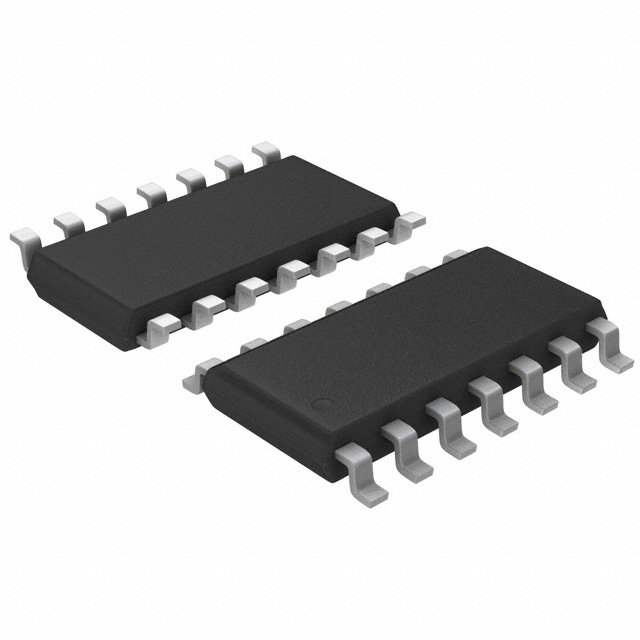
SN74AC74DR (Texas Instruments) provides a surface-mount alternative in 14-SOIC packaging. This part is active in production with ROHS3 compliance and offers superior performance characteristics: 6 ns propagation delay (faster than the original 8 ns), 160 MHz clock frequency, and 2 µA quiescent current. The supply voltage range is broader (2V ~ 6V), providing additional design flexibility. Selection of this part requires PCB redesign for surface-mount assembly but is recommended for new designs or board revisions.
Frequently Asked Questions (FAQ)
Q: Can I use SN74AC74DR as a direct replacement for 74ACTQ74PC on an existing through-hole PCB?
A: No. SN74AC74DR uses 14-SOIC surface-mount packaging, while 74ACTQ74PC uses 14-DIP through-hole packaging. Direct PCB substitution is not possible without board redesign. For through-hole applications, use SN74ACT74N instead.
Q: What is the difference between 74ACT and 74AC logic series?
A: Both are advanced CMOS logic families with similar functional characteristics. The primary difference is supply voltage range: 74ACT operates at 4.5V ~ 5.5V (TTL-compatible), while 74AC operates at 2V ~ 6V (broader range). For 5V systems, both are functionally equivalent.
Q: Is the propagation delay difference between 74ACTQ74PC (8 ns) and SN74ACT74N (11 ns) significant?
A: The 3 ns difference is negligible for most digital logic applications operating below 100 MHz. For timing-critical applications requiring sub-10 ns propagation delay, SN74AC74DR (6 ns) is the preferred substitute.
Q: Why is the quiescent current so different between these parts (2 µA to 20 µA)?
A: Quiescent current variation reflects manufacturing process differences and design optimization across manufacturers and product generations. Lower quiescent current (2 µA) in newer parts indicates improved power efficiency. This difference is significant only in battery-powered or ultra-low-power applications.
Q: Can I use CD74ACT74E in a -40°C ~ 85°C application?
A: Yes. CD74ACT74E operates across -55°C ~ 125°C, which fully encompasses the -40°C ~ 85°C range. However, CD74ACT74E is obsolete and RoHS non-compliant. Use SN74ACT74N for new designs or ongoing procurement.
Q: Are all three substitute parts pin-compatible with 74ACTQ74PC?
A: SN74ACT74N and CD74ACT74E are pin-compatible (both 14-DIP). SN74AC74DR is not pin-compatible due to different packaging (14-SOIC surface-mount vs. 14-DIP through-hole).
Q: Which substitute part should I choose for a new design?
A: SN74AC74DR (Texas Instruments, 14-SOIC) is recommended for new designs. It is active in production, ROHS3 compliant, offers superior performance (6 ns propagation delay), and provides broader supply voltage range (2V ~ 6V). If through-hole packaging is required, select SN74ACT74N.
Alternative Parts

SJ6012L2TP
Littelfuse Inc.
6 Alternative Parts

JMK107BBJ476MA-RE
Taiyo Yuden
10 Alternative Parts

GMK107BBJ475MA-T
Taiyo Yuden
5 Alternative Parts
SJ6020N2ARP
Littelfuse Inc.
3 Alternative Parts
SJ6025R2ATP
Littelfuse Inc.
4 Alternative Parts

2474-05L
API Delevan Inc.
1 Alternative Parts

4590R-684K
API Delevan Inc.
1 Alternative Parts

CM6560R-334
API Delevan Inc.
1 Alternative Parts

CM6460-104
API Delevan Inc.
1 Alternative Parts

5526-12
API Delevan Inc.
1 Alternative Parts