


Request Quote
(Ships tomorrow)
74ACTQ574PC Equivalent & Substitute Parts
Part Overview
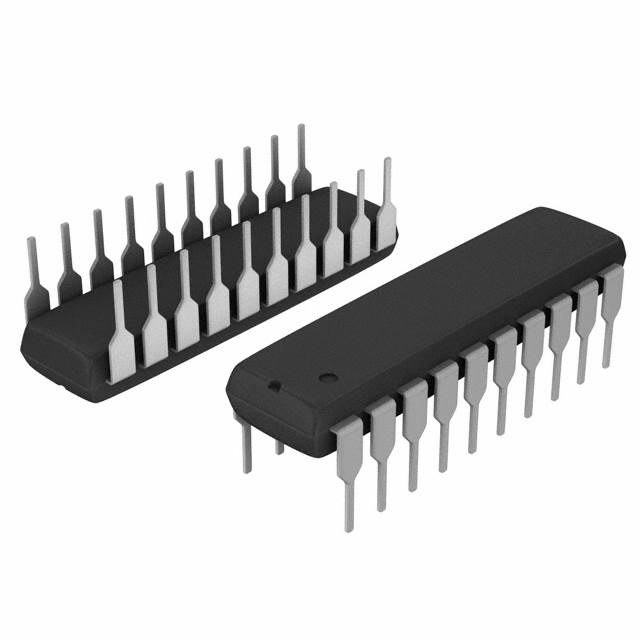
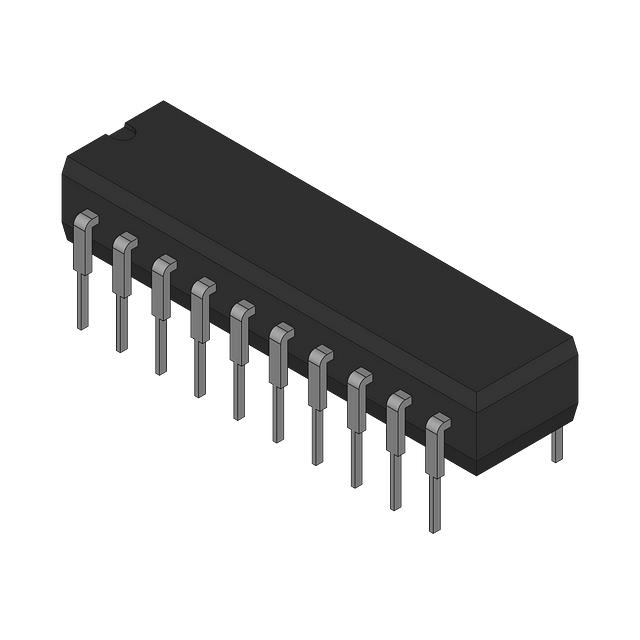
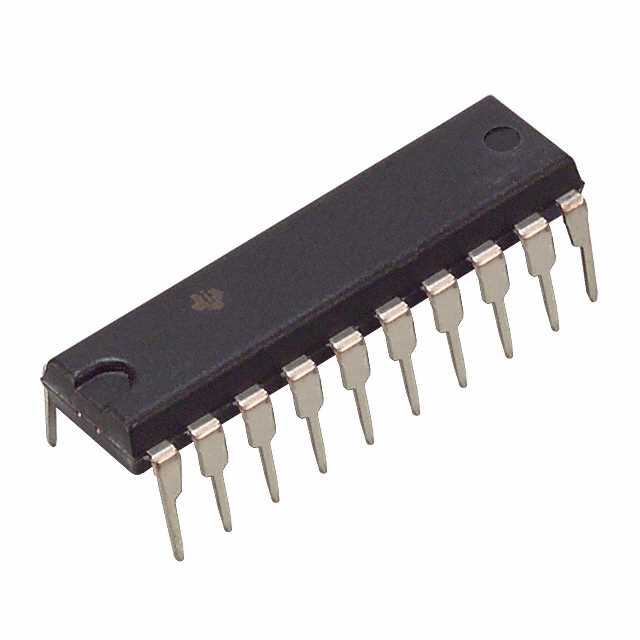
The 74ACTQ574PC is a single-element D-type flip-flop integrated circuit with 8-bit positive edge triggering, manufactured by onsemi in a 20-DIP through-hole package. This logic component is classified as obsolete, making equivalent substitute parts necessary for ongoing system maintenance, repair, and legacy design support. The part operates at 85 MHz clock frequency with tri-state, non-inverted outputs suitable for bus-oriented digital applications.
Substiute Parts
Key Parameters
| Parameter | Value |
|---|---|
| Manufacturer Part Number | 74ACTQ574PC |
| Manufacturer | onsemi |
| Category | Logic |
| Type | D-Type Flip-Flop |
| Number of Elements | 1 |
| Number of Bits per Element | 8 |
| Output Type | Tri-State, Non-Inverted |
| Clock Frequency | 85 MHz |
| Max Propagation Delay @ 5V, 50pF | 9 ns |
| Trigger Type | Positive Edge |
| Voltage Supply Range | 4.5V ~ 5.5V |
| Current - Output High/Low | 24 mA / 24 mA |
| Current - Quiescent (Iq) | 40 µA |
| Operating Temperature | -40°C ~ 85°C |
| Package / Case | 20-DIP (0.300", 7.62mm) |
| Mounting Type | Through Hole |
| Product Status | Obsolete |
Substitute Part Grouping Explanation
Substitution of the 74ACTQ574PC is determined by strict equivalence across the following critical parameters:
Functional Equivalence: All substitute parts must be D-type flip-flops with 1 element, 8 bits per element, positive edge triggering, and tri-state non-inverted outputs.
Electrical Compatibility: Supply voltage range (4.5V ~ 5.5V), output current capability (24 mA minimum for both high and low states), and package type (20-DIP through-hole) must match or exceed the original specification.
Timing Performance: Clock frequency and propagation delay determine functional interchangeability. Substitutes with equal or superior timing characteristics maintain system performance.
Thermal and Environmental Range: Operating temperature range must encompass or exceed the original -40°C ~ 85°C specification to ensure reliability across intended applications.
The 74ACTQ574PC has two qualified substitutes: the CD74ACT574E (Harris Corporation) and the SN74ACT574N (Texas Instruments), both meeting these core substitution criteria.
Parameter Comparison
| Parameter | 74ACTQ574PC (onsemi) | CD74ACT574E (Harris) | SN74ACT574N (Texas Instruments) |
|---|---|---|---|
| Type | D-Type Flip-Flop | D-Type Flip-Flop | D-Type Flip-Flop |
| Number of Elements | 1 | 1 | 1 |
| Number of Bits per Element | 8 | 8 | 8 |
| Output Type | Tri-State, Non-Inverted | Tri-State, Non-Inverted | Tri-State, Non-Inverted |
| Clock Frequency | 85 MHz | 110 MHz | 110 MHz |
| Max Propagation Delay @ 5V, 50pF | 9 ns | 11.2 ns | 11 ns |
| Trigger Type | Positive Edge | Positive Edge | Positive Edge |
| Voltage - Supply | 4.5V ~ 5.5V | 4.5V ~ 5.5V | 4.5V ~ 5.5V |
| Current - Output High/Low | 24 mA / 24 mA | 24 mA / 24 mA | 24 mA / 24 mA |
| Current - Quiescent (Iq) | 40 µA | 8 µA | 4 µA |
| Input Capacitance | 4.5 pF | 10 pF | 4.5 pF |
| Operating Temperature | -40°C ~ 85°C | -55°C ~ 125°C | -40°C ~ 85°C |
| Package / Case | 20-DIP (0.300", 7.62mm) | 20-DIP (0.300", 7.62mm) | 20-DIP (0.300", 7.62mm) |
| Mounting Type | Through Hole | Through Hole | Through Hole |
| Product Status | Obsolete | Obsolete | Active |
Engineering Selection Recommendations
SN74ACT574N (Texas Instruments) is the primary substitute for new designs and ongoing production. This part maintains active product status, ensuring long-term availability and supply chain stability. It meets all functional and electrical requirements with equivalent operating temperature range (-40°C ~ 85°C) and superior quiescent current performance (4 µA versus 40 µA). RoHS3 compliance supports modern manufacturing and environmental standards.
CD74ACT574E (Harris Corporation) serves as a secondary substitute where inventory availability or cost considerations apply. This part is obsolete but functionally equivalent, with extended operating temperature range (-55°C ~ 125°C) suitable for harsh environment applications. Lower quiescent current (8 µA) provides power efficiency benefits. Note that RoHS non-compliance may restrict use in regulated applications.
Both substitutes are pin-compatible through-hole 20-DIP packages with identical functional specifications, enabling direct board-level replacement without design modification.
Frequently Asked Questions (FAQ)
Q: Can the SN74ACT574N directly replace the 74ACTQ574PC without circuit modification?
A: Yes. Both parts are functionally equivalent D-type flip-flops with identical pin configurations, output types, supply voltage requirements, and output current ratings. Direct substitution is supported at the board level.
Q: What is the significance of the higher clock frequency (110 MHz) in the substitute parts?
A: The substitute parts (CD74ACT574E and SN74ACT574N) operate at 110 MHz versus 85 MHz for the original 74ACTQ574PC. This represents improved performance capability and does not create compatibility issues in systems designed for the original 85 MHz specification.
Q: Why is the SN74ACT574N preferred over the CD74ACT574E?
A: The SN74ACT574N maintains active product status, ensuring ongoing availability and supply chain support. It also provides lower quiescent current (4 µA) and RoHS3 compliance, meeting modern manufacturing and environmental requirements. The CD74ACT574E is obsolete and RoHS non-compliant.
Q: Are there thermal performance differences between these parts?
A: The CD74ACT574E supports an extended operating temperature range (-55°C ~ 125°C) compared to the 74ACTQ574PC and SN74ACT574N (-40°C ~ 85°C). For applications within the standard -40°C ~ 85°C range, all three parts are thermally equivalent.
Q: What does "tri-state, non-inverted output" mean for substitution purposes?
A: This output configuration allows the flip-flop outputs to assume three states: logic high, logic low, or high-impedance (disabled). Non-inverted means the output directly reflects the stored data state. All substitute parts maintain this identical output behavior.
Q: Is the 20-DIP package format critical for substitution?
A: Yes. The 20-DIP through-hole package is a physical and electrical requirement for direct board-level substitution. All listed substitutes use this identical package format, enabling pin-for-pin replacement.
Q: What is the impact of different input capacitance values (4.5 pF versus 10 pF)?
A: Input capacitance affects circuit loading and timing characteristics. The CD74ACT574E has higher input capacitance (10 pF) compared to the 74ACTQ574PC and SN74ACT574N (4.5 pF). This difference is within normal design margins for standard logic applications and does not prevent substitution.
Alternative Parts

SJ6012L2TP
Littelfuse Inc.
6 Alternative Parts

JMK107BBJ476MA-RE
Taiyo Yuden
10 Alternative Parts

GMK107BBJ475MA-T
Taiyo Yuden
5 Alternative Parts
SJ6020N2ARP
Littelfuse Inc.
3 Alternative Parts
SJ6025R2ATP
Littelfuse Inc.
4 Alternative Parts

2474-05L
API Delevan Inc.
1 Alternative Parts

4590R-684K
API Delevan Inc.
1 Alternative Parts

CM6560R-334
API Delevan Inc.
1 Alternative Parts

CM6460-104
API Delevan Inc.
1 Alternative Parts

5526-12
API Delevan Inc.
1 Alternative Parts