


Request Quote
(Ships tomorrow)
74ACT175PC Equivalent & Substitute Parts
Part Overview
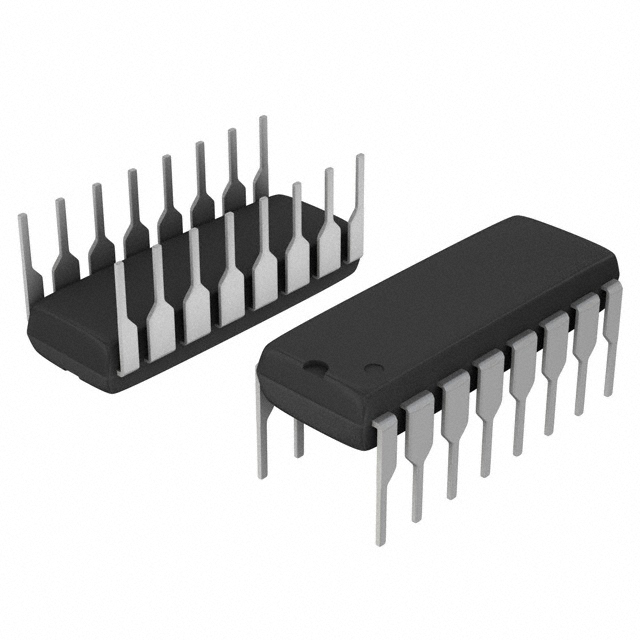
The 74ACT175PC is a D-type flip-flop logic integrated circuit manufactured by onsemi, designed for digital signal processing and sequential logic applications. This component features 1 element with 4 bits per element, positive edge triggering, and complementary output configuration. The part is classified as obsolete, making identification of functionally equivalent alternatives essential for ongoing system maintenance, repair, and legacy design support.
Substiute Parts
Key Parameters
| Parameter | Value |
|---|---|
| Manufacturer Part Number | 74ACT175PC |
| Manufacturer | onsemi |
| Base Product Number | 74ACT175 |
| Category | Logic |
| Function | Master Reset |
| Type | D-Type Flip Flop |
| Number of Elements | 1 |
| Number of Bits per Element | 4 |
| Output Type | Complementary |
| Trigger Type | Positive Edge |
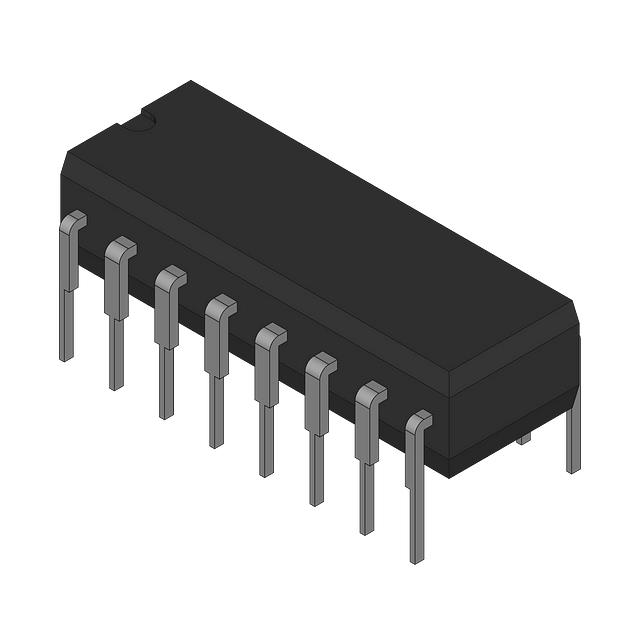
| Package / Case | 16-DIP (0.300", 7.62mm) |
| Mounting Type | Through Hole |
| Voltage - Supply | 4.5V ~ 5.5V |
| Operating Temperature | -40°C ~ 85°C (TA) |
| Product Status | Obsolete |
Substitute Part Grouping Explanation
Substitution of the 74ACT175PC is determined by strict equivalence across the following critical parameters:
Functional Equivalence Criteria:
- Base product number: 74ACT175 (identical logic family and pinout)
- Type: D-Type flip-flop with 1 element, 4 bits per element
- Output configuration: Complementary
- Trigger mechanism: Positive edge
- Function: Master reset capability
- Package: 16-DIP (0.300", 7.62mm) through-hole mounting
Electrical Compatibility Range:
- Supply voltage: 4.5V ~ 5.5V (must overlap or be contained within this range)
- Output current capability: 24mA high and low (minimum requirement)
- Quiescent current: Must not exceed specified operating conditions
Environmental Tolerance:
- Operating temperature range must accommodate the application's thermal requirements
- Moisture sensitivity level and compliance certifications must be evaluated for the specific use case
The CD74ACT175E qualifies as a direct substitute based on identical base product number, package configuration, functional architecture, and electrical parameter compatibility within the specified supply voltage and output current ranges.
Parameter Comparison
| Parameter | 74ACT175PC (onsemi) | CD74ACT175E (Harris Corporation) | Compatibility |
|---|---|---|---|
| Base Product Number | 74ACT175 | 74ACT175 | Identical |
| Type | D-Type | D-Type | Identical |
| Number of Elements | 1 | 1 | Identical |
| Number of Bits per Element | 4 | 4 | Identical |
| Output Type | Complementary | Complementary | Identical |
| Trigger Type | Positive Edge | Positive Edge | Identical |
| Function | Master Reset | Master Reset | Identical |
| Package / Case | 16-DIP (0.300", 7.62mm) | 16-DIP (0.300", 7.62mm) | Identical |
| Mounting Type | Through Hole | Through Hole | Identical |
| Voltage - Supply | 4.5V ~ 5.5V | 4.5V ~ 5.5V | Identical |
| Current - Output High, Low | 24mA, 24mA | 24mA, 24mA | Identical |
| Clock Frequency | 236 MHz | 114 MHz | CD74ACT175E rated lower |
| Max Propagation Delay @ 5V, 50pF | 11ns | 11.5ns | CD74ACT175E slightly higher |
| Current - Quiescent (Iq) | 40 µA | 8 µA | CD74ACT175E lower (favorable) |
| Input Capacitance | 4.5 pF | 10 pF | CD74ACT175E higher |
| Operating Temperature | -40°C ~ 85°C (TA) | -55°C ~ 125°C (TA) | CD74ACT175E wider range |
| Product Status | Obsolete | Obsolete | Both obsolete |
Engineering Selection Recommendations
Substitution Feasibility:
The CD74ACT175E (Harris Corporation) is a direct functional and electrical substitute for the 74ACT175PC. Both components share identical base product designation, logic architecture, package configuration, and supply voltage specifications. Pinout compatibility is assured through the standardized 74ACT175 logic family definition.
Performance Considerations:
The CD74ACT175E exhibits slightly lower maximum clock frequency (114 MHz versus 236 MHz) and marginally higher propagation delay (11.5ns versus 11ns). These differences are negligible for most legacy digital logic applications operating at standard TTL/CMOS clock rates. The CD74ACT175E provides superior quiescent current performance (8 µA versus 40 µA), reducing power consumption in standby conditions.
Environmental Advantages:
The CD74ACT175E supports an extended operating temperature range (-55°C ~ 125°C) compared to the 74ACT175PC (-40°C ~ 85°C), providing greater thermal margin for applications in extreme environments.
Compliance Status:
The 74ACT175PC carries REACH Unaffected status. The CD74ACT175E is classified as RoHS non-compliant. Selection between these parts must account for regulatory requirements specific to the end application and geographic market.
Recommendation:
For applications requiring direct pin-for-pin replacement with identical electrical performance, the CD74ACT175E is suitable. For systems with strict RoHS compliance mandates, alternative modern logic families should be evaluated, as both parts are obsolete.
Frequently Asked Questions (FAQ)
Q: Can the CD74ACT175E replace the 74ACT175PC in existing circuit boards?
A: Yes. Both components are 16-DIP through-hole packages with identical pinout, supply voltage requirements (4.5V ~ 5.5V), and output current specifications (24mA). Direct socket substitution is possible without circuit modification.
Q: What is the significance of the different clock frequency ratings?
A: The 74ACT175PC is rated for 236 MHz maximum clock frequency, while the CD74ACT175E is rated for 114 MHz. For legacy systems typically operating at standard TTL clock rates (typically 1-50 MHz), this difference is not operationally significant. Applications requiring operation above 114 MHz should retain the original 74ACT175PC or evaluate modern alternatives.
Q: How do the propagation delay differences affect system timing?
A: The 74ACT175PC specifies 11ns maximum propagation delay at 5V with 50pF load, compared to 11.5ns for the CD74ACT175E. This 0.5ns difference is negligible in most digital logic applications and does not require timing budget recalculation for standard designs.
Q: Why does the CD74ACT175E have lower quiescent current?
A: The CD74ACT175E draws 8 µA quiescent current versus 40 µA for the 74ACT175PC. This reflects manufacturing process differences between Harris Corporation and onsemi. The lower quiescent current is advantageous for battery-powered or low-power standby applications.
Q: What does "obsolete" status mean for both parts?
A: Both the 74ACT175PC and CD74ACT175E are classified as obsolete, indicating they are no longer in active production. Availability is limited to existing inventory from distributors and component brokers. For new designs, modern logic families (such as 74LVC or 74AHC series) should be considered.
Q: Are there RoHS compliance differences between these parts?
A: Yes. The 74ACT175PC carries REACH Unaffected status, while the CD74ACT175E is RoHS non-compliant. Applications subject to RoHS directives (primarily in EU markets) may face regulatory restrictions on the CD74ACT175E. Verify compliance requirements for your specific application and market.
Q: Can I use these parts interchangeably in high-temperature applications?
A: The CD74ACT175E supports operation to 125°C, exceeding the 74ACT175PC's 85°C maximum. For applications requiring extended temperature operation, the CD74ACT175E provides superior thermal margin. Verify that all other circuit components also support the extended temperature range.
Q: What is the input capacitance difference, and does it matter?
A: The CD74ACT175E has 10 pF input capacitance compared to 4.5 pF for the 74ACT175PC. This higher capacitance may slightly increase input loading on driving circuits. For standard logic-level signals, this difference is typically inconsequential. High-frequency or low-drive-strength applications should account for this parameter.
Alternative Parts

SJ6012L2TP
Littelfuse Inc.
6 Alternative Parts

JMK107BBJ476MA-RE
Taiyo Yuden
10 Alternative Parts

GMK107BBJ475MA-T
Taiyo Yuden
5 Alternative Parts
SJ6020N2ARP
Littelfuse Inc.
3 Alternative Parts
SJ6025R2ATP
Littelfuse Inc.
4 Alternative Parts

2474-05L
API Delevan Inc.
1 Alternative Parts

4590R-684K
API Delevan Inc.
1 Alternative Parts

CM6560R-334
API Delevan Inc.
1 Alternative Parts

CM6460-104
API Delevan Inc.
1 Alternative Parts

5526-12
API Delevan Inc.
1 Alternative Parts