


Request Quote
(Ships tomorrow)
74AC74MTC Equivalent & Substitute Parts
Part Overview
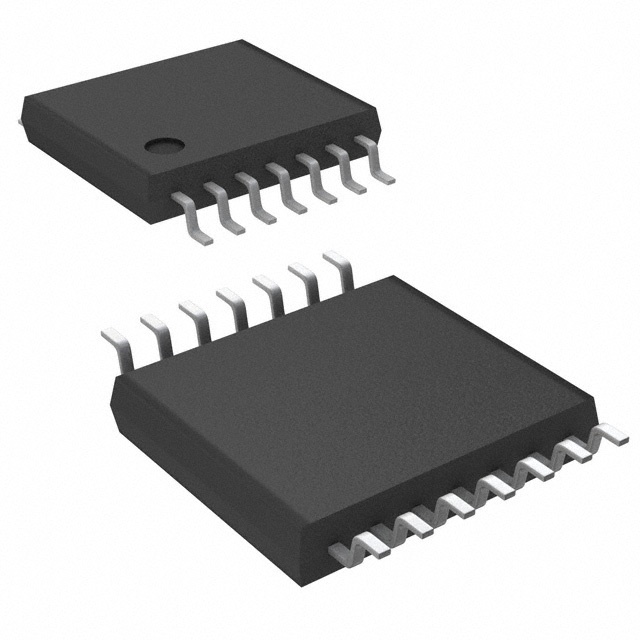
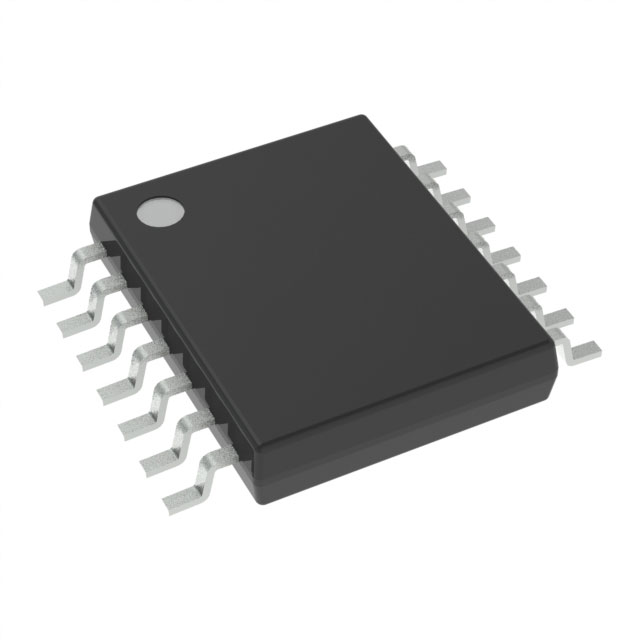
The 74AC74MTC is a dual D-type flip-flop logic integrated circuit manufactured by onsemi in a 14-TSSOP surface mount package. This device implements two independent D-type flip-flops with set and reset functionality, operating at a maximum clock frequency of 160 MHz. The main part is currently listed as obsolete, making equivalent substitute parts necessary for ongoing production and maintenance applications. Substitute parts maintain functional equivalence while offering improved availability and updated product status.
Substiute Parts
Key Parameters
| Parameter | Value |
|---|---|
| Logic Function | D-Type Flip-Flop, Dual Element |
| Number of Elements | 2 |
| Bits per Element | 1 |
| Output Type | Complementary |
| Trigger Type | Positive Edge |
| Clock Frequency (Max) | 160 MHz |
| Supply Voltage Range | 2V to 6V |
| Output Current (High/Low) | 24 mA / 24 mA |
| Operating Temperature | -40°C to +85°C |
| Mounting Type | Surface Mount |
| Moisture Sensitivity Level | MSL 1 (Unlimited) |
Substitute Part Grouping Explanation
Substitution for the 74AC74MTC is determined by the following critical parameters that must remain constant across all equivalent parts:
- Logic Function: Dual D-type flip-flop with set/reset capability
- Electrical Performance: 160 MHz clock frequency, 24 mA output drive, 2V to 6V supply range
- Trigger Behavior: Positive edge triggered operation
- Temperature Range: -40°C to +85°C operation
- Package Compatibility: Surface mount packages (14-TSSOP or 14-SOIC)
Substitute parts are grouped into two categories:
Direct Substitutes (Package-Compatible): Parts maintaining the 14-TSSOP package footprint with identical pinout and electrical characteristics.
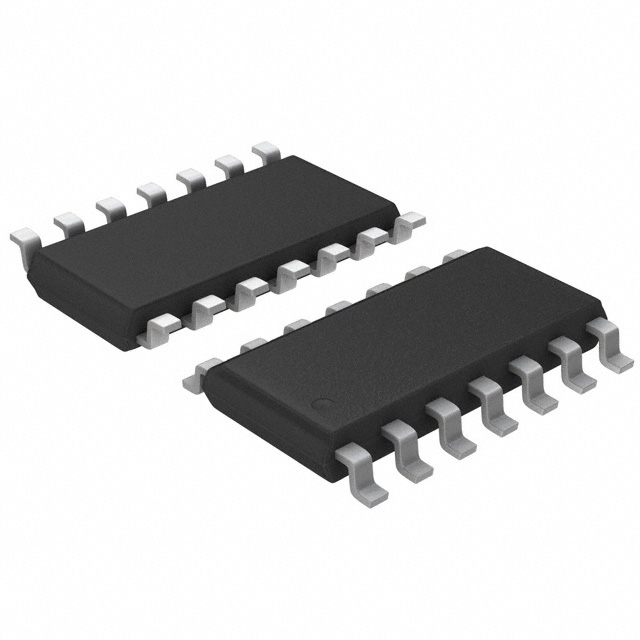
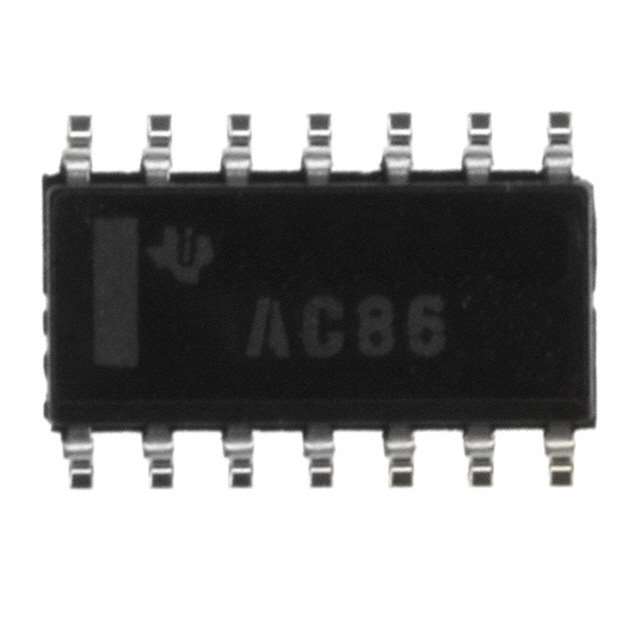
Similar Substitutes (Functional Equivalents): Parts with identical electrical function but different surface mount packages (14-SOIC or 14-SSOP), requiring PCB layout modification.
Parameter Comparison
| Part Number | Manufacturer | Package | Product Status | Propagation Delay (ns) | Quiescent Current (µA) | Input Capacitance (pF) | RoHS Compliance |
|---|---|---|---|---|---|---|---|
| 74AC74MTC | onsemi | 14-TSSOP | Obsolete | 10 @ 5V, 50pF | 20 | 4.5 | Not specified |
| MC74AC74DTR2G | onsemi | 14-TSSOP | Active | 10 @ 5V, 50pF | 4 | 4.5 | ROHS3 Compliant |
| SN74AC74PW | Texas Instruments | 14-TSSOP | Discontinued at DiGi Electronics | 10 @ 5V, 50pF | 2 | 3 | ROHS3 Compliant |
| SN74AC74PWR | Texas Instruments | 14-TSSOP | Active | 6 @ 5V, 50pF | 2 | 3 | ROHS3 Compliant |
| SN74AC74D | Texas Instruments | 14-SOIC | Discontinued at DiGi Electronics | 6 @ 5V, 50pF | 2 | 3 | ROHS3 Compliant |
| SN74AC74DBR | Texas Instruments | 14-SSOP | Active | 10 @ 5V, 50pF | 2 | 3 | ROHS3 Compliant |
Engineering Selection Recommendations
Primary Recommendation: MC74AC74DTR2G (onsemi, 14-TSSOP)
This part provides direct package compatibility with the 74AC74MTC, maintaining identical 14-TSSOP footprint and pinout. The device is currently in active production status with ROHS3 compliance certification. Quiescent current is reduced to 4 µA compared to the original 20 µA specification, providing improved power efficiency in battery-powered or low-power applications.
Secondary Recommendation: SN74AC74PWR (Texas Instruments, 14-TSSOP)
This part maintains the 14-TSSOP package footprint and is in active production status with ROHS3 compliance. It offers improved propagation delay performance (6 ns versus 10 ns) and lower quiescent current (2 µA), making it suitable for timing-critical applications. Higher inventory availability supports production continuity.
Alternative for Package-Flexible Designs: SN74AC74DBR (Texas Instruments, 14-SSOP)
This part is functionally equivalent with active product status and ROHS3 compliance. The 14-SSOP package requires PCB layout modification but is suitable for designs where package footprint flexibility exists. Propagation delay matches the original specification at 10 ns.
Not Recommended: SN74AC74D and SN74AC74PW
Both parts are discontinued at DiGi Electronics, limiting long-term supply availability despite current inventory levels.
Frequently Asked Questions (FAQ)
Q: Can I directly replace 74AC74MTC with MC74AC74DTR2G without PCB modification?
A: Yes. Both parts use the 14-TSSOP package with identical pinout and electrical specifications. No PCB layout changes are required.
Q: What is the difference between SN74AC74PWR and SN74AC74PW?
A: Both are Texas Instruments 14-TSSOP packages with identical electrical function. SN74AC74PWR is in active production status, while SN74AC74PW is discontinued at DiGi Electronics. SN74AC74PWR is the preferred choice for new designs.
Q: Can I use SN74AC74D as a substitute if my PCB layout permits package changes?
A: Yes, functionally. SN74AC74D is a 14-SOIC package variant with equivalent electrical performance. However, it is discontinued at DiGi Electronics, making it unsuitable for production applications requiring long-term supply assurance.
Q: Does the reduced quiescent current in MC74AC74DTR2G affect circuit operation?
A: No. The reduction from 20 µA to 4 µA represents improved manufacturing efficiency and does not alter functional behavior. All electrical specifications for logic operation remain identical.
Q: Are all substitute parts ROHS3 compliant?
A: All recommended substitute parts (MC74AC74DTR2G, SN74AC74PWR, SN74AC74D, SN74AC74DBR) carry ROHS3 compliance certification. The original 74AC74MTC does not specify RoHS status.
Q: What is the significance of propagation delay differences between parts?
A: Propagation delay determines the maximum frequency at which the flip-flop can reliably operate. All parts support the 160 MHz specification. Faster propagation delays (6 ns versus 10 ns) provide additional timing margin in high-frequency applications but do not affect compatibility with the original design.
Q: Can I mix different substitute parts in the same circuit board?
A: Yes. All substitute parts maintain identical electrical specifications for supply voltage, output current, temperature range, and logic function. Mixed usage is functionally compatible.
Alternative Parts

SJ6012L2TP
Littelfuse Inc.
6 Alternative Parts

JMK107BBJ476MA-RE
Taiyo Yuden
10 Alternative Parts

GMK107BBJ475MA-T
Taiyo Yuden
5 Alternative Parts
SJ6020N2ARP
Littelfuse Inc.
3 Alternative Parts
SJ6025R2ATP
Littelfuse Inc.
4 Alternative Parts

2474-05L
API Delevan Inc.
1 Alternative Parts

4590R-684K
API Delevan Inc.
1 Alternative Parts

CM6560R-334
API Delevan Inc.
1 Alternative Parts

CM6460-104
API Delevan Inc.
1 Alternative Parts

5526-12
API Delevan Inc.
1 Alternative Parts