


Request Quote
(Ships tomorrow)
Würth Elektronik 744773027 Equivalent & Substitute Parts
Part Overview
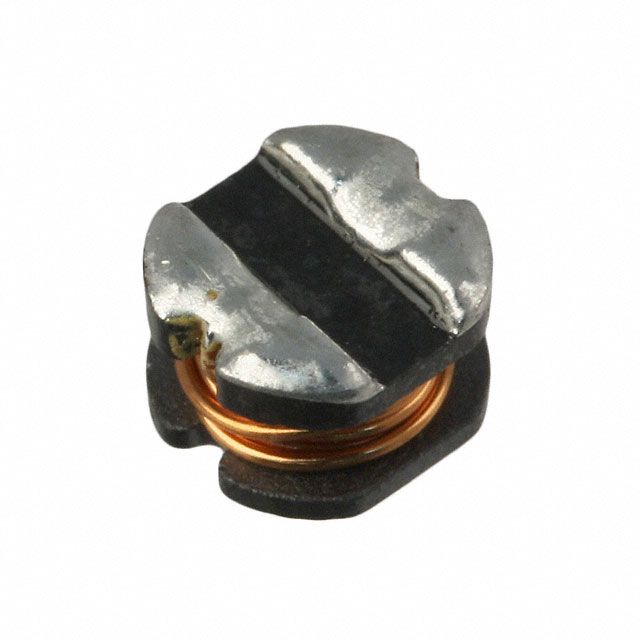
The Würth Elektronik 744773027 is a 2.7 µH unshielded drum core wirewound inductor rated for 2.25 A continuous current with a maximum DC resistance of 79 mOhm. This surface mount component operates across the industrial temperature range of -40°C to 125°C and is designed for applications requiring compact, high-frequency energy storage and filtering in power conversion circuits.
The part is currently in active production status with full ROHS3 compliance and unlimited moisture sensitivity rating (MSL 1). Substitute parts are necessary when addressing supply chain constraints, inventory availability, or when design specifications permit tolerance of minor performance variations within the allowed electrical and mechanical parameters.
Substiute Parts
Key Parameters
| Parameter | Value |
|---|---|
| Inductance | 2.7 µH |
| Inductance Tolerance | ±20% |
| Current Rating | 2.25 A |
| DC Resistance (DCR) | 79 mOhm Max |
| Current - Saturation (Isat) | 2.97 A |
| Core Material | Ferrite |
| Shielding | Unshielded |
| Mounting Type | Surface Mount |
| Package Size | 4.50mm L x 4.00mm W x 4.60mm H |
| Operating Temperature | -40°C to 125°C |
| Self Resonant Frequency | 72 MHz |
| RoHS Status | ROHS3 Compliant |
| MSL Rating | 1 (Unlimited) |
Substitute Part Grouping Explanation
Substitution of the Würth Elektronik 744773027 is determined by strict equivalence across the following critical parameters:
Mandatory Equivalence Criteria:
- Inductance value: 2.7 µH with ±20% tolerance
- Core type: Ferrite drum core, unshielded wirewound construction
- Mounting: Surface mount, nonstandard package
- Physical dimensions: 4.50mm L x 4.00mm W x 4.60mm H maximum
- Operating temperature range: -40°C to 125°C minimum
- RoHS3 compliance and MSL 1 rating
Allowable Performance Variations:
- Current rating: Substitute must meet or exceed 2.25 A
- DC resistance: Substitute may be lower than 79 mOhm (improved performance)
- Saturation current: Substitute may exceed 2.97 A (improved headroom)
- Self resonant frequency: Substitute may differ from 72 MHz within application tolerance
The Bourns SDR0403-2R7ML meets all mandatory criteria while offering improved electrical performance characteristics.
Parameter Comparison
| Parameter | Würth 744773027 | Bourns SDR0403-2R7ML | Compatibility |
|---|---|---|---|
| Inductance | 2.7 µH | 2.7 µH | Exact Match |
| Inductance Tolerance | ±20% | ±20% | Exact Match |
| Current Rating (Amps) | 2.25 A | 2.43 A | Substitute Exceeds |
| DC Resistance (DCR) | 79 mOhm Max | 52 mOhm Max | Substitute Superior |
| Current - Saturation (Isat) | 2.97 A | 4.6 A | Substitute Exceeds |
| Core Material | Ferrite | Ferrite | Exact Match |
| Shielding | Unshielded | Unshielded | Exact Match |
| Mounting Type | Surface Mount | Surface Mount | Exact Match |
| Package Size | 4.50mm L x 4.00mm W x 4.60mm H | 4.50mm L x 4.00mm W x 4.60mm H | Exact Match |
| Operating Temperature | -40°C to 125°C | -40°C to 125°C | Exact Match |
| Self Resonant Frequency | 72 MHz | 75 MHz | Within Tolerance |
| RoHS Status | ROHS3 Compliant | ROHS3 Compliant | Exact Match |
| MSL Rating | 1 (Unlimited) | 1 (Unlimited) | Exact Match |
Engineering Selection Recommendations
The Bourns SDR0403-2R7ML is a direct substitute for the Würth Elektronik 744773027 based on the following engineering criteria:
Electrical Compatibility: Both components deliver 2.7 µH inductance with identical ±20% tolerance. The Bourns substitute provides superior electrical performance with 52 mOhm maximum DC resistance compared to 79 mOhm, resulting in lower power dissipation. Current rating of 2.43 A exceeds the original 2.25 A requirement, and saturation current of 4.6 A provides additional design margin.
Mechanical and Environmental Compatibility: Identical physical dimensions (4.50mm x 4.00mm x 4.60mm) ensure direct PCB footprint compatibility. Both components operate across -40°C to 125°C and carry ROHS3 compliance with MSL 1 rating, meeting identical regulatory and environmental requirements.
Frequency Performance: Self resonant frequency of 75 MHz in the substitute is within acceptable tolerance of the original 72 MHz specification, with negligible impact on high-frequency filtering applications.
Product Status and Supply: Both components are in active production with full compliance documentation available. Selection between these parts should be based on inventory availability and cost considerations, as electrical and mechanical compatibility is confirmed.
Frequently Asked Questions (FAQ)
Q: Can the Bourns SDR0403-2R7ML be used as a direct replacement on existing PCBs designed for the Würth 744773027?
A: Yes. Both components share identical physical dimensions (4.50mm L x 4.00mm W x 4.60mm H) and surface mount package configuration, enabling direct PCB footprint compatibility without layout modifications.
Q: What are the key differences between these two inductors?
A: The primary differences are DC resistance (52 mOhm vs. 79 mOhm) and current rating (2.43 A vs. 2.25 A), both favoring the Bourns substitute. Self resonant frequency differs by 3 MHz (75 MHz vs. 72 MHz), which is negligible for most filtering and energy storage applications.
Q: Are both parts compliant with the same regulatory standards?
A: Yes. Both the Würth 744773027 and Bourns SDR0403-2R7ML are ROHS3 compliant, carry MSL 1 (unlimited) moisture sensitivity rating, and operate across -40°C to 125°C. Regulatory and environmental requirements are identical.
Q: Does the lower DC resistance of the Bourns part affect circuit performance?
A: Lower DC resistance (52 mOhm vs. 79 mOhm) reduces resistive losses and heat generation, representing an improvement in circuit efficiency. This change is beneficial for power conversion and filtering applications.
Q: What inductance tolerance should be expected from either part?
A: Both components are specified with ±20% inductance tolerance. Actual inductance values will fall within the range of 2.16 µH to 3.24 µH for either part.
Q: Can these inductors be used interchangeably in high-frequency applications?
A: Yes, within the frequency range where self resonant frequency is not a limiting factor. The 3 MHz difference in self resonant frequency (72 MHz vs. 75 MHz) is typically insignificant for applications below 50 MHz. For applications approaching or exceeding 70 MHz, verify that the specific self resonant frequency meets circuit requirements.
Alternative Parts

SJ6012L2TP
Littelfuse Inc.
6 Alternative Parts

JMK107BBJ476MA-RE
Taiyo Yuden
10 Alternative Parts

GMK107BBJ475MA-T
Taiyo Yuden
5 Alternative Parts
SJ6020N2ARP
Littelfuse Inc.
3 Alternative Parts
SJ6025R2ATP
Littelfuse Inc.
4 Alternative Parts

2474-05L
API Delevan Inc.
1 Alternative Parts

4590R-684K
API Delevan Inc.
1 Alternative Parts

CM6560R-334
API Delevan Inc.
1 Alternative Parts

CM6460-104
API Delevan Inc.
1 Alternative Parts

5526-12
API Delevan Inc.
1 Alternative Parts