


Request Quote
(Ships tomorrow)
Equivalent & Substitute Parts for 7204L30DB
Part Overview
The 7204L30DB is an asynchronous FIFO (First-In-First-Out) memory IC manufactured by Renesas Electronics Corporation. This device provides 36K bits of storage (4K x 9 organization) with a 30ns access time and operates at data rates up to 25MHz. The component is packaged in a 28-CDIP through-hole configuration and is designed for uni-directional data flow applications requiring depth and width expansion capabilities.
The 7204L30DB is classified as obsolete. Identifying equivalent substitute parts is necessary to maintain system functionality, ensure continued availability, and support design updates or production transitions.
Substiute Parts
Key Parameters
| Parameter | Value |
|---|---|
| Memory Size | 36K (4K x 9) |
| Function | Asynchronous |
| Data Rate | 25MHz |
| Access Time | 30ns |
| Voltage Supply | 4.5V ~ 5.5V |
| Current Supply (Max) | 150mA |
| Bus Directional | Uni-Directional |
| Operating Temperature | -55°C ~ 125°C |
| Mounting Type | Through Hole |
| Package | 28-CDIP (0.600", 15.24mm) |
Substitute Part Grouping Explanation
Substitution of the 7204L30DB is based on the following core electrical and mechanical parameters:
- Memory Organization: 36K (4K x 9) configuration must be maintained
- Function Type: Asynchronous FIFO operation required
- Bus Architecture: Uni-directional data flow
- Voltage Compatibility: 4.5V ~ 5.5V supply range
- Expansion Capability: Depth and width expansion support
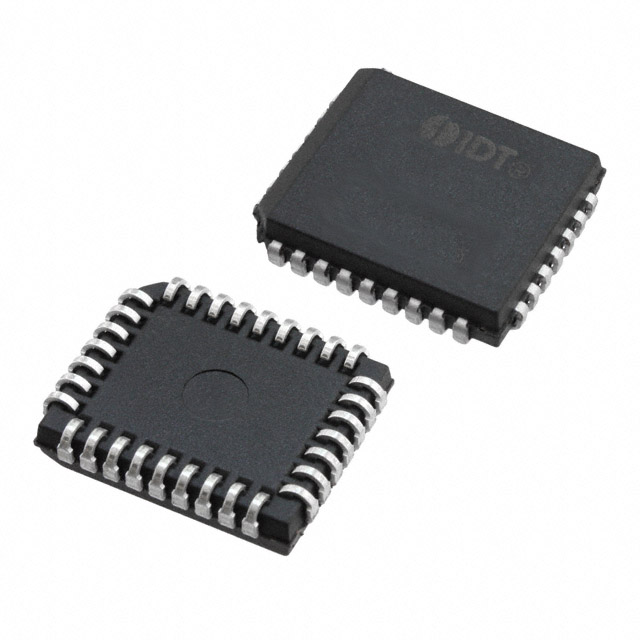
The 7204L12JG qualifies as a manufacturer-recommended substitute because it maintains identical memory organization, asynchronous function, uni-directional bus architecture, and compatible voltage supply specifications. While the substitute offers improved performance characteristics (12ns access time, 50MHz data rate) and different packaging (32-PLCC surface mount), these represent enhancements rather than deviations from the core functional requirements.
Parameter Comparison
| Parameter | 7204L30DB (Main Part) | 7204L12JG (Substitute) |
|---|---|---|
| Manufacturer | Renesas Electronics Corporation | Renesas Electronics Corporation |
| Memory Size | 36K (4K x 9) | 36K (4K x 9) |
| Function | Asynchronous | Asynchronous |
| Data Rate | 25MHz | 50MHz |
| Access Time | 30ns | 12ns |
| Voltage Supply | 4.5V ~ 5.5V | 4.5V ~ 5.5V |
| Current Supply (Max) | 150mA | 120mA |
| Bus Directional | Uni-Directional | Uni-Directional |
| Operating Temperature | -55°C ~ 125°C | 0°C ~ 70°C |
| Mounting Type | Through Hole | Surface Mount |
| Package | 28-CDIP (0.600", 15.24mm) | 32-PLCC (14x11.46) |
| Product Status | Obsolete | Active |
| RoHS Status | RoHS non-compliant | ROHS3 Compliant |
Engineering Selection Recommendations
The 7204L12JG is the manufacturer-recommended substitute for the 7204L30DB. Selection of this substitute is supported by the following factors:
Product Status: The 7204L30DB is obsolete, while the 7204L12JG maintains active product status with confirmed inventory availability (1376 pcs in stock).
Compliance: The 7204L12JG achieves ROHS3 compliance, whereas the 7204L30DB is RoHS non-compliant. This distinction is significant for applications subject to environmental and regulatory requirements.
Electrical Compatibility: Both devices operate within the same 4.5V ~ 5.5V supply range and maintain identical memory organization and asynchronous FIFO function. The substitute exhibits lower maximum supply current (120mA vs. 150mA), representing a favorable characteristic.
Performance Enhancement: The 7204L12JG provides superior access time (12ns vs. 30ns) and higher data rate capability (50MHz vs. 25MHz), enabling operation in applications with more demanding timing requirements.
Packaging Consideration: The substitute transitions from through-hole (28-CDIP) to surface-mount (32-PLCC) packaging. This change requires PCB redesign and assembly process modification but is compatible with modern manufacturing practices.
Temperature Range: The 7204L12JG operates over 0°C ~ 70°C, which is narrower than the 7204L30DB range (-55°C ~ 125°C). Applications requiring extended temperature operation must evaluate this limitation.
Frequently Asked Questions (FAQ)
Q: Can the 7204L12JG directly replace the 7204L30DB without circuit modification?
A: Direct pin-for-pin replacement is not possible due to package differences (28-CDIP vs. 32-PLCC). PCB redesign is required. However, the electrical interface and functional behavior are compatible when proper pin mapping is implemented.
Q: What is the significance of the access time difference (30ns vs. 12ns)?
A: Access time defines the delay between address input and valid data output. The 7204L12JG's 12ns access time is faster, allowing operation in systems with tighter timing constraints. Existing designs using the 7204L30DB will function correctly with the faster substitute, as timing margins typically accommodate improved performance.
Q: Does the operating temperature range difference affect substitution?
A: The 7204L12JG's narrower temperature range (0°C ~ 70°C) is suitable for commercial and industrial applications. Applications requiring extended temperature operation (-55°C ~ 125°C) must retain the 7204L30DB or identify alternative solutions. Temperature range compatibility must be verified against system requirements.
Q: What does the higher data rate (50MHz vs. 25MHz) mean for system integration?
A: Data rate represents the maximum frequency at which the FIFO can accept or provide data. The 7204L12JG's 50MHz capability supports higher-speed data transfer applications. Existing designs operating at 25MHz or below will function correctly with the substitute.
Q: Is the RoHS compliance difference important?
A: RoHS3 compliance of the 7204L12JG is advantageous for applications subject to environmental regulations or customer requirements. The 7204L30DB's non-compliance may restrict use in regulated markets or with certain OEMs. Compliance requirements must be evaluated against application scope.
Q: How does the packaging change from through-hole to surface mount affect production?
A: Surface-mount packaging (32-PLCC) requires different assembly equipment and processes compared to through-hole (28-CDIP). PCB layout, soldering processes, and test procedures must be adapted. Modern manufacturing facilities typically support both technologies, but process validation is necessary.
Alternative Parts

SJ6012L2TP
Littelfuse Inc.
6 Alternative Parts

JMK107BBJ476MA-RE
Taiyo Yuden
10 Alternative Parts

GMK107BBJ475MA-T
Taiyo Yuden
5 Alternative Parts
SJ6020N2ARP
Littelfuse Inc.
3 Alternative Parts
SJ6025R2ATP
Littelfuse Inc.
4 Alternative Parts

2474-05L
API Delevan Inc.
1 Alternative Parts

4590R-684K
API Delevan Inc.
1 Alternative Parts

CM6560R-334
API Delevan Inc.
1 Alternative Parts

CM6460-104
API Delevan Inc.
1 Alternative Parts

5526-12
API Delevan Inc.
1 Alternative Parts