


Request Quote
(Ships tomorrow)
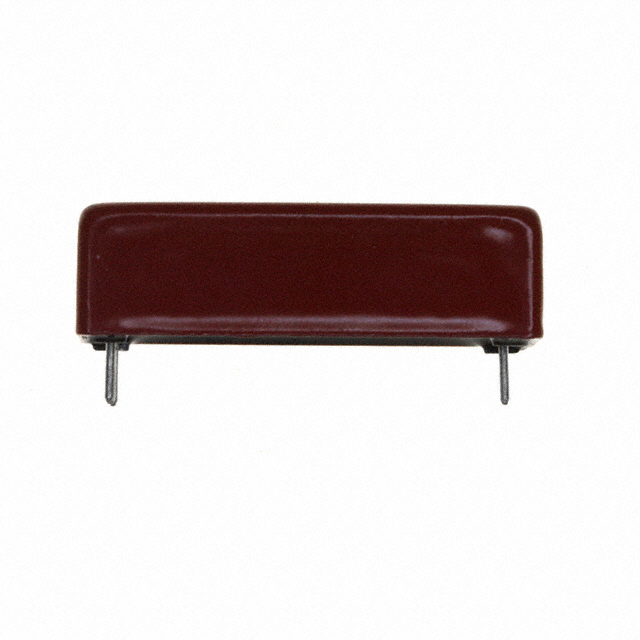
Equivalent & Substitute Parts: Coto Technology 7201-05-1100
Part Overview
The Coto Technology 7201-05-1100 is a reed relay with single-pole, single-throw (SPST) normally open contact configuration, rated for 1 ampere at 5 volts DC coil voltage. This component is classified as obsolete, which necessitates identification of functionally equivalent alternatives for ongoing system support and new design implementations. The relay operates through electromagnetic actuation of sealed reed contacts, providing galvanic isolation between control and load circuits.
Substiute Parts
Key Parameters
| Parameter | Value |
|---|---|
| Manufacturer Part Number | 7201-05-1100 |
| Manufacturer | Coto Technology |
| Product Status | Obsolete |
| Coil Voltage | 5VDC |
| Contact Form | SPST-NO (1 Form A) |
| Contact Rating (Current) | 1 A |
| Switching Voltage (Max) | 500VAC, 500VDC |
| Coil Current | 71.4 mA |
| Coil Resistance | 70 Ohms |
| Must Operate Voltage | 3.75 VDC |
| Must Release Voltage | 0.4 VDC |
| Operate Time | 2 ms |
| Release Time | 1 ms |
| Operating Temperature Range | -20°C to 85°C |
| Mounting Type | Through Hole |
| Termination Style | PC Pin |
| RoHS Status | ROHS3 Compliant |
| Moisture Sensitivity Level | 1 (Unlimited) |
| REACH Status | REACH Unaffected |
Substitute Part Grouping Explanation
Substitution of the Coto Technology 7201-05-1100 is determined by strict equivalence across the following critical parameters:
Contact Configuration and Rating: The substitute part must maintain SPST-NO (1 Form A) contact topology with a minimum current rating of 1 ampere to preserve circuit functionality.
Coil Voltage: The substitute must operate at 5VDC nominal coil voltage to ensure compatibility with existing control circuitry without modification.
Actuation Characteristics: The substitute must satisfy the must-operate voltage threshold of 3.75 VDC and must-release voltage of 0.4 VDC to maintain predictable relay behavior within the control system.
Mechanical Interface: Through-hole mounting with PC pin termination is required for direct replacement in existing printed circuit board layouts.
Regulatory Compliance: The substitute must maintain ROHS3 compliance and REACH unaffected status to satisfy current environmental and safety standards.
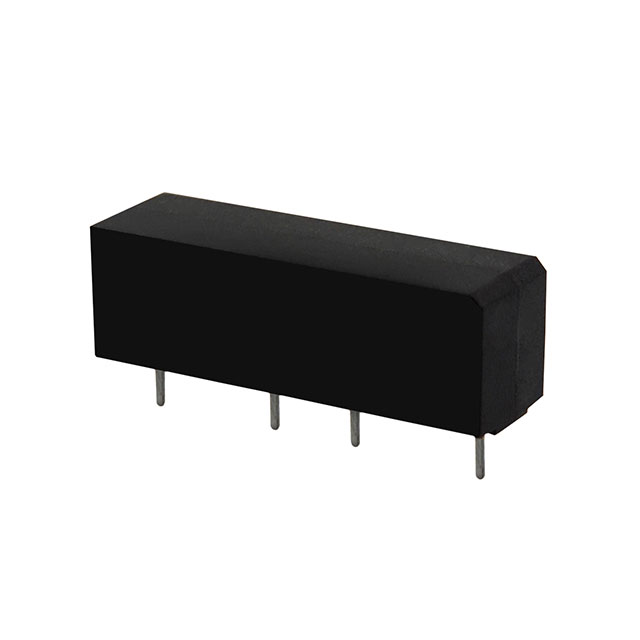
The Standex-Meder Electronics SHV05-1A85-78L4K satisfies all substitution criteria while offering enhanced electrical performance characteristics and active product status.
Parameter Comparison
| Parameter | Coto Technology 7201-05-1100 | Standex-Meder Electronics SHV05-1A85-78L4K |
|---|---|---|
| Coil Voltage | 5VDC | 5VDC |
| Contact Form | SPST-NO (1 Form A) | SPST-NO (1 Form A) |
| Contact Rating (Current) | 1 A | 1 A |
| Switching Voltage (Max) | 500VAC, 500VDC | 1000VAC, 1000VDC |
| Coil Current | 71.4 mA | 35.7 mA |
| Coil Resistance | 70 Ohms | 140 Ohms |
| Must Operate Voltage | 3.75 VDC | 3.75 VDC |
| Must Release Voltage | 0.4 VDC | 0.5 VDC |
| Operate Time | 2 ms | 1.1 ms |
| Release Time | 1 ms | 0.1 ms |
| Operating Temperature Range | -20°C to 85°C | -40°C to 100°C |
| Mounting Type | Through Hole | Through Hole |
| Termination Style | PC Pin | PC Pin |
| Product Status | Obsolete | Active |
| RoHS Status | ROHS3 Compliant | ROHS3 Compliant |
| REACH Status | REACH Unaffected | REACH Unaffected |
Engineering Selection Recommendations
The Standex-Meder Electronics SHV05-1A85-78L4K is the qualified substitute for the obsolete Coto Technology 7201-05-1100. Both components maintain identical coil voltage, contact configuration, and current rating specifications. The substitute part carries active product status, ensuring long-term availability and supply chain continuity.
Both parts maintain ROHS3 compliance and REACH unaffected status, satisfying current regulatory requirements. The substitute demonstrates enhanced electrical performance through doubled switching voltage capability (1000VAC/1000VDC versus 500VAC/500VDC), reduced coil current consumption (35.7 mA versus 71.4 mA), and extended operating temperature range (-40°C to 100°C versus -20°C to 85°C). These performance enhancements provide additional design margin without compromising functional compatibility.
The substitute part maintains identical mechanical interface specifications, enabling direct replacement in existing through-hole printed circuit board layouts without modification to mounting or termination requirements.
Frequently Asked Questions (FAQ)
Q: Can the Standex-Meder Electronics SHV05-1A85-78L4K directly replace the Coto Technology 7201-05-1100 in existing circuit boards?
A: Yes. Both components share identical coil voltage (5VDC), contact configuration (SPST-NO), current rating (1A), mounting type (through-hole), and termination style (PC pin). Direct substitution is supported without circuit board modification.
Q: What are the key differences between these two relay models?
A: The substitute part offers superior switching voltage capability (1000VAC/1000VDC versus 500VAC/500VDC), lower coil current consumption (35.7 mA versus 71.4 mA), faster actuation response (1.1 ms operate time versus 2 ms), and extended operating temperature range (-40°C to 100°C versus -20°C to 85°C). The substitute maintains active product status, ensuring ongoing availability.
Q: Are there packaging differences between these components?
A: The Coto Technology 7201-05-1100 is supplied in bulk packaging, while the Standex-Meder Electronics SHV05-1A85-78L4K is supplied in tube packaging. Both packaging formats are standard for through-hole relay components and do not affect functional compatibility.
Q: Do both relays meet current environmental compliance standards?
A: Yes. Both the Coto Technology 7201-05-1100 and Standex-Meder Electronics SHV05-1A85-78L4K are ROHS3 compliant and REACH unaffected, satisfying current environmental and safety regulations.
Q: What is the significance of the must-operate and must-release voltage specifications?
A: Must-operate voltage (3.75 VDC for both parts) defines the minimum coil voltage required to guarantee relay actuation. Must-release voltage (0.4 VDC for the original, 0.5 VDC for the substitute) defines the maximum coil voltage at which the relay is guaranteed to release. Both specifications are within acceptable tolerance for direct substitution.
Q: How do the coil resistance values affect circuit design?
A: The substitute part exhibits doubled coil resistance (140 Ohms versus 70 Ohms), resulting in proportionally reduced coil current consumption at identical voltage. This characteristic reduces power dissipation and heat generation in the control circuit while maintaining identical actuation voltage thresholds.
Alternative Parts

SJ6012L2TP
Littelfuse Inc.
6 Alternative Parts

JMK107BBJ476MA-RE
Taiyo Yuden
10 Alternative Parts

GMK107BBJ475MA-T
Taiyo Yuden
5 Alternative Parts
SJ6020N2ARP
Littelfuse Inc.
3 Alternative Parts
SJ6025R2ATP
Littelfuse Inc.
4 Alternative Parts

2474-05L
API Delevan Inc.
1 Alternative Parts

4590R-684K
API Delevan Inc.
1 Alternative Parts

CM6560R-334
API Delevan Inc.
1 Alternative Parts

CM6460-104
API Delevan Inc.
1 Alternative Parts

5526-12
API Delevan Inc.
1 Alternative Parts