


Request Quote
(Ships tomorrow)
Equivalent & Substitute Parts for 5IRC-940
Part Overview
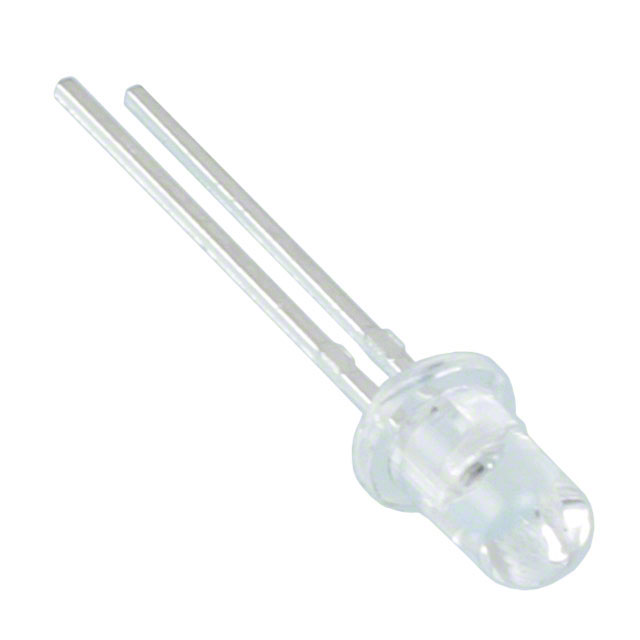
The 5IRC-940 is an infrared (IR) emitter manufactured by Bivar Inc., designed for applications requiring 940nm wavelength emission at 100mA maximum forward current. This component features a radial through-hole package with a 20° viewing angle and operates across the temperature range of -45°C to 85°C. The product is classified as obsolete, making identification of functionally equivalent alternatives necessary for ongoing system support and new design implementations.
Substiute Parts
Key Parameters
| Parameter | Value | Unit |
|---|---|---|
| Wavelength | 940 | nm |
| Current - DC Forward (If) Max | 100 | mA |
| Voltage - Forward (Vf) Typical | 1.2 | V |
| Radiant Intensity (Ie) Min | 1.8 | mW/cm² @ 50mA |
| Viewing Angle | 20 | ° |
| Operating Temperature Range | -45 to 85 | °C |
| Mounting Type | Through Hole | — |
| Package / Case | Radial | — |
| Moisture Sensitivity Level | 1 (Unlimited) | — |
Substitute Part Grouping Explanation
Substitution eligibility for the 5IRC-940 is determined by the following critical parameters:
Primary Matching Criteria:
- Wavelength: 940nm (exact match required)
- Package / Case: Radial through-hole (mechanical compatibility)
- Voltage - Forward (Vf): 1.2V nominal (electrical compatibility)
- Mounting Type: Through Hole (board-level compatibility)
Secondary Compatibility Factors:
- Current - DC Forward (If) Max: Substitute must support the application's required current draw
- Radiant Intensity (Ie): Substitute must meet or exceed the optical output requirements of the application
- Viewing Angle: Substitute viewing angle must be compatible with system optical design
- Operating Temperature Range: Substitute must cover the application's thermal operating envelope
The LTE-209 from Lite-On Inc. qualifies as a substitute based on matching wavelength (940nm), forward voltage (1.2V), package type (radial), and mounting configuration (through-hole). However, the LTE-209 exhibits reduced maximum forward current (60mA versus 100mA) and a narrower viewing angle (16° versus 20°), requiring application-level verification of compatibility.
Parameter Comparison
| Parameter | 5IRC-940 (Bivar Inc.) | LTE-209 (Lite-On Inc.) | Unit |
|---|---|---|---|
| Wavelength | 940 | 940 | nm |
| Current - DC Forward (If) Max | 100 | 60 | mA |
| Voltage - Forward (Vf) Typical | 1.2 | 1.2 | V |
| Radiant Intensity (Ie) Min | 1.8 @ 50mA | 1.38 @ 20mA | mW/cm² / mW/sr |
| Viewing Angle | 20 | 16 | ° |
| Operating Temperature Range | -45 to 85 | -40 to 85 | °C |
| Mounting Type | Through Hole | Through Hole | — |
| Package / Case | Radial | Radial | — |
| Moisture Sensitivity Level | 1 (Unlimited) | 1 (Unlimited) | — |
| Product Status | Obsolete | Active | — |
Engineering Selection Recommendations
For 5IRC-940 Replacement:
The LTE-209 is available as an active product with current inventory (1619 pcs), whereas the 5IRC-940 is obsolete with limited remaining stock (1048 pcs). Both components share identical wavelength (940nm) and forward voltage (1.2V) specifications, ensuring basic electrical compatibility in 940nm infrared applications.
Critical Differences Requiring Application Assessment:
The LTE-209 operates at a maximum forward current of 60mA compared to the 5IRC-940's 100mA rating. Applications designed to operate the 5IRC-940 at currents exceeding 60mA cannot directly substitute the LTE-209 without circuit redesign. Additionally, the LTE-209 features a 16° viewing angle versus the 5IRC-940's 20° angle, which may impact optical system performance in applications with specific beam-width requirements.
The LTE-209 maintains RoHS3 compliance and operates across -40°C to 85°C, covering the 5IRC-940's lower temperature limit of -45°C with a 5°C offset. Applications requiring operation below -40°C cannot use the LTE-209.
Both components carry MSL 1 (Unlimited) moisture sensitivity classification and identical ECCN/HTSUS codes, ensuring regulatory and supply-chain compatibility.
Frequently Asked Questions (FAQ)
Q: Can the LTE-209 directly replace the 5IRC-940 in all applications?
A: Direct substitution is limited by three factors: (1) maximum forward current is reduced from 100mA to 60mA, (2) viewing angle is narrower at 16° versus 20°, and (3) minimum operating temperature is -40°C versus -45°C. Applications operating within these constraints may substitute the LTE-209; others require circuit or optical redesign.
Q: What is the difference between the radiant intensity specifications (mW/cm² versus mW/sr)?
A: The 5IRC-940 specifies radiant intensity as 1.8mW/cm² at 50mA, while the LTE-209 specifies 1.38mW/sr at 20mA. These are different measurement units reflecting different optical characterization methods. Direct numerical comparison is not valid without unit conversion and measurement geometry alignment.
Q: Are both components suitable for new designs?
A: The 5IRC-940 is obsolete and not recommended for new designs. The LTE-209 is active and carries RoHS3 compliance, making it the appropriate choice for new product development requiring 940nm infrared emission in radial through-hole packages.
Q: What packaging options are available?
A: Both the 5IRC-940 and LTE-209 are supplied in radial through-hole packages suitable for conventional PCB assembly. The LTE-209 is available in bulk packaging, while the 5IRC-940 packaging format is not specified in available documentation.
Q: Do both components have identical moisture sensitivity requirements?
A: Yes. Both the 5IRC-940 and LTE-209 carry MSL 1 (Unlimited) classification, indicating no moisture sensitivity constraints during storage or handling.
Alternative Parts

SJ6012L2TP
Littelfuse Inc.
6 Alternative Parts

JMK107BBJ476MA-RE
Taiyo Yuden
10 Alternative Parts

GMK107BBJ475MA-T
Taiyo Yuden
5 Alternative Parts
SJ6020N2ARP
Littelfuse Inc.
3 Alternative Parts
SJ6025R2ATP
Littelfuse Inc.
4 Alternative Parts

2474-05L
API Delevan Inc.
1 Alternative Parts

4590R-684K
API Delevan Inc.
1 Alternative Parts

CM6560R-334
API Delevan Inc.
1 Alternative Parts

CM6460-104
API Delevan Inc.
1 Alternative Parts

5526-12
API Delevan Inc.
1 Alternative Parts