


Request Quote
(Ships tomorrow)
Honeywell 58426HV Magnetic VRS Sensor - Equivalent & Substitute Parts
Part Overview
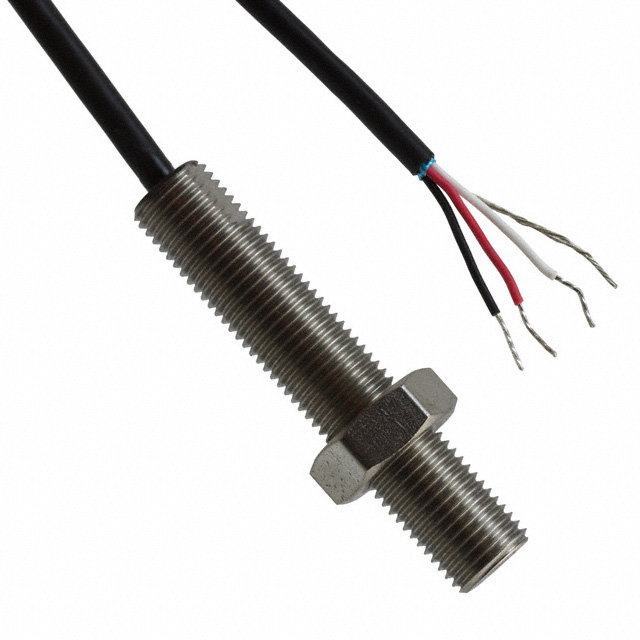
The Honeywell 58426HV is a magnetic variable reluctance sensor (VRS) with digital output, designed for ferrous metal and gear tooth detection applications. This sensor features a digital connector barrel termination in stainless steel construction and operates across an industrial temperature range of -40°C to 107°C.
The 58426HV is classified as an obsolete product. Identifying equivalent and substitute parts is necessary to maintain system functionality, ensure supply chain continuity, and support ongoing maintenance and replacement requirements for legacy installations.
Substiute Parts
Key Parameters
| Parameter | Value |
|---|---|
| Manufacturer Part Number | 58426HV |
| Manufacturer | Honeywell Sensing and Productivity Solutions |
| Category | Magnetic Sensors |
| Sensor Type | VRS (Digital Out) |
| Output Type | Digital |
| Actuator Material | Ferrous Metals, Gear Tooth |
| Termination Style | Connector |
| Frequency | 10 kHz |
| Voltage Supply Range | 10V ~ 30V |
| Operating Temperature | -40°C ~ 107°C (TA) |
| Package / Case | Barrel, Stainless Steel |
| Product Status | Obsolete |
| RoHS Status | RoHS non-compliant |
| Moisture Sensitivity Level (MSL) | 1 (Unlimited) |
Substitute Part Grouping Explanation
Substitute parts for the 58426HV are identified based on the following critical parameters that determine functional compatibility:
Core Compatibility Criteria:
- Sensor Category: Magnetic Sensors
- Output Type: Digital
- Actuator Material: Ferrous Metals, Gear Tooth
- Package / Case: Barrel, Stainless Steel
- Voltage Supply Range: Overlap or containment within 10V ~ 30V
- Operating Temperature Range: Support for -40°C minimum and operation within industrial specifications
- Manufacturer: Honeywell Sensing and Productivity Solutions
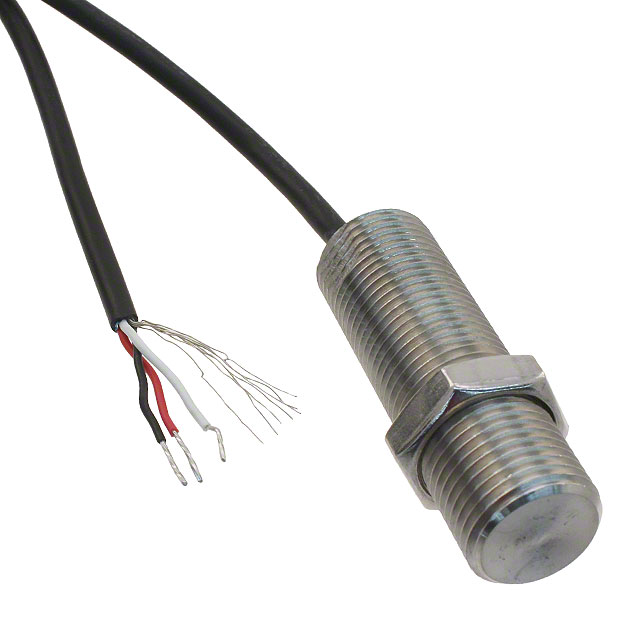
The substitute parts LCZ260 and LCZ460 are Hall Effect sensors that share the same actuator material (ferrous metals, gear tooth detection), identical package construction (barrel, stainless steel), and compatible voltage supply ranges. Both substitutes operate at higher maximum frequencies (15 kHz vs. 10 kHz) and support extended temperature ranges (-40°C ~ 125°C), providing enhanced performance margins. The primary difference is termination style: the 58426HV uses a connector termination, while LCZ260 and LCZ460 use wire leads.
Parameter Comparison
| Parameter | 58426HV (Main Part) | LCZ260 (Substitute) | LCZ460 (Substitute) |
|---|---|---|---|
| Manufacturer | Honeywell Sensing and Productivity Solutions | Honeywell Sensing and Productivity Solutions | Honeywell Sensing and Productivity Solutions |
| Category | Magnetic Sensors | Magnetic Sensors | Magnetic Sensors |
| Output Type | Digital | Digital | Digital |
| Actuator Material | Ferrous Metals, Gear Tooth | Ferrous Metals, Gear Tooth | Ferrous Metals, Gear Tooth |
| Package / Case | Barrel, Stainless Steel | Barrel, Stainless Steel | Barrel, Stainless Steel |
| Termination Style | Connector | Wire Leads | Wire Leads |
| Frequency | 10 kHz | 15 kHz | 15 kHz |
| Voltage Supply Range | 10V ~ 30V | 4.5V ~ 26V | 4.5V ~ 26V |
| Operating Temperature | -40°C ~ 107°C (TA) | -40°C ~ 125°C (TA) | -40°C ~ 125°C (TA) |
| Product Status | Obsolete | Active | Active |
| Series | DI-MAG | LCZ | LCZ |
Engineering Selection Recommendations
Product Status Consideration: The 58426HV is classified as obsolete, while both LCZ260 and LCZ460 are active products with current manufacturing support. Selection of an active substitute part ensures long-term availability, ongoing technical support, and compliance with current manufacturing standards.
Compliance and Certification: The 58426HV is RoHS non-compliant. Both substitute parts (LCZ260 and LCZ460) carry REACH Unaffected status, indicating alignment with current environmental and regulatory frameworks. This distinction is significant for applications subject to modern compliance requirements.
Electrical Performance: Both substitutes operate at higher maximum frequencies (15 kHz) compared to the 58426HV (10 kHz), providing performance headroom. The voltage supply range of LCZ260 and LCZ460 (4.5V ~ 26V) overlaps substantially with the 58426HV range (10V ~ 30V), with the exception of the 26V ~ 30V upper band. Applications requiring operation above 26V must retain the 58426HV or implement voltage regulation.
Temperature Performance: Both substitutes support an extended operating temperature range (-40°C ~ 125°C) compared to the 58426HV (-40°C ~ 107°C), offering improved thermal margin for high-temperature applications.
Termination Compatibility: The primary engineering consideration is termination style. The 58426HV uses a connector termination, while LCZ260 and LCZ460 use wire leads. System integration must account for this difference in connector interface and wiring harness compatibility.
Frequently Asked Questions (FAQ)
Q: Can LCZ260 or LCZ460 directly replace the 58426HV without modification?
A: Direct replacement requires termination adaptation. The 58426HV uses a connector interface, while LCZ260 and LCZ460 use wire leads. Mechanical and electrical interface modifications are necessary. Both sensors share identical package construction (barrel, stainless steel) and are functionally compatible for ferrous metal and gear tooth detection.
Q: What is the voltage supply compatibility between the 58426HV and its substitutes?
A: The 58426HV operates at 10V ~ 30V. LCZ260 and LCZ460 operate at 4.5V ~ 26V. Applications requiring operation in the 26V ~ 30V range cannot use LCZ260 or LCZ460 without voltage regulation. Applications operating at 10V ~ 26V are fully compatible with all three sensors.
Q: Are there frequency differences that affect system performance?
A: The 58426HV operates at 10 kHz maximum frequency. LCZ260 and LCZ460 operate at 15 kHz maximum frequency. For applications requiring detection speeds below 10 kHz, both substitutes provide performance margin. Applications designed specifically for 10 kHz operation will function correctly with the higher-frequency substitutes.
Q: What is the significance of the obsolete product status?
A: The 58426HV is obsolete and no longer manufactured. LCZ260 and LCZ460 are active products with current production and technical support. For new designs or long-term system support, active substitutes are recommended to ensure supply chain continuity and access to technical documentation.
Q: How do the operating temperature ranges compare?
A: The 58426HV operates from -40°C to 107°C. LCZ260 and LCZ460 operate from -40°C to 125°C. Both substitutes provide an 18°C extended upper temperature range, beneficial for high-temperature industrial environments. The lower temperature limit (-40°C) is identical across all three sensors.
Q: What packaging differences exist between these sensors?
A: All three sensors use identical barrel, stainless steel package construction. The 58426HV is supplied in standard packaging. LCZ260 and LCZ460 are supplied in box packaging. Physical sensor dimensions and mounting interfaces are consistent across all three parts.
Q: Are there compliance or regulatory differences?
A: The 58426HV is RoHS non-compliant. LCZ260 and LCZ460 are REACH Unaffected, indicating compliance with current environmental regulations. For applications subject to RoHS or REACH requirements, the LCZ series substitutes are appropriate selections.
Alternative Parts

SJ6012L2TP
Littelfuse Inc.
6 Alternative Parts

JMK107BBJ476MA-RE
Taiyo Yuden
10 Alternative Parts

GMK107BBJ475MA-T
Taiyo Yuden
5 Alternative Parts
SJ6020N2ARP
Littelfuse Inc.
3 Alternative Parts
SJ6025R2ATP
Littelfuse Inc.
4 Alternative Parts

2474-05L
API Delevan Inc.
1 Alternative Parts

4590R-684K
API Delevan Inc.
1 Alternative Parts

CM6560R-334
API Delevan Inc.
1 Alternative Parts

CM6460-104
API Delevan Inc.
1 Alternative Parts

5526-12
API Delevan Inc.
1 Alternative Parts