


Request Quote
(Ships tomorrow)
Renesas 574MILF Zero Delay Fanout Buffer - Equivalent & Substitute Parts
Part Overview
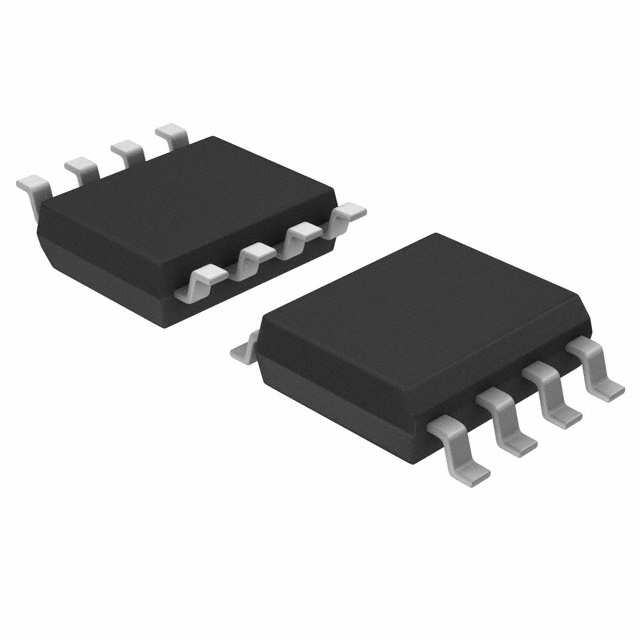
The Renesas 574MILF is a fanout buffer (distribution) integrated circuit designed for clock and timing applications. This 8-SOIC surface mount device operates at frequencies up to 160MHz with a 1:4 input-to-output ratio and features integrated phase-locked loop (PLL) technology. The device accepts CMOS input signals and provides CMOS output distribution across four channels.
The 574MILF is classified as obsolete. Locating equivalent or substitute components is necessary for new designs, production continuity, and system upgrades where this part number is no longer readily available through standard distribution channels.
Substiute Parts
Key Parameters
| Parameter | Value |
|---|---|
| Manufacturer | Renesas Electronics Corporation |
| Part Number | 574MILF |
| Category | Clock/Timing |
| Type | Fanout Buffer (Distribution), Zero Delay Buffer |
| Package | 8-SOIC (0.154", 3.90mm Width) |
| Mounting Type | Surface Mount |
| Frequency - Max | 160MHz |
| Input:Output Ratio | 1:4 |
| Input Type | CMOS |
| Output Type | CMOS |
| PLL | Yes |
| Voltage Supply Range | 3V ~ 5.5V |
| Operating Temperature | -40°C ~ 85°C |
| Product Status | Obsolete |
| RoHS Status | ROHS3 Compliant |
| MSL Rating | 1 (Unlimited) |
Substitute Part Grouping Explanation
Substitution of the 574MILF requires evaluation of the following critical parameters that define functional compatibility:
Package Compatibility: Both the main part and substitute must use the 8-SOIC (0.154", 3.90mm Width) surface mount package to ensure PCB layout and assembly compatibility without redesign.
Frequency Performance: The substitute must support the maximum frequency requirement of the application. The 574MILF operates at 160MHz maximum; substitutes operating at lower frequencies may be acceptable depending on system clock speed requirements.
Input/Output Configuration: The 574MILF provides a 1:4 fanout ratio with CMOS input and CMOS output. Substitutes with different input:output ratios or signal type combinations require circuit-level evaluation.
Voltage Supply Range: The 574MILF operates across 3V to 5.5V. Substitutes with narrower supply ranges (such as 3V to 3.6V) may limit application flexibility in systems requiring the full voltage range.
PLL Functionality: The 574MILF includes integrated PLL technology. Substitutes with PLL bypass capability provide additional design flexibility.
Regulatory Compliance: Both parts must meet RoHS3 and REACH requirements for applications subject to these standards.
Parameter Comparison
| Parameter | 574MILF (Main Part) | 2305A-1HDCGI (Substitute) |
|---|---|---|
| Manufacturer | Renesas Electronics Corporation | Renesas Electronics Corporation |
| Category | Clock/Timing | Clock/Timing |
| Type | Fanout Buffer (Distribution), Zero Delay Buffer | Zero Delay Buffer |
| Package | 8-SOIC (0.154", 3.90mm Width) | 8-SOIC (0.154", 3.90mm Width) |
| Mounting Type | Surface Mount | Surface Mount |
| Frequency - Max | 160MHz | 133MHz |
| Input:Output Ratio | 1:4 | 1:5 |
| Input Type | CMOS | LVTTL |
| Output Type | CMOS | CMOS, LVCMOS, TTL |
| PLL | Yes | Yes with Bypass |
| Voltage Supply Range | 3V ~ 5.5V | 3V ~ 3.6V |
| Operating Temperature | -40°C ~ 85°C | -40°C ~ 85°C |
| Product Status | Obsolete | Active |
| RoHS Status | ROHS3 Compliant | ROHS3 Compliant |
| MSL Rating | 1 (Unlimited) | 1 (Unlimited) |
Engineering Selection Recommendations
The 2305A-1HDCGI is an active product from Renesas Electronics Corporation and represents a viable substitute for the obsolete 574MILF in applications where the following conditions are met:
Package Compatibility: Both devices use identical 8-SOIC surface mount packaging, eliminating PCB redesign requirements.
Frequency Headroom: Applications operating at clock frequencies below 133MHz can use the 2305A-1HDCGI without performance degradation. Systems requiring the full 160MHz capability of the 574MILF must verify that the 133MHz maximum frequency of the substitute meets actual system requirements.
Supply Voltage Consideration: The 2305A-1HDCGI operates within a narrower supply range (3V to 3.6V) compared to the 574MILF (3V to 5.5V). Systems requiring operation across the full 5.5V upper limit must confirm compatibility or consider alternative substitutes.
Output Fanout: The 2305A-1HDCGI provides a 1:5 output ratio versus the 574MILF's 1:4 ratio, offering additional output channels. This difference requires verification that the application circuit can accommodate the additional output or that unused outputs can be left unconnected.
Signal Type Compatibility: The 2305A-1HDCGI accepts LVTTL input signals and provides multiple output types (CMOS, LVCMOS, TTL), offering greater flexibility than the 574MILF's CMOS-only configuration.
Regulatory Status: Both devices are RoHS3 compliant and REACH unaffected, meeting current regulatory requirements for electronic component procurement.
Frequently Asked Questions (FAQ)
Q: Can the 2305A-1HDCGI directly replace the 574MILF without PCB modifications?
A: Yes, both devices use the 8-SOIC (0.154", 3.90mm Width) package with identical pinout compatibility for surface mount assembly. No PCB layout changes are required.
Q: What is the frequency difference between these parts, and does it matter?
A: The 574MILF operates at 160MHz maximum, while the 2305A-1HDCGI operates at 133MHz maximum. The difference is significant only if your application requires clock frequencies above 133MHz. For systems operating below 133MHz, the substitute performs identically.
Q: Why does the 2305A-1HDCGI have a 1:5 ratio instead of 1:4?
A: The 2305A-1HDCGI provides five output channels instead of four. Applications using the 574MILF's four outputs can use the first four outputs of the substitute. The fifth output can remain unconnected or be utilized if additional fanout is beneficial.
Q: The 2305A-1HDCGI has a narrower voltage range (3V to 3.6V). Is this a problem?
A: Only if your application requires operation at voltages above 3.6V or below 3V. If your system operates within the 3V to 3.6V range, the substitute is fully compatible. Systems requiring the full 3V to 5.5V range of the 574MILF must verify actual operating voltages before substitution.
Q: What is the difference between CMOS input and LVTTL input?
A: The 574MILF accepts CMOS-level input signals. The 2305A-1HDCGI accepts LVTTL-level input signals, which are compatible with CMOS outputs from most modern logic devices. This difference is typically transparent in standard digital circuit applications.
Q: Are both parts currently available for purchase?
A: The 574MILF is obsolete and availability is limited to existing inventory. The 2305A-1HDCGI is an active product with ongoing production and standard distribution availability.
Alternative Parts

SJ6012L2TP
Littelfuse Inc.
6 Alternative Parts

JMK107BBJ476MA-RE
Taiyo Yuden
10 Alternative Parts

GMK107BBJ475MA-T
Taiyo Yuden
5 Alternative Parts
SJ6020N2ARP
Littelfuse Inc.
3 Alternative Parts
SJ6025R2ATP
Littelfuse Inc.
4 Alternative Parts

2474-05L
API Delevan Inc.
1 Alternative Parts

4590R-684K
API Delevan Inc.
1 Alternative Parts

CM6560R-334
API Delevan Inc.
1 Alternative Parts

CM6460-104
API Delevan Inc.
1 Alternative Parts

5526-12
API Delevan Inc.
1 Alternative Parts