


Request Quote
(Ships tomorrow)
5526-7 Equivalent & Substitute Parts Reference
Part Overview
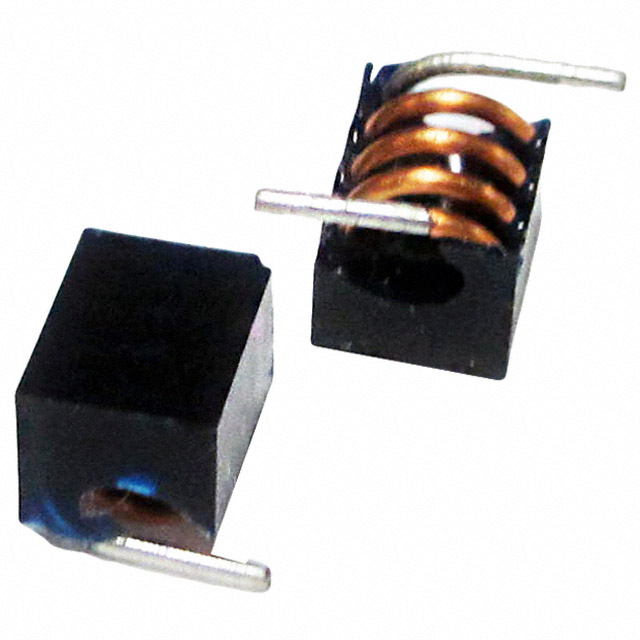
The 5526-7 is a 246 nH unshielded wirewound inductor rated for 3 A continuous current, manufactured by API Delevan Inc. This component is designed for surface mount applications requiring low inductance values with air core construction. The part is classified as obsolete, necessitating identification of equivalent substitute components for ongoing production and maintenance applications. Substitute parts must maintain electrical performance across the specified operating temperature range and mechanical compatibility with existing PCB layouts.
Substiute Parts
Key Parameters
| Parameter | Specification |
|---|---|
| Inductance | 246 nH |
| Tolerance | ±5% |
| Current Rating | 3 A |
| Core Material | Air |
| Shielding | Unshielded |
| Mounting Type | Surface Mount |
| Operating Temperature Range | -55°C ~ 125°C |
| Q Factor @ 50 MHz | 95 |
| Self Resonant Frequency | 685 MHz |
| Package Type | Nonstandard |
Substitute Part Grouping Explanation
Substitution eligibility for the 5526-7 is determined by the following critical parameters:
Electrical Equivalence Criteria:
- Inductance value: 246 nH ±5%
- Current rating: minimum 3 A
- Core material: Air (unshielded)
- Tolerance: ±5%
- Frequency test point: 50 MHz
Mechanical Compatibility Criteria:
- Mounting type: Surface Mount
- Package classification: Nonstandard
- Physical dimensions compatible with PCB footprint
Environmental Criteria:
- Operating temperature range: must support -55°C ~ 125°C minimum
- Moisture sensitivity level: 1 (Unlimited)
The AIAC-4125C-R246J-T from Abracon LLC meets all electrical equivalence criteria and mechanical compatibility requirements, qualifying it as a direct substitute for the obsolete 5526-7.
Parameter Comparison
| Parameter | 5526-7 (API Delevan) | AIAC-4125C-R246J-T (Abracon) |
|---|---|---|
| Inductance | 246 nH | 246 nH |
| Tolerance | ±5% | ±5% |
| Current Rating (Amps) | 3 A | 3 A |
| Core Material | Air | Air |
| Shielding | Unshielded | Unshielded |
| Q @ 50 MHz | 95 | 100 |
| Self Resonant Frequency | 685 MHz | 600 MHz |
| Operating Temperature Range | -55°C ~ 125°C | -40°C ~ 125°C |
| Mounting Type | Surface Mount | Surface Mount |
| DC Resistance (DCR) | Not specified | 17 mOhm Max |
| Inductance Test Frequency | 50 MHz | 50 MHz |
| Size / Dimension | 0.420" L x 0.250" W (10.67mm x 6.35mm) | 0.354" L x 0.173" W (9.00mm x 4.40mm) |
| Height - Seated (Max) | 0.235" (5.97mm) | 0.197" (5.00mm) |
| RoHS Status | RoHS non-compliant | ROHS3 Compliant |
| Product Status | Obsolete | Active |
Engineering Selection Recommendations
The AIAC-4125C-R246J-T qualifies as the equivalent substitute for the 5526-7 based on the following factors:
Electrical Performance: Both components deliver identical inductance (246 nH ±5%) and current rating (3 A) at the 50 MHz test frequency. The substitute exhibits a marginally higher Q factor (100 vs. 95), indicating improved efficiency. The self-resonant frequency difference (600 MHz vs. 685 MHz) remains within acceptable operational margins for most RF and high-frequency applications.
Compliance Status: The AIAC-4125C-R246J-T is ROHS3 compliant and carries active product status, ensuring long-term availability and regulatory alignment. The original 5526-7 is RoHS non-compliant and obsolete, making the substitute the preferred choice for new designs and ongoing production.
Temperature Range Consideration: The substitute operates across -40°C ~ 125°C, which covers the upper temperature requirement of the original part. Applications requiring the full -55°C lower limit must evaluate thermal performance independently.
Physical Footprint: The substitute is physically smaller (9.00mm x 4.40mm vs. 10.67mm x 6.35mm), enabling potential PCB space optimization. PCB layout verification is required to confirm mechanical fit within existing designs.
DC Resistance: The substitute specifies 17 mOhm maximum DCR, providing quantified performance data absent from the original part specification.
Frequently Asked Questions (FAQ)
Q: Can the AIAC-4125C-R246J-T directly replace the 5526-7 in existing designs?
A: Yes, provided the physical footprint accommodates the smaller dimensions (9.00mm x 4.40mm vs. 10.67mm x 6.35mm). Electrical parameters are equivalent. Verify PCB layout compatibility before implementation.
Q: What is the significance of the Q factor difference (100 vs. 95)?
A: The higher Q factor of the substitute indicates lower losses at 50 MHz, resulting in improved efficiency. This represents a performance enhancement rather than a limitation.
Q: Does the lower self-resonant frequency (600 MHz vs. 685 MHz) affect circuit performance?
A: The self-resonant frequency difference is application-dependent. For circuits operating below 600 MHz, no impact is expected. Applications utilizing frequencies near or above 600 MHz require circuit simulation to confirm performance.
Q: Why is the operating temperature range different (-40°C vs. -55°C minimum)?
A: The substitute is rated for -40°C minimum, which is 15°C higher than the original. Applications requiring operation at -55°C must evaluate thermal performance or select alternative components.
Q: What is the advantage of ROHS3 compliance?
A: ROHS3 compliance ensures regulatory alignment with current environmental standards and facilitates market access in regions with RoHS requirements. The original part's non-compliance status may restrict use in certain applications or markets.
Q: Are there packaging differences between the two parts?
A: The original 5526-7 is supplied in standard packaging. The AIAC-4125C-R246J-T is available in Cut Tape (CT) and Digi-Reel® formats, offering flexibility in procurement quantities and handling methods.
Q: How does the specified DCR (17 mOhm Max) of the substitute compare to the original?
A: The original part does not specify DCR. The substitute's 17 mOhm maximum provides quantified performance data, enabling precise power loss calculations in circuit design.
Q: Is the smaller physical size of the substitute a disadvantage?
A: No. The smaller footprint (9.00mm x 4.40mm) enables PCB space optimization and may reduce parasitic effects. Verify mechanical fit within existing PCB layouts.
Alternative Parts

SJ6012L2TP
Littelfuse Inc.
6 Alternative Parts

JMK107BBJ476MA-RE
Taiyo Yuden
10 Alternative Parts

GMK107BBJ475MA-T
Taiyo Yuden
5 Alternative Parts
SJ6020N2ARP
Littelfuse Inc.
3 Alternative Parts
SJ6025R2ATP
Littelfuse Inc.
4 Alternative Parts

2474-05L
API Delevan Inc.
1 Alternative Parts

4590R-684K
API Delevan Inc.
1 Alternative Parts

CM6560R-334
API Delevan Inc.
1 Alternative Parts

CM6460-104
API Delevan Inc.
1 Alternative Parts

5526-12
API Delevan Inc.
1 Alternative Parts