




Request Quote
(Ships tomorrow)
501JCAM032768DAG Equivalent & Substitute Parts
Part Overview
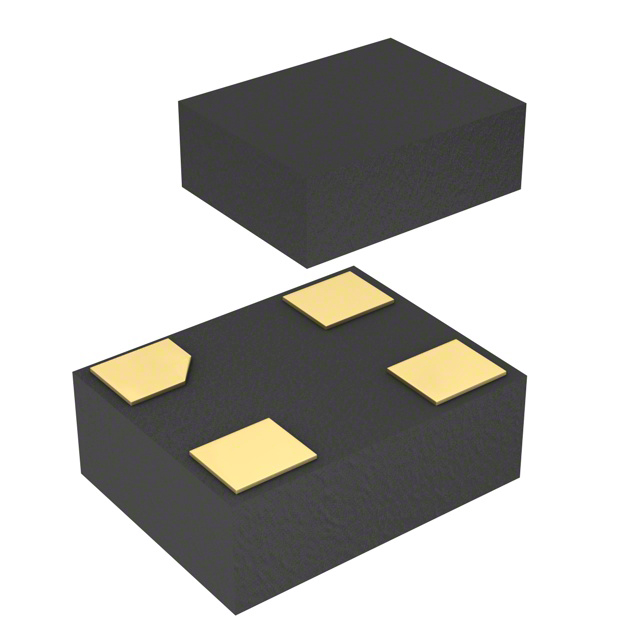
The 501JCAM032768DAG is a 32.768 kHz CMEMS® LVCMOS Oscillator manufactured by Silicon Labs, designed for 3.3V applications with Enable/Disable functionality in a 4-SMD, No Lead package. This part is classified as Obsolete, making identification of functionally equivalent alternatives essential for ongoing system support and new design implementations.
The obsolete status necessitates evaluation of active substitute components that maintain electrical and mechanical compatibility while meeting current supply chain requirements.
Substiute Parts
Key Parameters
| Parameter | Value |
|---|---|
| Frequency | 32.768 kHz |
| Output Type | LVCMOS |
| Supply Voltage | 3.3V |
| Function | Enable/Disable |
| Frequency Stability | ±20ppm |
| Operating Temperature Range | -40°C ~ 85°C |
| Package / Case | 4-SMD, No Lead |
| Size / Dimension | 0.098" L x 0.079" W (2.50mm x 2.00mm) |
| Current - Supply (Max) | 4.9mA |
| Mounting Type | Surface Mount |
Substitute Part Grouping Explanation
Substitute parts for the 501JCAM032768DAG are qualified based on the following critical parameters:
- Frequency Match: 32.768 kHz (exact)
- Output Compatibility: LVCMOS or CMOS output capable of interfacing with 3.3V logic systems
- Supply Voltage: 3.3V nominal operation or voltage range encompassing 3.3V
- Package Compatibility: 4-SMD, No Lead form factor with equivalent footprint dimensions
- Operating Temperature: -40°C ~ 85°C range support
- Function: Enable/Disable capability or equivalent control functionality
The identified substitutes meet these criteria while offering active product status and improved availability compared to the obsolete 501JCAM032768DAG.
Parameter Comparison
| Parameter | 501JCAM032768DAG (Main) | ASDK-32.768KHZ-LRT | SIT1533AI-H4-DCC-32.768G |
|---|---|---|---|
| Manufacturer | Silicon Labs | Abracon LLC | SiTime |
| Product Status | Obsolete | Active | Active |
| Frequency | 32.768 kHz | 32.768 kHz | 32.768 kHz |
| Output Type | LVCMOS | CMOS | LVCMOS |
| Supply Voltage | 3.3V | 3.3V | 1.5V ~ 3.63V |
| Function | Enable/Disable | Enable/Disable | - |
| Frequency Stability | ±20ppm | ±25ppm | +100ppm |
| Operating Temperature | -40°C ~ 85°C | -40°C ~ 85°C | -40°C ~ 85°C |
| Package / Case | 4-SMD, No Lead | 4-SMD, No Lead | 4-SMD, No Lead |
| Size / Dimension | 0.098" L x 0.079" W (2.50mm x 2.00mm) | 0.098" L x 0.079" W (2.50mm x 2.00mm) | 0.079" L x 0.047" W (2.00mm x 1.20mm) |
| Height - Seated (Max) | 0.035" (0.90mm) | 0.037" (0.95mm) | 0.024" (0.60mm) |
| Current - Supply (Max) | 4.9mA | 4.6mA | 1.4µA |
| RoHS Status | - | ROHS3 Compliant | ROHS3 Compliant |
| Moisture Sensitivity Level (MSL) | 2 (1 Year) | 1 (Unlimited) | 1 (Unlimited) |
Engineering Selection Recommendations
ASDK-32.768KHZ-LRT (Abracon LLC) provides the closest electrical and mechanical match to the 501JCAM032768DAG. This part maintains identical frequency, package dimensions, and operating temperature range. The CMOS output is compatible with 3.3V logic systems. Frequency stability of ±25ppm represents a minor deviation from the original ±20ppm specification. The part is ROHS3 compliant and carries MSL 1 rating, indicating superior moisture handling compared to the obsolete part. Active product status ensures long-term availability.
SIT1533AI-H4-DCC-32.768G (SiTime) offers an alternative with LVCMOS output matching the original specification exactly. The extended supply voltage range (1.5V ~ 3.63V) provides design flexibility. However, the smaller package footprint (2.00mm x 1.20mm versus 2.50mm x 2.00mm) requires PCB layout verification. Frequency stability of +100ppm represents a significant deviation and may not be suitable for applications requiring tight timing tolerance. The part exhibits exceptionally low current consumption (1.4µA) and is ROHS3 compliant with MSL 1 rating.
Selection between these substitutes depends on application-specific requirements for frequency stability, power consumption, and PCB layout constraints.
Frequently Asked Questions (FAQ)
Q: Can the ASDK-32.768KHZ-LRT directly replace the 501JCAM032768DAG without PCB modifications?
A: Yes. Both parts share identical package dimensions (0.098" L x 0.079" W) and 4-SMD, No Lead form factor, enabling direct footprint compatibility. Height variation (0.037" versus 0.035") is within typical PCB assembly tolerances.
Q: What is the significance of the frequency stability difference between ±20ppm and ±25ppm?
A: Frequency stability defines the maximum deviation from nominal frequency across operating conditions. The ±25ppm specification of the ASDK part represents a 5ppm wider tolerance band. For 32.768 kHz applications, this equates to approximately 0.82 Hz maximum deviation versus 0.65 Hz for the original part. Suitability depends on system timing requirements.
Q: Is the SIT1533AI-H4-DCC-32.768G suitable for existing PCB designs?
A: The SIT1533AI part has a smaller footprint (2.00mm x 1.20mm) compared to the original (2.50mm x 2.00mm). Direct substitution requires PCB layout modification. The reduced height (0.024" versus 0.035") may also affect assembly clearances. Evaluate mechanical constraints before selection.
Q: What does MSL 1 (Unlimited) mean compared to MSL 2 (1 Year)?
A: Moisture Sensitivity Level (MSL) indicates the component's susceptibility to moisture absorption during storage. MSL 1 (Unlimited) allows indefinite shelf storage without special precautions. MSL 2 (1 Year) requires controlled storage conditions and limits shelf life to one year from manufacturing. Both substitute parts offer superior moisture handling.
Q: Are the substitute parts RoHS compliant?
A: Both ASDK-32.768KHZ-LRT and SIT1533AI-H4-DCC-32.768G are ROHS3 compliant, meeting current environmental regulations. The original 501JCAM032768DAG does not specify RoHS status.
Q: How does the current consumption difference affect system design?
A: The 501JCAM032768DAG draws 4.9mA maximum. The ASDK part draws 4.6mA (29% reduction), while the SIT1533AI draws 1.4µA (99.97% reduction). Lower current consumption reduces power dissipation and extends battery life in portable applications. Verify that existing power supply designs accommodate the lower current draw without stability issues.
Alternative Parts

SJ6012L2TP
Littelfuse Inc.
6 Alternative Parts

JMK107BBJ476MA-RE
Taiyo Yuden
10 Alternative Parts

GMK107BBJ475MA-T
Taiyo Yuden
5 Alternative Parts
SJ6020N2ARP
Littelfuse Inc.
3 Alternative Parts
SJ6025R2ATP
Littelfuse Inc.
4 Alternative Parts

2474-05L
API Delevan Inc.
1 Alternative Parts

4590R-684K
API Delevan Inc.
1 Alternative Parts

CM6560R-334
API Delevan Inc.
1 Alternative Parts

CM6460-104
API Delevan Inc.
1 Alternative Parts

5526-12
API Delevan Inc.
1 Alternative Parts