


Request Quote
(Ships tomorrow)
4426R-7RC Equivalent & Substitute Parts
Part Overview
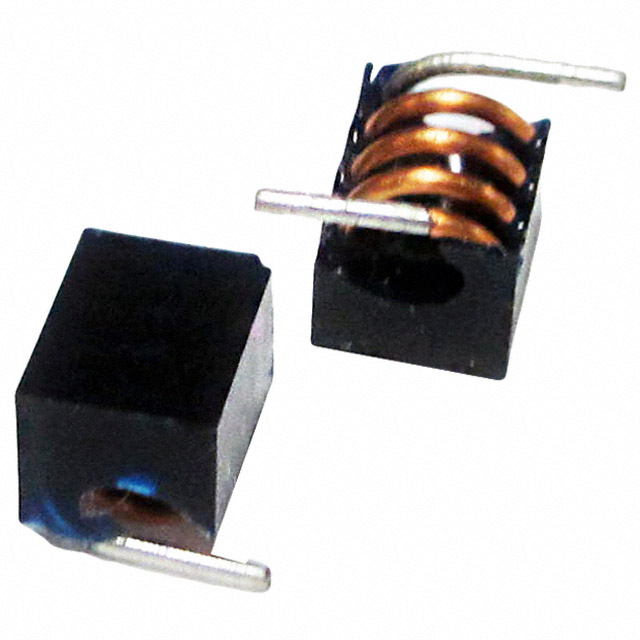
The 4426R-7RC is a 22 nH unshielded wirewound inductor manufactured by API Delevan Inc., rated for 3 A continuous current operation. This component is designed for surface mount applications in high-frequency circuits requiring low inductance values. The part is classified as obsolete, necessitating identification of active equivalent components to maintain design continuity and ensure supply chain availability for new production and repair applications.
Substiute Parts
Key Parameters
| Parameter | Value | Significance for Substitution |
|---|---|---|
| Inductance | 22 nH | Critical - must match exactly |
| Inductance Tolerance | ±5% | Critical - defines acceptable range |
| Current Rating | 3 A | Critical - minimum thermal requirement |
| Shielding | Unshielded | Critical - affects EMI characteristics |
| Core Material | Air | Critical - determines frequency response |
| Mounting Type | Surface Mount | Critical - PCB assembly compatibility |
| Operating Temperature Range | -55°C ~ 125°C | Important - thermal environment compatibility |
| Q @ 150 MHz | 102 | Important - efficiency indicator |
| Self Resonant Frequency | 3 GHz | Important - upper frequency limit |
| RoHS Status | ROHS3 Compliant | Important - regulatory compliance |
Substitute Part Grouping Explanation
Substitution eligibility for the 4426R-7RC is determined by strict adherence to the following electrical and mechanical parameters:
Critical Matching Parameters:
- Inductance value: 22 nH ±5%
- Current rating: minimum 3 A
- Core type: Air core (unshielded)
- Mounting: Surface mount configuration
- Package classification: Nonstandard form factor
Secondary Compatibility Parameters:
- Operating temperature range must encompass or exceed the application requirements
- Self-resonant frequency must support the intended operating frequency
- Q factor at 150 MHz should maintain circuit performance characteristics
- RoHS3 compliance required for regulatory alignment
The AIAC-2712C-22N0J-T from Abracon LLC meets all critical matching parameters and qualifies as a direct electrical equivalent. Physical dimensions differ slightly, requiring PCB layout verification before implementation.
Parameter Comparison
| Parameter | 4426R-7RC (API Delevan) | AIAC-2712C-22N0J-T (Abracon) | Match Status |
|---|---|---|---|
| Inductance | 22 nH | 22 nH | Exact Match |
| Inductance Tolerance | ±5% | ±5% | Exact Match |
| Current Rating (Amps) | 3 A | 3 A | Exact Match |
| Core Material | Air | Air | Exact Match |
| Shielding | Unshielded | Unshielded | Exact Match |
| Mounting Type | Surface Mount | Surface Mount | Exact Match |
| Q @ 150 MHz | 102 | 100 | Comparable (2% variance) |
| Self Resonant Frequency | 3 GHz | 2 GHz | Lower in substitute |
| Operating Temperature Range | -55°C ~ 125°C | -40°C ~ 125°C | Substitute range narrower at low end |
| DC Resistance (DCR) | Not specified | 5 mOhm Max | Substitute specifies maximum |
| Size / Dimension (L x W) | 0.270" x 0.125" (6.86mm x 3.18mm) | 0.236" x 0.098" (6.00mm x 2.50mm) | Substitute is smaller |
| Height - Seated (Max) | 0.120" (3.05mm) | 0.110" (2.80mm) | Substitute is lower profile |
| RoHS Status | ROHS3 Compliant | ROHS3 Compliant | Exact Match |
| Product Status | Obsolete | Active | Substitute actively manufactured |
Engineering Selection Recommendations
The AIAC-2712C-22N0J-T qualifies as an electrical equivalent for the obsolete 4426R-7RC based on matching inductance, current rating, core material, and shielding configuration. Both components maintain ROHS3 compliance and operate within compatible frequency ranges for typical RF and microwave applications.
Implementation Considerations:
The substitute component exhibits a lower self-resonant frequency (2 GHz versus 3 GHz), which may impact performance in applications operating near or above 2 GHz. Verification of circuit performance at the intended operating frequency is necessary before production implementation.
The substitute component features a smaller physical footprint (6.00mm x 2.50mm versus 6.86mm x 3.18mm) and lower profile (2.80mm versus 3.05mm). PCB layout modifications may be required to accommodate the dimensional differences, particularly in space-constrained designs.
The substitute component specifies a maximum DC resistance of 5 mOhm, providing quantified resistance data absent from the original part specification. This specification improves design predictability for power loss calculations.
The substitute component operates over a narrower low-temperature range (-40°C versus -55°C minimum). Applications requiring operation below -40°C must retain the original part specification or identify alternative sources.
Frequently Asked Questions (FAQ)
Q: Can the AIAC-2712C-22N0J-T be used as a direct replacement for the 4426R-7RC in all applications?
A: Electrical substitution is valid for inductance, current rating, and core characteristics. Physical dimensions differ, requiring PCB layout verification. The lower self-resonant frequency (2 GHz) may affect performance in applications operating above 2 GHz. Low-temperature applications below -40°C require the original specification.
Q: What is the significance of the self-resonant frequency difference?
A: The self-resonant frequency defines the upper frequency limit where the component maintains inductive behavior. The substitute's 2 GHz limit versus the original's 3 GHz limit may introduce capacitive behavior at higher frequencies, affecting circuit performance. Applications operating below 2 GHz are unaffected.
Q: How do the physical dimension differences impact PCB design?
A: The substitute is smaller in length (6.00mm versus 6.86mm), width (2.50mm versus 3.18mm), and height (2.80mm versus 3.05mm). Existing PCB footprints designed for the original part may require modification. The smaller footprint may provide layout advantages in space-constrained designs.
Q: Are both components RoHS compliant?
A: Both the 4426R-7RC and AIAC-2712C-22N0J-T are ROHS3 compliant, meeting current regulatory requirements for lead-free and restricted substance elimination.
Q: What is the difference in DC resistance specification?
A: The original part does not specify DC resistance. The substitute specifies a maximum of 5 mOhm. This specification enables precise power loss calculations and thermal analysis. If the original part's DCR was significantly different, circuit performance may vary.
Q: Which component should be selected for new designs?
A: The AIAC-2712C-22N0J-T should be selected for new designs due to active manufacturing status and availability. The 4426R-7RC is obsolete and subject to supply constraints.
Q: Is the operating temperature range difference significant?
A: The substitute operates from -40°C to 125°C versus the original's -55°C to 125°C. The 15°C difference at the low end affects only applications requiring operation below -40°C. Most commercial and industrial applications operate within the substitute's range.
Alternative Parts

SJ6012L2TP
Littelfuse Inc.
6 Alternative Parts

JMK107BBJ476MA-RE
Taiyo Yuden
10 Alternative Parts

GMK107BBJ475MA-T
Taiyo Yuden
5 Alternative Parts
SJ6020N2ARP
Littelfuse Inc.
3 Alternative Parts
SJ6025R2ATP
Littelfuse Inc.
4 Alternative Parts

2474-05L
API Delevan Inc.
1 Alternative Parts

4590R-684K
API Delevan Inc.
1 Alternative Parts

CM6560R-334
API Delevan Inc.
1 Alternative Parts

CM6460-104
API Delevan Inc.
1 Alternative Parts

5526-12
API Delevan Inc.
1 Alternative Parts