



Request Quote
(Ships tomorrow)
TE Connectivity AMP 4-1734839-2 FPC Connector Equivalent & Substitute Parts
Part Overview
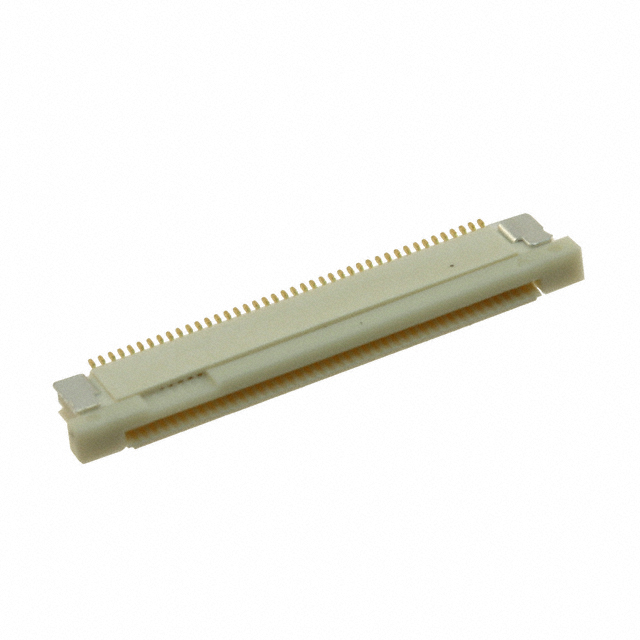
The TE Connectivity AMP 4-1734839-2 is a 42-position flat flexible connector (FPC) designed for surface mount, right-angle applications with 0.5mm pitch contacts. This connector features zero insertion force (ZIF) operation, solder termination, and is rated for 250V at 0.5A continuous current. The product is classified as obsolete, necessitating identification of functionally equivalent alternatives for ongoing design support and procurement requirements.
Substiute Parts
Key Parameters
| Parameter | Value |
|---|---|
| Connector Type | FPC (Flat Flexible Connector) |
| Number of Positions | 42 |
| Pitch | 0.020" (0.50mm) |
| Mounting Type | Surface Mount, Right Angle |
| Contact Position | Top |
| Termination Method | Solder |
| FFC/FCB Thickness | 0.30mm |
| Contact Material | Phosphor Bronze |
| Contact Finish | Gold |
| Voltage Rating | 250V |
| Current Rating | 0.5A |
| Operating Temperature Range | -20°C ~ 85°C |
| Flammability Rating | UL94 V-0 |
| Zero Insertion Force (ZIF) | Yes |
| RoHS Status | ROHS3 Compliant |
| Moisture Sensitivity Level | 1 (Unlimited) |
Substitute Part Grouping Explanation
Substitution of the TE Connectivity AMP 4-1734839-2 is based on strict alignment of the following critical parameters:
Mandatory Matching Parameters:
- Number of positions: 42
- Pitch: 0.020" (0.50mm)
- Mounting type: Surface mount, right angle
- Contact position: Top
- Termination method: Solder
- FFC/FCB thickness: 0.30mm
- Contact material: Phosphor Bronze
- Contact finish: Gold
- Zero insertion force (ZIF) feature: Present
- Flammability rating: UL94 V-0
- Current rating: 0.5A
- Moisture sensitivity level: 1 (Unlimited)
The Hirose Electric FH12A-42S-0.5SH(55) meets all mandatory matching parameters and qualifies as a functional equivalent. While certain specifications differ (voltage rating, operating temperature range, height above board, locking mechanism, and housing materials), these variations remain within acceptable substitution tolerances for FPC connector applications where the core electrical and mechanical interface requirements are preserved.
Parameter Comparison
| Parameter | TE Connectivity AMP 4-1734839-2 | Hirose Electric FH12A-42S-0.5SH(55) | Match Status |
|---|---|---|---|
| Number of Positions | 42 | 42 | Match |
| Pitch | 0.020" (0.50mm) | 0.020" (0.50mm) | Match |
| Mounting Type | Surface Mount, Right Angle | Surface Mount, Right Angle | Match |
| Contact Position | Top | Top | Match |
| Termination Method | Solder | Solder | Match |
| FFC/FCB Thickness | 0.30mm | 0.30mm | Match |
| Contact Material | Phosphor Bronze | Phosphor Bronze | Match |
| Contact Finish | Gold | Gold | Match |
| Current Rating (Amps) | 0.5A | 0.5A | Match |
| Flammability Rating | UL94 V-0 | UL94 V-0 | Match |
| Zero Insertion Force (ZIF) | Yes | Yes | Match |
| Moisture Sensitivity Level | 1 (Unlimited) | 1 (Unlimited) | Match |
| Voltage Rating | 250V | 50V | Variation |
| Operating Temperature Range | -20°C ~ 85°C | -40°C ~ 85°C | Variation |
| Height Above Board | 0.081" (2.05mm) | 0.079" (2.00mm) | Variation |
| Locking Feature | Slide Lock | Flip Lock | Variation |
| Cable End Type | Tapered | Straight | Variation |
| Housing Material | Thermoplastic | Polyamide (PA), Nylon | Variation |
| Actuator Material | Thermoplastic | Polyphenylene Sulfide (PPS) | Variation |
| Product Status | Obsolete | Active | Variation |
| RoHS Status | ROHS3 Compliant | RoHS Compliant | Compliant |
Engineering Selection Recommendations
The Hirose Electric FH12A-42S-0.5SH(55) is a qualified substitute for the obsolete TE Connectivity AMP 4-1734839-2 based on the following engineering criteria:
Product Status Alignment: The Hirose part is active and currently available, addressing the obsolescence status of the TE Connectivity component. This ensures long-term procurement viability and supply chain continuity.
Compliance Certifications: Both connectors maintain UL94 V-0 flammability ratings and comply with RoHS directives (ROHS3 for the TE part, RoHS for the Hirose part). Both are classified as MSL 1 (Unlimited moisture sensitivity), indicating no special handling requirements.
Electrical and Mechanical Interface Compatibility: The substitute part preserves all critical interface parameters: 42-position configuration, 0.5mm pitch, top-contact solder termination, 0.30mm FFC thickness, phosphor bronze contacts with gold finish, and 0.5A current capacity. These parameters ensure mechanical and electrical compatibility with existing PCB designs and cable assemblies.
Operational Considerations: The Hirose substitute operates across a wider temperature range (-40°C to 85°C versus -20°C to 85°C) and features a flip lock mechanism in place of the slide lock. The height above board differential (2.00mm versus 2.05mm) is negligible for most applications. The voltage rating reduction from 250V to 50V requires evaluation against specific circuit requirements; applications operating below 50V are unaffected.
Frequently Asked Questions (FAQ)
Q: Can the Hirose FH12A-42S-0.5SH(55) be used as a direct replacement for the TE Connectivity AMP 4-1734839-2?
A: Yes, the Hirose part qualifies as a functional equivalent for applications where the circuit voltage does not exceed 50V. All critical mechanical and electrical interface parameters match, including position count, pitch, termination method, contact materials, and current rating. PCB footprints and cable assembly connectors designed for the TE part are compatible with the Hirose substitute.
Q: What is the significance of the voltage rating difference (250V versus 50V)?
A: The TE Connectivity part is rated for 250V, while the Hirose substitute is rated for 50V. For applications operating at voltages below 50V, this difference is not a limiting factor. Applications requiring voltages above 50V must retain the original TE part or identify alternative substitutes with higher voltage ratings.
Q: Are there differences in the locking mechanisms between these connectors?
A: Yes. The TE Connectivity part uses a slide lock mechanism, while the Hirose substitute uses a flip lock mechanism. Both provide zero insertion force (ZIF) operation and secure cable retention. The functional outcome is equivalent; however, the actuation method differs. Design integration should account for the physical space and operator interface requirements of each locking style.
Q: How do the operating temperature ranges compare?
A: The TE Connectivity part operates from -20°C to 85°C, while the Hirose substitute operates from -40°C to 85°C. The Hirose part provides extended low-temperature capability. For applications within the -20°C to 85°C range, both parts are suitable. Applications requiring operation below -20°C benefit from the Hirose substitute's extended range.
Q: What is the impact of the cable end type difference (tapered versus straight)?
A: The TE Connectivity part features tapered cable ends, while the Hirose substitute features straight cable ends. This difference affects cable assembly design and mating interface geometry. Cable assemblies must be manufactured to match the specific connector type; existing tapered cable assemblies are not compatible with the straight-end Hirose connector without modification.
Q: Are both connectors RoHS compliant?
A: Yes. The TE Connectivity part is ROHS3 compliant, and the Hirose part is RoHS compliant. Both meet environmental and hazardous substance restrictions applicable to electronic components. Both are classified as MSL 1 (Unlimited), requiring no special moisture sensitivity handling during storage or assembly.
Q: What is the packaging difference between these parts?
A: The TE Connectivity part packaging information is not specified in the available data. The Hirose substitute is supplied in Tape & Reel (TR) packaging, which is standard for high-volume surface mount applications and automated assembly processes.
Q: Are there any height above board considerations for PCB layout?
A: The TE Connectivity part has a height above board of 0.081" (2.05mm), while the Hirose substitute is 0.079" (2.00mm). This 0.05mm difference is negligible for most applications and does not typically require PCB layout modifications. Clearance verification is recommended for applications with tight vertical space constraints.
Alternative Parts

SJ6012L2TP
Littelfuse Inc.
6 Alternative Parts

JMK107BBJ476MA-RE
Taiyo Yuden
10 Alternative Parts

GMK107BBJ475MA-T
Taiyo Yuden
5 Alternative Parts
SJ6020N2ARP
Littelfuse Inc.
3 Alternative Parts
SJ6025R2ATP
Littelfuse Inc.
4 Alternative Parts

2474-05L
API Delevan Inc.
1 Alternative Parts

4590R-684K
API Delevan Inc.
1 Alternative Parts

CM6560R-334
API Delevan Inc.
1 Alternative Parts

CM6460-104
API Delevan Inc.
1 Alternative Parts

5526-12
API Delevan Inc.
1 Alternative Parts