


Request Quote
(Ships tomorrow)
2SD468-C-AP Equivalent & Substitute Parts
Part Overview
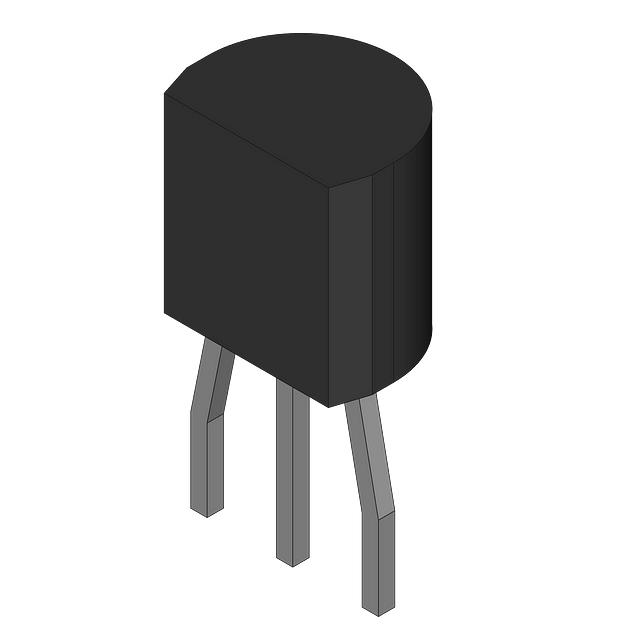
The 2SD468-C-AP is a Bipolar (BJT) NPN transistor manufactured by Micro Commercial Co, designed for small-signal switching and amplification applications. The device features a maximum collector current of 1 A, collector-emitter breakdown voltage of 20 V, and a power dissipation rating of 900 mW in a Through Hole TO-92 package.
The 2SD468-C-AP is classified as an Obsolete product. Locating equivalent or substitute components is necessary to support ongoing maintenance, repair, and redesign activities for legacy systems and applications utilizing this transistor.
Substiute Parts
Key Parameters
| Parameter | Value | Unit |
|---|---|---|
| Transistor Type | NPN | — |
| Current - Collector (Ic) (Max) | 1 | A |
| Voltage - Collector Emitter Breakdown (Max) | 20 | V |
| Vce Saturation (Max) @ Ib, Ic | 500mV @ 80mA, 800mA | — |
| Current - Collector Cutoff (Max) | 1 | µA |
| DC Current Gain (hFE) (Min) @ Ic, Vce | 120 @ 500mA, 2V | — |
| Power - Max | 900 | mW |
| Frequency - Transition | 190 | MHz |
| Operating Temperature | -55 to 150 | °C |
| Mounting Type | Through Hole | — |
| Package / Case | TO-92-3 | — |
| RoHS Status | ROHS3 Compliant | — |
| Moisture Sensitivity Level (MSL) | 1 (Unlimited) | — |
Substitute Part Grouping Explanation
Substitution of the 2SD468-C-AP is determined by electrical and mechanical compatibility across the following critical parameters:
Electrical Compatibility Criteria:
- Transistor Type: NPN configuration required
- Collector Current Rating: Substitute must equal or exceed 1 A maximum
- Collector-Emitter Breakdown Voltage: Substitute must equal or exceed 20 V
- Vce Saturation Characteristics: Substitute must meet or improve upon 500mV @ 80mA, 800mA
- DC Current Gain (hFE): Substitute must maintain minimum 120 gain at specified operating points
- Power Dissipation: Substitute must equal or exceed 900 mW rating
- Frequency Response: Transition frequency of 190 MHz establishes the switching speed baseline
Mechanical Compatibility Criteria:
- Package Type: TO-92-3 Through Hole configuration required for direct board-level substitution
- Mounting Type: Through Hole assembly compatibility
- Operating Temperature Range: Substitute must support -55°C to 150°C junction temperature range
Compliance Criteria:
- RoHS3 Compliance required
- MSL Level 1 (Unlimited) moisture sensitivity
The SS8050CTA meets all substitution criteria with electrical ratings that equal or exceed the 2SD468-C-AP across all specified parameters while maintaining identical package and mounting compatibility.
Parameter Comparison
| Parameter | 2SD468-C-AP | SS8050CTA | Compatibility |
|---|---|---|---|
| Transistor Type | NPN | NPN | Match |
| Current - Collector (Ic) (Max) | 1 A | 1.5 A | Substitute Exceeds |
| Voltage - Collector Emitter Breakdown (Max) | 20 V | 25 V | Substitute Exceeds |
| Vce Saturation (Max) @ Ib, Ic | 500mV @ 80mA, 800mA | 500mV @ 80mA, 800mA | Match |
| Current - Collector Cutoff (Max) | 1 µA | 100 nA | Substitute Improves |
| DC Current Gain (hFE) (Min) | 120 @ 500mA, 2V | 120 @ 100mA, 1V | Substitute Meets |
| Power - Max | 900 mW | 1 W | Substitute Exceeds |
| Frequency - Transition | 190 MHz | 100 MHz | Original Exceeds |
| Operating Temperature | -55 to 150 °C | Up to 150 °C | Substitute Meets Upper Limit |
| Mounting Type | Through Hole | Through Hole | Match |
| Package / Case | TO-92-3 | TO-92-3 | Match |
Engineering Selection Recommendations
Primary Substitute: SS8050CTA
The SS8050CTA is suitable as a direct substitute for the 2SD468-C-AP based on the following factors:
-
Electrical Ratings: The SS8050CTA exceeds the 2SD468-C-AP in collector current (1.5 A vs. 1 A), collector-emitter breakdown voltage (25 V vs. 20 V), and power dissipation (1 W vs. 900 mW). These higher ratings provide operational margin in applications where the original device was rated at or near maximum specifications.
-
Saturation Characteristics: Both devices share identical Vce saturation specifications (500mV @ 80mA, 800mA), ensuring equivalent switching behavior in saturated operation.
-
Current Gain: Both devices maintain a minimum DC current gain of 120, meeting amplification requirements across their respective operating points.
-
Leakage Current: The SS8050CTA demonstrates superior leakage performance (100 nA vs. 1 µA ICBO), reducing standby power consumption in applications sensitive to quiescent current.
-
Package Compatibility: Both devices utilize the TO-92-3 Through Hole package, enabling direct board-level substitution without layout modification.
-
Product Status: The SS8050CTA is classified as Active, ensuring continued availability and supply chain stability compared to the Obsolete 2SD468-C-AP.
-
Compliance: The SS8050CTA maintains RoHS3 compliance, supporting regulatory requirements for new and legacy system applications.
Frequency Consideration: The 2SD468-C-AP specifies a transition frequency of 190 MHz, while the SS8050CTA specifies 100 MHz. In applications where switching speed at the 190 MHz specification is a critical design requirement, the reduced transition frequency of the SS8050CTA may impact performance. Circuit-level evaluation is necessary to determine if the 100 MHz transition frequency is acceptable for the intended application.
Frequently Asked Questions (FAQ)
Q: Can the SS8050CTA directly replace the 2SD468-C-AP on a printed circuit board?
A: Yes. Both devices use the TO-92-3 Through Hole package with identical lead configuration and spacing. No board layout modification is required for physical substitution.
Q: Are there electrical differences that affect circuit operation?
A: The SS8050CTA provides higher electrical ratings across collector current, breakdown voltage, and power dissipation. Saturation voltage and DC current gain specifications are identical. The primary difference is transition frequency: the 2SD468-C-AP specifies 190 MHz while the SS8050CTA specifies 100 MHz. Applications operating at or above 100 MHz require evaluation to confirm acceptable performance.
Q: Is the SS8050CTA available in the same packaging as the 2SD468-C-AP?
A: Yes. The SS8050CTA is supplied in the TO-92-3 Through Hole package, matching the 2SD468-C-AP package specification.
Q: What is the product status difference between these devices?
A: The 2SD468-C-AP is classified as Obsolete, indicating discontinued production and limited availability. The SS8050CTA is classified as Active, indicating current production and reliable supply chain availability.
Q: Do both devices meet RoHS3 compliance requirements?
A: The 2SD468-C-AP is specified as ROHS3 Compliant. The SS8050CTA is also compliant with RoHS requirements, supporting applications with regulatory compliance mandates.
Q: What is the operating temperature range for each device?
A: The 2SD468-C-AP specifies -55°C to 150°C junction temperature. The SS8050CTA specifies operation up to 150°C junction temperature. Applications requiring operation below -55°C require verification that the SS8050CTA meets the lower temperature requirement.
Q: How do the leakage current specifications compare?
A: The 2SD468-C-AP specifies a maximum collector cutoff current (ICBO) of 1 µA. The SS8050CTA specifies 100 nA. The lower leakage current of the SS8050CTA reduces standby power consumption and improves circuit performance in applications sensitive to quiescent current.
Q: Are there any applications where the 2SD468-C-AP cannot be substituted with the SS8050CTA?
A: Applications requiring transition frequency performance at or above 190 MHz may not be suitable for substitution with the SS8050CTA, which specifies 100 MHz transition frequency. Circuit-level analysis is necessary to determine if the reduced switching speed is acceptable for the specific application.
Alternative Parts

SJ6012L2TP
Littelfuse Inc.
6 Alternative Parts

JMK107BBJ476MA-RE
Taiyo Yuden
10 Alternative Parts

GMK107BBJ475MA-T
Taiyo Yuden
5 Alternative Parts
SJ6020N2ARP
Littelfuse Inc.
3 Alternative Parts
SJ6025R2ATP
Littelfuse Inc.
4 Alternative Parts

2474-05L
API Delevan Inc.
1 Alternative Parts

4590R-684K
API Delevan Inc.
1 Alternative Parts

CM6560R-334
API Delevan Inc.
1 Alternative Parts

CM6460-104
API Delevan Inc.
1 Alternative Parts

5526-12
API Delevan Inc.
1 Alternative Parts