


Request Quote
(Ships tomorrow)
2SD1815T-H Equivalent & Substitute Parts
Part Overview
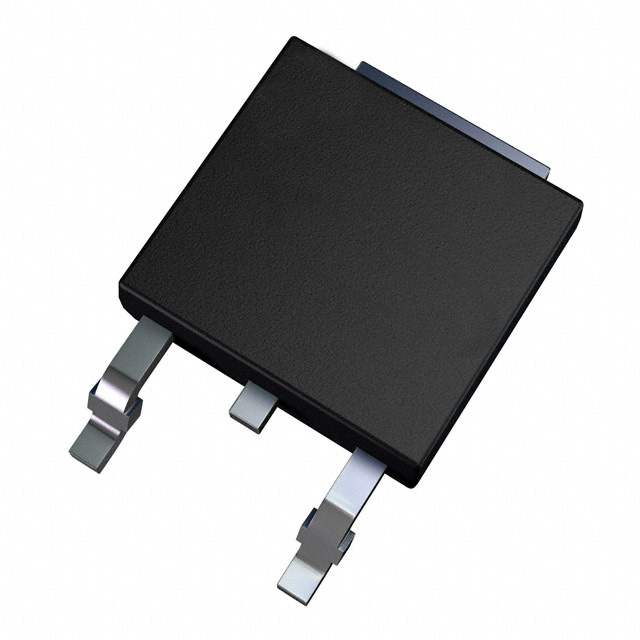
The 2SD1815T-H is an NPN bipolar junction transistor manufactured by onsemi, rated for 100 V collector-emitter breakdown voltage and 3 A maximum collector current. This component is designed for through-hole mounting applications and delivers 1 W maximum power dissipation with a transition frequency of 180 MHz. The part is classified as obsolete, making identification of functionally equivalent substitutes necessary for ongoing design support and production continuity.
Substiute Parts
Key Parameters
| Parameter | Value |
|---|---|
| Transistor Type | NPN |
| Maximum Collector Current (Ic) | 3 A |
| Collector-Emitter Breakdown Voltage (Max) | 100 V |
| Vce Saturation (Max) | 400 mV @ 150 mA, 1.5 A |
| Maximum Power Dissipation | 1 W |
| Transition Frequency | 180 MHz |
| Operating Temperature (TJ) | 150°C |
| Mounting Type | Through Hole |
| Package Type | TO-251-3 Short Leads, IPak, TO-251AA |
Substitute Part Grouping Explanation
Substitution of the 2SD1815T-H is determined by electrical parameter equivalence and mechanical compatibility. The primary substitute identified is the 2SD1815T-TL-E, which maintains identical ratings for collector current (3 A), collector-emitter breakdown voltage (100 V), saturation voltage (400 mV @ 150 mA, 1.5 A), maximum power dissipation (1 W), transition frequency (180 MHz), and operating temperature (150°C).
The critical distinction between the main part and its substitute is the mounting configuration: the 2SD1815T-H uses through-hole mounting, while the 2SD1815T-TL-E employs surface-mount technology. This difference necessitates circuit board redesign and assembly process modification. Both parts share the same base product number (2SD1815) and are manufactured by onsemi.
The DC current gain (hFE) differs between the two parts: the 2SD1815T-H specifies a minimum of 200 @ 500 mA, 5 V, while the 2SD1815T-TL-E specifies a minimum of 70 @ 500 mA, 5 V. This parameter variance must be evaluated within the context of the specific application circuit.
Parameter Comparison
| Parameter | 2SD1815T-H (Main Part) | 2SD1815T-TL-E (Substitute) |
|---|---|---|
| Manufacturer | onsemi | onsemi |
| Transistor Type | NPN | NPN |
| Maximum Collector Current (Ic) | 3 A | 3 A |
| Collector-Emitter Breakdown Voltage (Max) | 100 V | 100 V |
| Vce Saturation (Max) | 400 mV @ 150 mA, 1.5 A | 400 mV @ 150 mA, 1.5 A |
| DC Current Gain (hFE) (Min) @ Ic, Vce | 200 @ 500 mA, 5 V | 70 @ 500 mA, 5 V |
| Maximum Power Dissipation | 1 W | 1 W |
| Transition Frequency | 180 MHz | 180 MHz |
| Operating Temperature (TJ) | 150°C | 150°C |
| Mounting Type | Through Hole | Surface Mount |
| Package Type | TO-251-3 Short Leads, IPak, TO-251AA | TO-252-3, DPAK (2 Leads + Tab), SC-63 |
| Product Status | Obsolete | Obsolete |
| Moisture Sensitivity Level (MSL) | 1 (Unlimited) | 1 (Unlimited) |
| REACH Status | REACH Unaffected | REACH Unaffected |
Engineering Selection Recommendations
The 2SD1815T-TL-E serves as an electrical equivalent to the 2SD1815T-H when collector current, breakdown voltage, saturation characteristics, power dissipation, and frequency response are the primary selection criteria. Both parts are manufactured by onsemi and share identical electrical performance in these categories.
Selection between these parts depends on circuit board assembly methodology. The through-hole configuration of the 2SD1815T-H is suitable for manual assembly, wave soldering, and applications requiring mechanical robustness through lead insertion. The surface-mount configuration of the 2SD1815T-TL-E is appropriate for automated assembly processes and high-density circuit board layouts.
The DC current gain differential (200 versus 70 minimum) requires circuit analysis to determine whether the lower gain of the 2SD1815T-TL-E affects bias network design or switching performance. Applications with gain-dependent biasing networks may require component value adjustments.
Both parts carry identical compliance certifications: REACH Unaffected status and MSL 1 (Unlimited) moisture sensitivity rating. Both are classified as obsolete products, indicating limited future availability through standard distribution channels.
Frequently Asked Questions (FAQ)
Q: Can the 2SD1815T-TL-E directly replace the 2SD1815T-H without circuit board modification?
A: No. The 2SD1815T-H uses through-hole mounting while the 2SD1815T-TL-E uses surface-mount technology. Circuit board layout and assembly process changes are required. Footprint redesign from TO-251-3 through-hole to TO-252-3 surface-mount is necessary.
Q: Are the electrical characteristics identical between these two parts?
A: Electrical characteristics are equivalent for collector current (3 A), breakdown voltage (100 V), saturation voltage (400 mV), power dissipation (1 W), and transition frequency (180 MHz). The DC current gain minimum differs: 200 for the 2SD1815T-H versus 70 for the 2SD1815T-TL-E. Circuit analysis is required to determine if this difference affects application performance.
Q: What is the significance of the different DC current gain specifications?
A: The 2SD1815T-H specifies a minimum hFE of 200 at 500 mA collector current, while the 2SD1815T-TL-E specifies a minimum of 70 at the same conditions. Lower gain requires higher base current to achieve the same collector current. Bias resistor networks may require recalculation for the substitute part.
Q: Are both parts still available for purchase?
A: Both parts are classified as obsolete. The 2SD1815T-TL-E has higher reported inventory (5530 pieces) compared to the 2SD1815T-H (1071 pieces), but neither part should be considered for new long-term production designs.
Q: What compliance certifications apply to both parts?
A: Both parts carry REACH Unaffected status and Moisture Sensitivity Level 1 (Unlimited). Both are subject to ECCN EAR99 export classification and HTSUS code 8541.29.0075.
Q: Are there other substitute parts listed for the 2SD1815T-TL-E?
A: The 2SD1815T-TL-E documentation references additional substitutes including MJD32CT4, MJD32C-13, MJD32C-TP, 2SD1815S-TL-E, and MJD32CQ-13. These parts require separate electrical and mechanical parameter verification for compatibility with specific applications.
Alternative Parts

SJ6012L2TP
Littelfuse Inc.
6 Alternative Parts

JMK107BBJ476MA-RE
Taiyo Yuden
10 Alternative Parts

GMK107BBJ475MA-T
Taiyo Yuden
5 Alternative Parts
SJ6020N2ARP
Littelfuse Inc.
3 Alternative Parts
SJ6025R2ATP
Littelfuse Inc.
4 Alternative Parts

2474-05L
API Delevan Inc.
1 Alternative Parts

4590R-684K
API Delevan Inc.
1 Alternative Parts

CM6560R-334
API Delevan Inc.
1 Alternative Parts

CM6460-104
API Delevan Inc.
1 Alternative Parts

5526-12
API Delevan Inc.
1 Alternative Parts