


Request Quote
(Ships tomorrow)
Equivalent & Substitute Parts Reference: 2SC3851A
Part Overview
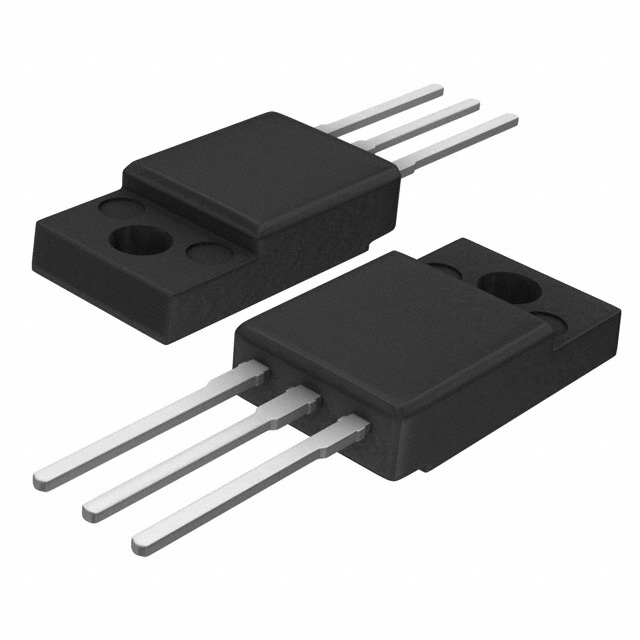
The Sanken Electric USA Inc. 2SC3851A is an active NPN Bipolar (BJT) transistor designed for power switching and amplification applications. It offers collector-emitter breakdown voltage up to 80 V, maximum collector current of 4 A, and a transition frequency of 15 MHz. The product is packaged in TO-220F for through-hole mounting and is RoHS3 compliant. Identifying suitable equivalent or substitute parts is essential when inventory availability is limited or specific compliance/certification requirements must be met.
Substiute Parts
Key Parameters
| Manufacturer Part Number | Manufacturer | Category | Transistor Type | Current - Collector (Ic) (Max) | Voltage - Collector Emitter Breakdown (Max) | Vce Saturation (Max) @ Ib, Ic | Current - Collector Cutoff (Max) | DC Current Gain (hFE) (Min) @ Ic, Vce | Power - Max | Frequency - Transition | Operating Temperature | Mounting Type | Package / Case | Supplier Device Package | RoHS Status |
|---|---|---|---|---|---|---|---|---|---|---|---|---|---|---|---|
| 2SC3851A | Sanken Electric USA Inc. | Transistors, Bipolar (BJT) | NPN | 4 A | 80 V | 500mV @ 200mA, 2A | 100µA (ICBO) | 40 @ 1A, 4V | 25 W | 15MHz | 150°C (TJ) | Through Hole | TO-220-3 Full Pack | TO-220F | ROHS3 Compliant |
Substitute Part Grouping Explanation
Substitute relationships in the "Transistors, Bipolar (BJT)" category are determined strictly by matching key parameters. These include transistor type (NPN), collector-emitter breakdown voltage, maximum collector current, current gain, saturation voltage, cutoff current, total power dissipation, transition frequency, package/case specification, mounting type, and compliance status. Alternatives must meet or exceed these minimum criteria without introducing parameters outside the provided set.
Parameter Comparison
| Manufacturer Part Number | Manufacturer | Transistor Type | Current - Collector (Ic) (Max) | Voltage - Collector Emitter Breakdown (Max) | Vce Saturation (Max) @ Ib, Ic | Current - Collector Cutoff (Max) | DC Current Gain (hFE) (Min) @ Ic, Vce | Power - Max | Frequency - Transition | Operating Temperature | Mounting Type | Package / Case | Supplier Device Package | RoHS Status |
|---|---|---|---|---|---|---|---|---|---|---|---|---|---|---|
| 2SC3851A | Sanken Electric USA Inc. | NPN | 4 A | 80 V | 500mV @ 200mA, 2A | 100µA (ICBO) | 40 @ 1A, 4V | 25 W | 15MHz | 150°C (TJ) | Through Hole | TO-220-3 Full Pack | TO-220F | ROHS3 Compliant |
| KSD1408YTU | Fairchild Semiconductor | NPN | 4 A | 80 V | 1.5V @ 300mA, 3A | 30µA (ICBO) | 120 @ 500mA, 5V | 25 W | 8MHz | 150°C (TJ) | Through Hole | TO-220-3 Full Pack | TO-220F-3 | - |
| MJF3055G | onsemi | NPN | 10 A | 90 V | 2.5V @ 3.3A, 10A | 1µA | 20 @ 4A, 4V | 2 W | 2MHz | -55°C ~ 150°C (TJ) | Through Hole | TO-220-3 Full Pack | TO-220FP | ROHS3 Compliant |
Engineering Selection Recommendations
2SC3851A and MJF3055G possess ROHS3 compliance and are both listed as active status. KSD1408YTU does not indicate ROHS status within the provided data. All parts are available with standard tubes or bulk packaging and meet the stated mounting and case specifications. Certifications such as moisture sensitivity level and ECCN do not restrict selection based on the provided information.
Frequently Asked Questions (FAQ)
Q1: What are the critical parameters when selecting a substitute for 2SC3851A?
A1: Key parameters include transistor type (NPN), collector-emitter breakdown voltage, maximum collector current, current gain, cutoff current, total power dissipation, saturation voltage, transition frequency, package/case, mounting type, and compliance status.
Q2: Are the listed substitutes physically compatible with existing PCBs designed for 2SC3851A?
A2: All parts utilize the TO-220-3 Full Pack package and are designed for through-hole mounting, enabling direct physical substitution based on provided specifications.
Q3: Does RoHS compliance affect substitute selection?
A3: If RoHS compliance is a requirement, only models with explicit ROHS3 status, such as 2SC3851A and MJF3055G, should be selected according to the provided data.
Q4: Are there differences in electrical performance between these alternatives?
A4: Differences in current gain, saturation voltage, and transition frequency exist. Component selection should be made strictly according to the parameters listed in the table.
Q5: How should electrical compatibility be evaluated between listed substitute parts?
A5: Compare only the common parameters such as voltage, current, gain, cutoff current, power, and frequency. Select alternatives that meet or exceed the required performance in all provided fields.
Alternative Parts

SJ6012L2TP
Littelfuse Inc.
6 Alternative Parts

JMK107BBJ476MA-RE
Taiyo Yuden
10 Alternative Parts

GMK107BBJ475MA-T
Taiyo Yuden
5 Alternative Parts
SJ6020N2ARP
Littelfuse Inc.
3 Alternative Parts
SJ6025R2ATP
Littelfuse Inc.
4 Alternative Parts

2474-05L
API Delevan Inc.
1 Alternative Parts

4590R-684K
API Delevan Inc.
1 Alternative Parts

CM6560R-334
API Delevan Inc.
1 Alternative Parts

CM6460-104
API Delevan Inc.
1 Alternative Parts

5526-12
API Delevan Inc.
1 Alternative Parts