




Request Quote
(Ships tomorrow)
2SC3624-T1B-A Equivalent & Substitute Parts
Part Overview
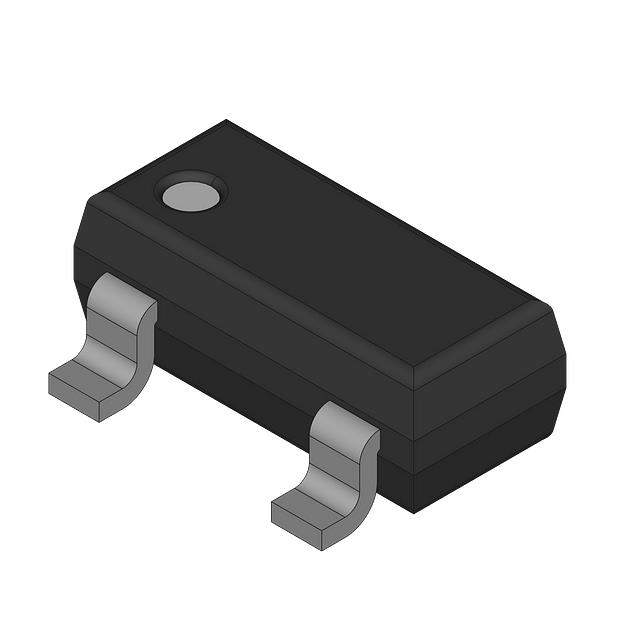
The 2SC3624-T1B-A is an NPN bipolar junction transistor manufactured by Renesas Electronics Corporation, designed for small-signal switching and amplification applications. This device operates at 50 V collector-emitter breakdown voltage with a maximum collector current of 150 mA and transition frequency of 250 MHz. The part is classified as obsolete, making equivalent and substitute parts necessary for ongoing design support and production continuity. Substitute parts must maintain electrical compatibility across voltage, current, frequency, and power dissipation parameters while accommodating surface mount packaging in the SC-59 (SOT-23-3) form factor.
Substiute Parts
Key Parameters
| Parameter | Value | Unit |
|---|---|---|
| Transistor Type | NPN | — |
| Voltage - Collector Emitter Breakdown (Max) | 50 | V |
| Current - Collector (Ic) (Max) | 150 | mA |
| Power - Max | 200 | mW |
| Frequency - Transition | 250 | MHz |
| Operating Temperature (TJ) | 150 | °C |
| Mounting Type | Surface Mount | — |
| Package / Case | TO-236-3, SC-59, SOT-23-3 | — |
| Current - Collector Cutoff (Max) | 100 | nA |
| Vce Saturation (Max) @ Ib, Ic | 300mV @ 5mA, 50mA | — |
Substitute Part Grouping Explanation
Substitution of the 2SC3624-T1B-A is determined by strict adherence to the following electrical and mechanical parameters:
Primary Substitution Criteria:
- Transistor Type: NPN (required match)
- Voltage - Collector Emitter Breakdown (Max): 50 V (minimum requirement)
- Current - Collector (Ic) (Max): 150 mA or greater (minimum requirement)
- Power - Max: 200 mW or greater (minimum requirement)
- Frequency - Transition: 250 MHz or greater (minimum requirement)
- Operating Temperature: 150°C (TJ) (minimum requirement)
- Mounting Type: Surface Mount (required match)
- Package / Case: TO-236-3, SC-59, or SOT-23-3 (required match)
Secondary Compatibility Parameters:
- Current - Collector Cutoff (Max): 100 nA or lower (preferred)
- Vce Saturation: 300 mV or lower at specified bias conditions (preferred)
- DC Current Gain (hFE): Functional equivalence within application context
- RoHS3 Compliance: Required for environmental and regulatory alignment
- Moisture Sensitivity Level (MSL): 1 (Unlimited) preferred
Substitute parts are grouped into two categories based on electrical performance alignment:
Category A - Direct Electrical Equivalents: Parts matching all primary criteria with identical or superior electrical specifications.
Category B - Functional Equivalents: Parts meeting all primary criteria with minor variations in secondary parameters that do not compromise circuit operation within the 2SC3624-T1B-A application envelope.
Parameter Comparison
| Parameter | 2SC3624-T1B-A | 2PD601BSL,215 | 2SC2412KT146Q | 2SD2226KT146V | 2SD2226KT146W | MMBT6429LT1G | NXP3875GR |
|---|---|---|---|---|---|---|---|
| Manufacturer | Renesas | NXP | Rohm | Rohm | Rohm | onsemi | Nexperia |
| Transistor Type | NPN | NPN | NPN | NPN | NPN | NPN | NPN |
| Voltage - Collector Emitter Breakdown (Max) | 50 V | 50 V | 50 V | 50 V | 50 V | 45 V | 50 V |
| Current - Collector (Ic) (Max) | 150 mA | 200 mA | 150 mA | 150 mA | 150 mA | 200 mA | 150 mA |
| Power - Max | 200 mW | 250 mW | 200 mW | 200 mW | 200 mW | 225 mW | 200 mW |
| Frequency - Transition | 250 MHz | 250 MHz | 180 MHz | 250 MHz | 250 MHz | 700 MHz | 80 MHz |
| Operating Temperature (TJ) | 150°C | 150°C | 150°C | 150°C | 150°C | -55°C ~ 150°C | 150°C |
| Mounting Type | Surface Mount | Surface Mount | Surface Mount | Surface Mount | Surface Mount | Surface Mount | Surface Mount |
| Package / Case | TO-236-3, SC-59, SOT-23-3 | TO-236-3, SC-59, SOT-23-3 | TO-236-3, SC-59, SOT-23-3 | TO-236-3, SC-59, SOT-23-3 | TO-236-3, SC-59, SOT-23-3 | TO-236-3, SC-59, SOT-23-3 | TO-236-3, SC-59, SOT-23-3 |
| Current - Collector Cutoff (Max) | 100 nA | 100 nA | 100 nA | 300 nA | 300 nA | 100 nA | 100 nA |
| Vce Saturation (Max) @ Ib, Ic | 300mV @ 5mA, 50mA | 250mV @ 10mA, 100mA | 400mV @ 5mA, 50mA | 300mV @ 5mA, 50mA | 300mV @ 5mA, 50mA | 600mV @ 5mA, 100mA | 250mV @ 10mA, 100mA |
| Product Status | Obsolete | Active | Active | Active | Active | Active | Active |
| RoHS3 Compliance | Yes | Not specified | Yes | Yes | Yes | Yes | Yes |
| Moisture Sensitivity Level (MSL) | 1 (Unlimited) | 1 (Unlimited) | 1 (Unlimited) | 1 (Unlimited) | 1 (Unlimited) | 1 (Unlimited) | 1 (Unlimited) |
Engineering Selection Recommendations
Category A - Direct Electrical Equivalents (Recommended Primary Substitutes):
2SD2226KT146V (Rohm Semiconductor) and 2SD2226KT146W (Rohm Semiconductor) are the closest electrical equivalents to the 2SC3624-T1B-A. Both parts match all primary substitution criteria with identical voltage, current, power, and frequency specifications. The 2SD2226 series maintains the same Vce saturation characteristics (300 mV @ 5 mA, 50 mA) and operating temperature range. Both parts are active products with RoHS3 compliance and MSL 1 rating. The primary distinction between these two variants is DC Current Gain (hFE): 2SD2226KT146V provides 820 @ 1 mA, 5V, while 2SD2226KT146W provides 1200 @ 1 mA, 5V. Selection between these variants depends on application-specific gain requirements.
2PD601BSL,215 (NXP Semiconductors) qualifies as a direct equivalent with superior current handling (200 mA vs. 150 mA) and power dissipation (250 mW vs. 200 mW). This part maintains 50 V breakdown voltage and 250 MHz transition frequency. The lower Vce saturation (250 mV @ 10 mA, 100 mA) provides improved switching efficiency. NXP3875GR also meets primary criteria with automotive-grade qualification (AEC-Q101), though transition frequency is reduced to 80 MHz.
Category B - Functional Equivalents (Secondary Substitutes):
2SC2412KT146Q (Rohm Semiconductor) meets all primary criteria with identical voltage, current, and power specifications. However, transition frequency is reduced to 180 MHz (below the 250 MHz specification). This part is suitable for applications where the lower frequency response does not compromise circuit performance. Vce saturation is elevated to 400 mV @ 5 mA, 50 mA, indicating slightly higher saturation losses.
MMBT6429LT1G (onsemi) exceeds primary electrical requirements with 200 mA collector current, 225 mW power dissipation, and 700 MHz transition frequency. However, the collector-emitter breakdown voltage is 45 V, which is 5 V below the 2SC3624-T1B-A specification. This part is suitable only for applications where the 50 V rating is not a hard requirement. The elevated Vce saturation (600 mV @ 5 mA, 100 mA) indicates higher saturation losses compared to the original part.
Product Status and Compliance Considerations:
All substitute parts listed are active products with current manufacturing support, ensuring long-term availability and supply chain stability. The 2SC3624-T1B-A is classified as obsolete, making transition to active alternatives necessary for new designs and production continuity. All recommended substitutes maintain RoHS3 compliance and MSL 1 rating, ensuring environmental and reliability alignment with the original part.
Frequently Asked Questions (FAQ)
Q1: Can the 2SD2226KT146V directly replace the 2SC3624-T1B-A without circuit modification?
A: Yes. The 2SD2226KT146V meets all primary electrical and mechanical substitution criteria. Voltage, current, power, frequency, and package specifications are identical or superior. The part operates within the same temperature range and maintains equivalent Vce saturation characteristics. No circuit modification is required for direct substitution in applications designed for the 2SC3624-T1B-A.
Q2: Why is the MMBT6429LT1G listed as a substitute if the breakdown voltage is only 45 V instead of 50 V?
A: The MMBT6429LT1G is included as a functional equivalent for applications where the 50 V rating is not a critical design constraint. The 45 V breakdown voltage provides adequate margin for circuits operating below 45 V. However, this part is not suitable for applications requiring the full 50 V rating. Circuit analysis is necessary to confirm voltage compatibility before selection.
Q3: What is the significance of the different DC Current Gain (hFE) values between 2SD2226KT146V and 2SD2226KT146W?
A: DC Current Gain determines the amplification factor of the transistor. The 2SD2226KT146V provides 820 @ 1 mA, 5V, while the 2SD2226KT146W provides 1200 @ 1 mA, 5V. Higher gain reduces base current requirements for a given collector current. Selection depends on application-specific biasing and gain requirements. Both parts are electrically equivalent for switching applications where gain variation is not critical.
Q4: Is the NXP3875GR suitable for high-frequency applications?
A: The NXP3875GR has a transition frequency of 80 MHz, which is significantly lower than the 2SC3624-T1B-A (250 MHz). This part is not suitable for applications requiring high-frequency switching or amplification above 80 MHz. However, it is qualified to automotive standards (AEC-Q101), making it appropriate for automotive applications operating within the 80 MHz frequency envelope.
Q5: What does MSL 1 (Unlimited) mean for moisture sensitivity?
A: MSL 1 (Unlimited) indicates that the component has no moisture sensitivity limitations. The part can be stored and handled without special moisture control measures, and there are no time-to-reflow restrictions. This classification simplifies supply chain management and reduces handling costs compared to higher MSL ratings.
Q6: Are all substitute parts RoHS3 compliant?
A: All substitute parts listed are RoHS3 compliant, ensuring compliance with environmental and regulatory requirements. The 2SC3624-T1B-A is also RoHS3 compliant. This compliance status is maintained across all recommended substitutes, supporting seamless integration into environmentally regulated supply chains.
Q7: Can the 2PD601BSL,215 be used in place of the 2SC3624-T1B-A in all applications?
A: The 2PD601BSL,215 is a direct electrical equivalent with superior current and power ratings. It meets or exceeds all primary substitution criteria. However, the higher current rating (200 mA vs. 150 mA) and improved Vce saturation (250 mV vs. 300 mV) may alter circuit behavior in current-limited or saturation-dependent applications. Circuit analysis is recommended to confirm compatibility, though direct substitution is generally feasible.
Q8: What is the difference between TO-236-3, SC-59, and SOT-23-3 package designations?
A: TO-236-3, SC-59, and SOT-23-3 are equivalent package designations for the same three-lead surface mount form factor. These terms are used interchangeably by different manufacturers and standards organizations. All substitute parts use this identical package, ensuring mechanical and electrical compatibility with the 2SC3624-T1B-A footprint.
Q9: Why is the 2SC2412KT146Q listed as a substitute if the transition frequency is only 180 MHz?
A: The 2SC2412KT146Q is included as a functional equivalent for applications where the 250 MHz transition frequency specification is not a critical design constraint. The 180 MHz frequency provides adequate performance for switching applications operating below this threshold. Applications requiring the full 250 MHz specification should select alternatives with higher frequency ratings.
Q10: What is the significance of Vce saturation specifications in transistor selection?
A: Vce saturation determines the voltage drop across the transistor when operating in saturation mode (fully conducting). Lower Vce saturation reduces power dissipation and heat generation. The 2SC3624-T1B-A specifies 300 mV @ 5 mA, 50 mA. Substitutes with lower saturation voltage (such as 2PD601BSL,215 at 250 mV) provide improved efficiency, while higher saturation voltage (such as 2SC2412KT146Q at 400 mV) increases power loss. Selection depends on thermal and efficiency requirements.
Alternative Parts

SJ6012L2TP
Littelfuse Inc.
6 Alternative Parts

JMK107BBJ476MA-RE
Taiyo Yuden
10 Alternative Parts

GMK107BBJ475MA-T
Taiyo Yuden
5 Alternative Parts
SJ6020N2ARP
Littelfuse Inc.
3 Alternative Parts
SJ6025R2ATP
Littelfuse Inc.
4 Alternative Parts

2474-05L
API Delevan Inc.
1 Alternative Parts

4590R-684K
API Delevan Inc.
1 Alternative Parts

CM6560R-334
API Delevan Inc.
1 Alternative Parts

CM6460-104
API Delevan Inc.
1 Alternative Parts

5526-12
API Delevan Inc.
1 Alternative Parts