


Request Quote
(Ships tomorrow)
2SB772 Equivalent & Substitute Parts
Part Overview
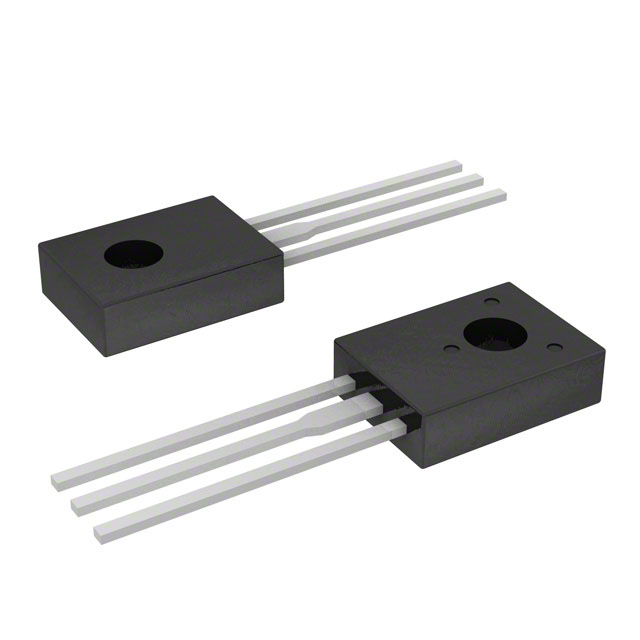
The 2SB772 is a PNP bipolar junction transistor manufactured by STMicroelectronics, rated for 30 V collector-emitter breakdown voltage and 3 A maximum collector current. This device is packaged in SOT-32-3 (TO-225AA, TO-126-3) through-hole configuration and is designed for general-purpose switching and amplification applications requiring 12.5 W power dissipation capability.
The 2SB772 carries an Obsolete product status. Identifying equivalent substitute parts is necessary to maintain design continuity, ensure supply chain availability, and support ongoing production requirements for applications currently utilizing this component.
Substiute Parts
Key Parameters
| Parameter | Value | Unit |
|---|---|---|
| Transistor Type | PNP | — |
| Maximum Collector Current (Ic) | 3 | A |
| Collector-Emitter Breakdown Voltage (Max) | 30 | V |
| Maximum Power Dissipation | 12.5 | W |
| Transition Frequency | 100 | MHz |
| Operating Temperature (Junction) | 150 | °C |
| Mounting Type | Through Hole | — |
| Package / Case | TO-225AA, TO-126-3 | — |
| RoHS Status | ROHS3 Compliant | — |
Substitute Part Grouping Explanation
Substitute parts for the 2SB772 are qualified based on the following critical electrical and mechanical parameters:
Electrical Compatibility Criteria:
- Transistor type must be PNP
- Maximum collector current must equal or exceed 3 A
- Collector-emitter breakdown voltage must equal or exceed 30 V
- Operating temperature range must support 150°C junction temperature
- Package / case must be compatible with TO-225AA or TO-126-3 through-hole mounting
Mechanical Compatibility Criteria:
- Mounting type must be Through Hole
- Physical package dimensions must accommodate existing PCB layouts designed for SOT-32-3 or equivalent TO-126-3 footprints
The substitute parts identified (KSB772YS and KSB772YSTU, both manufactured by Fairchild Semiconductor) satisfy all mandatory electrical and mechanical parameters. Both devices are Active products with current inventory availability, providing superior supply chain continuity compared to the Obsolete 2SB772.
Parameter Comparison
| Parameter | 2SB772 (STMicroelectronics) | KSB772YS (Fairchild) | KSB772YSTU (Fairchild) |
|---|---|---|---|
| Product Status | Obsolete | Active | Active |
| Transistor Type | PNP | PNP | PNP |
| Maximum Collector Current (Ic) | 3 A | 3 A | 3 A |
| Collector-Emitter Breakdown Voltage (Max) | 30 V | 30 V | 30 V |
| Vce Saturation (Max) | 1.1 V @ 150mA, 3A | 500 mV @ 200mA, 2A | 500 mV @ 200mA, 2A |
| DC Current Gain (hFE Min) | 100 @ 100mA, 2V | 160 @ 1A, 2V | 160 @ 1A, 2V |
| Maximum Power Dissipation | 12.5 W | 1 W | 1 W |
| Transition Frequency | 100 MHz | 80 MHz | 80 MHz |
| Operating Temperature (Junction) | 150°C | 150°C | 150°C |
| Mounting Type | Through Hole | Through Hole | Through Hole |
| Package / Case | TO-225AA, TO-126-3 | TO-225AA, TO-126-3 | TO-225AA, TO-126-3 |
| Supplier Device Package | SOT-32-3 | TO-126-3 | TO-126-3 |
| Current Inventory Status | 69,400 Pcs | 28,200 Pcs | 19,261 Pcs |
Engineering Selection Recommendations
Primary Substitutes: KSB772YS and KSB772YSTU
Both Fairchild Semiconductor alternatives satisfy all mandatory electrical and mechanical compatibility requirements for direct substitution with the 2SB772. Key selection factors include:
Product Status Advantage: Both KSB772YS and KSB772YSTU carry Active product status with established supply chain availability, eliminating obsolescence risk associated with the 2SB772.
Compliance and Certifications: Both substitute parts maintain ECCN EAR99 classification, consistent with the original 2SB772. RoHS3 compliance status is maintained through the Fairchild alternatives.
Electrical Performance Considerations: The substitute parts demonstrate improved DC current gain (160 vs. 100 minimum) and reduced saturation voltage (500 mV vs. 1.1 V), resulting in enhanced switching efficiency. Transition frequency is reduced from 100 MHz to 80 MHz; this parameter difference is non-critical for applications not requiring the original 100 MHz specification.
Power Dissipation Difference: The substitute parts are rated for 1 W maximum power dissipation compared to 12.5 W for the 2SB772. Applications requiring sustained power dissipation exceeding 1 W must conduct thermal analysis to confirm the substitute parts operate within acceptable junction temperature limits.
Packaging and Mounting: Both substitutes utilize TO-126-3 supplier device packaging, compatible with existing through-hole PCB layouts designed for the 2SB772 SOT-32-3 configuration.
Frequently Asked Questions (FAQ)
Q: Can KSB772YS and KSB772YSTU be used interchangeably with the 2SB772?
A: Both Fairchild parts satisfy the core electrical parameters (PNP type, 3 A collector current, 30 V breakdown voltage, 150°C operating temperature) and through-hole mounting requirements. Direct pin-for-pin substitution is supported for applications where the 1 W power rating is sufficient. Applications requiring the original 12.5 W power dissipation capability require alternative component selection.
Q: What is the difference between KSB772YS and KSB772YSTU?
A: Both parts are electrically identical with matching electrical specifications. The primary difference is supplier device packaging designation (both TO-126-3) and HTSUS tariff classification codes. Selection between these two substitutes is based on supplier availability and procurement requirements rather than technical performance.
Q: Are there any frequency limitations when substituting with KSB772YS or KSB772YSTU?
A: The substitute parts operate at 80 MHz transition frequency compared to 100 MHz for the 2SB772. Applications operating below 80 MHz encounter no frequency-related limitations. Designs requiring operation at frequencies between 80 MHz and 100 MHz must conduct performance validation to confirm acceptable operation within the reduced frequency specification.
Q: Do the substitute parts maintain the same thermal characteristics?
A: The substitute parts are rated for 1 W maximum power dissipation versus 12.5 W for the 2SB772. Thermal performance differs significantly. Applications dissipating power levels between 1 W and 12.5 W require thermal analysis to confirm junction temperature remains within the 150°C maximum operating limit when using substitute parts.
Q: Are RoHS and compliance certifications maintained with the substitute parts?
A: Both KSB772YS and KSB772YSTU maintain ECCN EAR99 classification and RoHS3 compliance status, consistent with the original 2SB772. No compliance degradation occurs when substituting these parts.
Q: What inventory considerations apply to these substitutes?
A: KSB772YS maintains 28,200 pieces in current inventory, while KSB772YSTU maintains 19,261 pieces. Both alternatives provide substantially higher availability compared to the Obsolete 2SB772 status, supporting long-term production continuity.
Alternative Parts

SJ6012L2TP
Littelfuse Inc.
6 Alternative Parts

JMK107BBJ476MA-RE
Taiyo Yuden
10 Alternative Parts

GMK107BBJ475MA-T
Taiyo Yuden
5 Alternative Parts
SJ6020N2ARP
Littelfuse Inc.
3 Alternative Parts
SJ6025R2ATP
Littelfuse Inc.
4 Alternative Parts

2474-05L
API Delevan Inc.
1 Alternative Parts

4590R-684K
API Delevan Inc.
1 Alternative Parts

CM6560R-334
API Delevan Inc.
1 Alternative Parts

CM6460-104
API Delevan Inc.
1 Alternative Parts

5526-12
API Delevan Inc.
1 Alternative Parts