



Request Quote
(Ships tomorrow)
2SA1832-Y-AP Equivalent & Substitute Parts
Part Overview
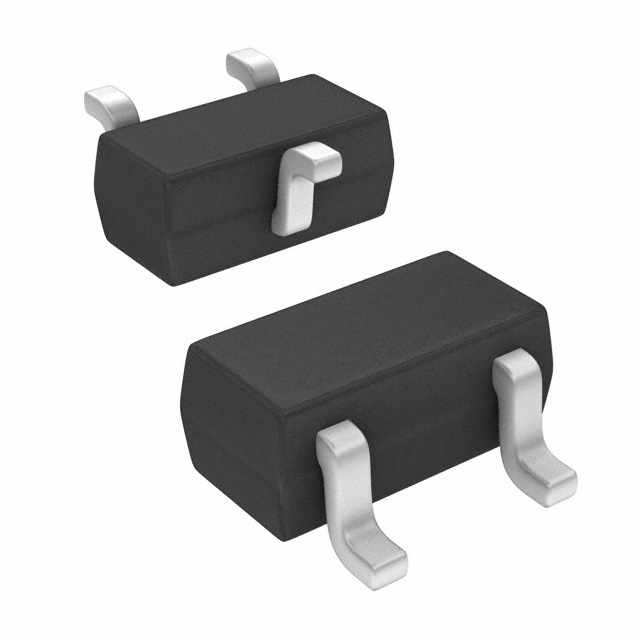
The 2SA1832-Y-AP is a PNP bipolar junction transistor manufactured by Micro Commercial Co, designed for surface mount applications in SOT-523 packaging. This component operates at 50V collector-emitter breakdown voltage with a maximum collector current of 150mA and 100mW power dissipation. The part is classified as obsolete, necessitating identification of active equivalent alternatives that maintain electrical and mechanical compatibility for ongoing production and repair applications.
Substiute Parts
Key Parameters
| Parameter | Value | Unit |
|---|---|---|
| Transistor Type | PNP | — |
| Current - Collector (Ic) Max | 150 | mA |
| Voltage - Collector Emitter Breakdown (Max) | 50 | V |
| Vce Saturation (Max) | 300mV @ 10mA, 100mA | — |
| Current - Collector Cutoff (Max) | 100 | nA |
| DC Current Gain (hFE) Min | 120 @ 1mA, 6V | — |
| Power - Max | 100 | mW |
| Frequency - Transition | 80 | MHz |
| Mounting Type | Surface Mount | — |
| Package / Case | SOT-523 | — |
| Operating Temperature (TJ) | 150 | °C |
| RoHS Status | ROHS3 Compliant | — |
| Moisture Sensitivity Level | 1 (Unlimited) | — |
Substitute Part Grouping Explanation
Substitute parts for the 2SA1832-Y-AP are classified based on strict electrical and mechanical parameter alignment. The primary substitution criteria are:
Critical Parameters for Substitution:
- Transistor Type: PNP configuration
- Collector Current Rating: 150mA maximum
- Collector-Emitter Breakdown Voltage: 50V minimum
- DC Current Gain (hFE): Minimum 120
- Collector Cutoff Current: 100nA maximum
- RoHS3 Compliance and MSL Level 1 rating
Direct Substitute (2SA1832-Y,LF): Manufactured by Toshiba Semiconductor and Storage, this part maintains identical electrical specifications including 150mA collector current, 50V breakdown voltage, 100mW power rating, and 80MHz transition frequency. The primary difference is packaging format (SSM/SC-75 versus SOT-523) and active product status. DC current gain specification differs at test point (2mA versus 1mA) but maintains the 120 minimum threshold.
Similar Substitute (2DA1774Q-7-F): Manufactured by Diodes Incorporated, this part meets core electrical requirements with 150mA collector current and 50V breakdown voltage. Enhanced specifications include 140MHz transition frequency (versus 80MHz), 150mW power rating (versus 100mW), and extended operating temperature range (-55°C to 150°C). Package remains SOT-523, ensuring mechanical compatibility. Vce saturation specification differs (500mV @ 5mA, 50mA versus 300mV @ 10mA, 100mA).
Parameter Comparison
| Parameter | 2SA1832-Y-AP (Main) | 2SA1832-Y,LF (Direct) | 2DA1774Q-7-F (Similar) |
|---|---|---|---|
| Manufacturer | Micro Commercial Co | Toshiba Semiconductor and Storage | Diodes Incorporated |
| Product Status | Obsolete | Active | Active |
| Transistor Type | PNP | PNP | PNP |
| Current - Collector (Ic) Max | 150 mA | 150 mA | 150 mA |
| Voltage - Collector Emitter Breakdown (Max) | 50 V | 50 V | 50 V |
| Vce Saturation (Max) | 300mV @ 10mA, 100mA | 300mV @ 10mA, 100mA | 500mV @ 5mA, 50mA |
| Current - Collector Cutoff (Max) | 100 nA | 100 nA | 100 nA |
| DC Current Gain (hFE) Min | 120 @ 1mA, 6V | 120 @ 2mA, 6V | 120 @ 1mA, 6V |
| Power - Max | 100 mW | 100 mW | 150 mW |
| Frequency - Transition | 80 MHz | 80 MHz | 140 MHz |
| Operating Temperature (TJ) | 150°C | 125°C | -55°C to 150°C |
| Mounting Type | Surface Mount | Surface Mount | Surface Mount |
| Package / Case | SOT-523 | SC-75, SOT-416 | SOT-523 |
| RoHS Status | ROHS3 Compliant | ROHS3 Compliant | ROHS3 Compliant |
| Moisture Sensitivity Level | 1 (Unlimited) | 1 (Unlimited) | 1 (Unlimited) |
Engineering Selection Recommendations
2SA1832-Y,LF Selection Criteria:
The 2SA1832-Y,LF is the direct electrical equivalent with active product status from Toshiba Semiconductor and Storage. This substitute maintains all critical electrical parameters including 150mA collector current, 50V breakdown voltage, 100mW power dissipation, and 80MHz transition frequency. ROHS3 compliance and MSL Level 1 rating ensure regulatory and environmental compatibility. The primary consideration is package format difference (SSM/SC-75 versus SOT-523), which requires PCB layout evaluation for mechanical fit. This substitute is appropriate for applications where the original SOT-523 package can be accommodated through alternative mounting solutions or where the SSM package is acceptable.
2DA1774Q-7-F Selection Criteria:
The 2DA1774Q-7-F from Diodes Incorporated provides direct SOT-523 package compatibility with the original 2SA1832-Y-AP, eliminating mechanical redesign requirements. This substitute maintains core electrical specifications (150mA collector current, 50V breakdown voltage) while offering enhanced performance characteristics including 140MHz transition frequency and 150mW power rating. Extended operating temperature range (-55°C to 150°C) provides thermal margin beyond the original specification. ROHS3 compliance and MSL Level 1 rating ensure full regulatory alignment. The Vce saturation specification differs at specified test points; applications requiring precise saturation voltage matching at 10mA/100mA conditions should evaluate this parameter against circuit requirements.
Both substitutes are active products with current manufacturing availability and full compliance certifications. Selection between them depends on package compatibility requirements and performance margin needs for the specific application.
Frequently Asked Questions (FAQ)
Q: Can the 2SA1832-Y,LF directly replace the 2SA1832-Y-AP in existing PCB designs?
A: Electrical substitution is direct; however, package format differs. The 2SA1832-Y,LF uses SC-75 or SOT-416 packaging versus the original SOT-523. PCB footprint compatibility must be verified before implementation. If the original design requires SOT-523 package, the 2DA1774Q-7-F provides direct mechanical compatibility.
Q: What are the key differences between the two substitute options?
A: The 2SA1832-Y,LF maintains identical electrical specifications to the original part (100mW, 80MHz) with different packaging. The 2DA1774Q-7-F offers enhanced specifications (150mW, 140MHz) while maintaining SOT-523 package compatibility. Both are active products with full compliance certifications.
Q: Does the 2DA1774Q-7-F higher power rating (150mW versus 100mW) affect circuit operation?
A: The higher power rating indicates greater thermal capability and does not negatively affect circuit operation. Applications designed for 100mW operation remain fully compatible. The enhanced rating provides additional thermal margin for demanding applications.
Q: Are there package compatibility issues with the 2SA1832-Y,LF?
A: Yes. The 2SA1832-Y,LF uses SC-75 or SOT-416 packaging, which differs from the original SOT-523. Mechanical fit on existing PCBs requires footprint verification. The 2DA1774Q-7-F maintains SOT-523 compatibility, eliminating this consideration.
Q: How do the DC current gain specifications compare across the three parts?
A: All three parts specify minimum DC current gain (hFE) of 120. The 2SA1832-Y-AP and 2DA1774Q-7-F specify this at 1mA collector current, while the 2SA1832-Y,LF specifies at 2mA. This difference reflects different test conditions but maintains the same minimum threshold for circuit design purposes.
Q: What is the significance of the extended temperature range in the 2DA1774Q-7-F?
A: The 2DA1774Q-7-F operates from -55°C to 150°C, compared to 150°C maximum for the original part. This extended lower temperature limit provides operational capability in cold environment applications and represents enhanced thermal performance specification.
Q: Are all three parts RoHS3 compliant?
A: Yes. The 2SA1832-Y-AP, 2SA1832-Y,LF, and 2DA1774Q-7-F are all ROHS3 compliant with MSL Level 1 (Unlimited) moisture sensitivity rating, ensuring full regulatory compatibility for current manufacturing standards.
Q: How does the transition frequency difference (80MHz versus 140MHz) impact substitution?
A: The 2DA1774Q-7-F transition frequency of 140MHz exceeds the original 80MHz specification. Applications designed for 80MHz operation remain fully compatible with the higher frequency part. Enhanced frequency capability provides margin for high-speed switching applications without negative effects on lower-frequency designs.
Q: What is the practical implication of different Vce saturation specifications?
A: The 2SA1832-Y-AP specifies 300mV saturation at 10mA/100mA test points, while the 2DA1774Q-7-F specifies 500mV at 5mA/50mA. Applications requiring precise saturation voltage matching at the original test points should evaluate this parameter. For general switching applications, both specifications provide adequate saturation performance.
Alternative Parts

SJ6012L2TP
Littelfuse Inc.
6 Alternative Parts

JMK107BBJ476MA-RE
Taiyo Yuden
10 Alternative Parts

GMK107BBJ475MA-T
Taiyo Yuden
5 Alternative Parts
SJ6020N2ARP
Littelfuse Inc.
3 Alternative Parts
SJ6025R2ATP
Littelfuse Inc.
4 Alternative Parts

2474-05L
API Delevan Inc.
1 Alternative Parts

4590R-684K
API Delevan Inc.
1 Alternative Parts

CM6560R-334
API Delevan Inc.
1 Alternative Parts

CM6460-104
API Delevan Inc.
1 Alternative Parts

5526-12
API Delevan Inc.
1 Alternative Parts