


Request Quote
(Ships tomorrow)
2N6517 NPN Bipolar Junction Transistor Equivalent & Substitute Parts
Part Overview
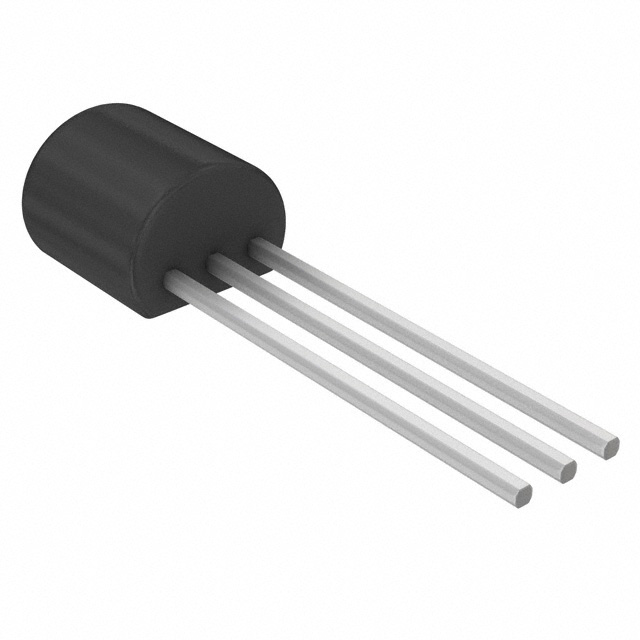
The 2N6517 is an NPN bipolar junction transistor manufactured by onsemi, designed for general-purpose switching and amplification applications. This device features a maximum collector current of 500 mA, collector-emitter breakdown voltage of 350 V, and maximum power dissipation of 625 mW in a Through Hole TO-92 package.
The 2N6517 is classified as an obsolete product. Locating equivalent and substitute parts is necessary due to discontinued manufacturing and limited availability of the original component. The 2N6517BU represents a direct substitute option with identical electrical specifications and improved compliance status.
Substiute Parts
Key Parameters
| Parameter | Value | Unit |
|---|---|---|
| Transistor Type | NPN | — |
| Current - Collector (Ic) Max | 500 | mA |
| Voltage - Collector Emitter Breakdown (Max) | 350 | V |
| Vce Saturation (Max) @ Ib, Ic | 1 V @ 5 mA, 50 mA | — |
| Current - Collector Cutoff (Max) | 50 | nA |
| DC Current Gain (hFE) Min @ Ic, Vce | 20 @ 50 mA, 10 V | — |
| Power - Max | 625 | mW |
| Frequency - Transition | 200 | MHz |
| Operating Temperature Range | -55 to 150 | °C |
| Mounting Type | Through Hole | — |
| Package / Case | TO-92-3, TO-226-3 | — |
Substitute Part Grouping Explanation
Substitution of the 2N6517 is determined by strict equivalence across the following electrical and mechanical parameters:
Critical Substitution Parameters:
- Transistor Type: NPN
- Maximum Collector Current (Ic): 500 mA
- Collector-Emitter Breakdown Voltage: 350 V
- Maximum Power Dissipation: 625 mW
- DC Current Gain (hFE): 20 minimum at specified conditions
- Transition Frequency: 200 MHz
- Package Type: TO-92 Through Hole configuration
The 2N6517BU qualifies as a direct electrical equivalent, maintaining identical ratings across all critical parameters. Both devices share the same base product number (2N6517) and are manufactured by onsemi. The primary distinction between these parts is packaging format (Bulk versus standard) and product status (Last Time Buy versus Obsolete), along with improved RoHS compliance in the 2N6517BU variant.
Parameter Comparison
| Parameter | 2N6517 | 2N6517BU | Match |
|---|---|---|---|
| Transistor Type | NPN | NPN | ✓ |
| Current - Collector (Ic) Max | 500 mA | 500 mA | ✓ |
| Voltage - Collector Emitter Breakdown (Max) | 350 V | 350 V | ✓ |
| Vce Saturation (Max) @ Ib, Ic | 1 V @ 5 mA, 50 mA | 1 V @ 5 mA, 50 mA | ✓ |
| Current - Collector Cutoff (Max) | 50 nA | 50 nA | ✓ |
| DC Current Gain (hFE) Min @ Ic, Vce | 20 @ 50 mA, 10 V | 20 @ 50 mA, 10 V | ✓ |
| Power - Max | 625 mW | 625 mW | ✓ |
| Frequency - Transition | 200 MHz | 200 MHz | ✓ |
| Mounting Type | Through Hole | Through Hole | ✓ |
| Package / Case | TO-92-3, TO-226-3 | TO-92-3, TO-226-3 | ✓ |
| RoHS Status | Non-compliant | ROHS3 Compliant | — |
| Product Status | Obsolete | Last Time Buy | — |
Engineering Selection Recommendations
2N6517BU Selection Criteria:
The 2N6517BU is the direct substitute for the 2N6517 based on complete electrical parameter equivalence. Selection of the 2N6517BU is supported by the following factors:
-
Electrical Equivalence: All critical electrical parameters match exactly, including collector current, breakdown voltage, saturation characteristics, current gain, power rating, and transition frequency.
-
Package Compatibility: Both devices utilize identical TO-92-3 Through Hole packaging, ensuring mechanical and thermal compatibility in existing circuit board layouts.
-
Compliance Status: The 2N6517BU carries ROHS3 compliance certification, whereas the original 2N6517 is non-compliant. For applications subject to RoHS requirements, the 2N6517BU is the appropriate selection.
-
Product Availability: The 2N6517BU maintains Last Time Buy status with documented inventory (20,200 pieces), compared to the Obsolete status of the original 2N6517.
-
Regulatory Alignment: Both devices maintain REACH Unaffected status and identical ECCN and HTSUS classifications, ensuring consistent regulatory treatment.
Frequently Asked Questions (FAQ)
Q: Can the 2N6517BU be used as a direct replacement for the 2N6517 in existing designs?
A: Yes. The 2N6517BU is electrically and mechanically equivalent to the 2N6517. All electrical parameters, including collector current, breakdown voltage, current gain, and power dissipation, are identical. The TO-92-3 package dimensions are the same, permitting direct substitution in existing circuit board layouts without modification.
Q: What is the difference between the 2N6517 and 2N6517BU?
A: The primary differences are packaging format (Bulk versus standard), product status (Last Time Buy versus Obsolete), and RoHS compliance. The 2N6517BU is ROHS3 compliant, while the 2N6517 is non-compliant. All electrical specifications are identical.
Q: Are there any temperature range differences between these parts?
A: The 2N6517 specifies an operating temperature range of -55°C to 150°C. The 2N6517BU specifies a maximum junction temperature of 150°C. Both devices support the same upper temperature limit. For applications requiring the full -55°C lower limit, both parts are suitable.
Q: What does "Last Time Buy" status mean for the 2N6517BU?
A: Last Time Buy status indicates that the manufacturer has announced the end of production for this component. Existing inventory is available for purchase, but no new manufacturing runs are planned. This status differs from Obsolete, which indicates production has already ceased.
Q: Is the TO-92-3 package the same as TO-226-3?
A: Yes. TO-92-3 and TO-226-3 refer to the same three-lead Through Hole package configuration. Both designations are used interchangeably in component specifications.
Q: What are the REACH and RoHS compliance implications for component selection?
A: The 2N6517BU carries ROHS3 compliance certification, making it suitable for applications subject to RoHS Directive requirements. The original 2N6517 is non-compliant. Both devices maintain REACH Unaffected status, indicating they are not subject to REACH substance restrictions. For new designs or applications with RoHS requirements, the 2N6517BU is the appropriate selection.
Alternative Parts

SJ6012L2TP
Littelfuse Inc.
6 Alternative Parts

JMK107BBJ476MA-RE
Taiyo Yuden
10 Alternative Parts

GMK107BBJ475MA-T
Taiyo Yuden
5 Alternative Parts
SJ6020N2ARP
Littelfuse Inc.
3 Alternative Parts
SJ6025R2ATP
Littelfuse Inc.
4 Alternative Parts

2474-05L
API Delevan Inc.
1 Alternative Parts

4590R-684K
API Delevan Inc.
1 Alternative Parts

CM6560R-334
API Delevan Inc.
1 Alternative Parts

CM6460-104
API Delevan Inc.
1 Alternative Parts

5526-12
API Delevan Inc.
1 Alternative Parts