


Request Quote
(Ships tomorrow)
2N5194 PNP Bipolar Transistor Equivalent & Substitute Parts
Part Overview
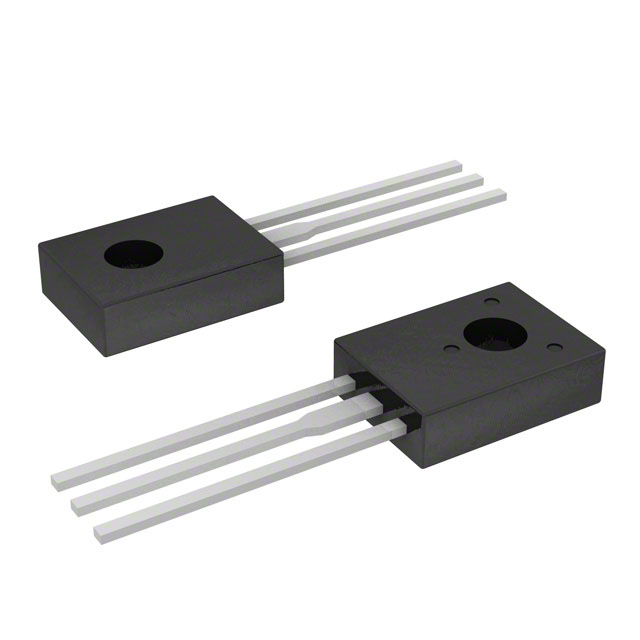
The 2N5194 is a PNP bipolar junction transistor manufactured by Central Semiconductor Corp, rated for 60 V collector-emitter breakdown voltage and 4 A maximum collector current in a TO-126 through-hole package. This device is classified as obsolete, making equivalent and substitute parts necessary for ongoing design support and production continuity. The 2N5194 operates across a temperature range of -65°C to 150°C and delivers 40 W maximum power dissipation with a 2 MHz transition frequency.
Substiute Parts
Key Parameters
| Parameter | Value | Unit |
|---|---|---|
| Transistor Type | PNP | — |
| Collector Current (Max) | 4 | A |
| Collector-Emitter Breakdown Voltage (Max) | 60 | V |
| Power Dissipation (Max) | 40 | W |
| Transition Frequency | 2 | MHz |
| Operating Temperature Range | -65 to 150 | °C |
| Mounting Type | Through Hole | — |
| Package | TO-126-3 | — |
Substitute Part Grouping Explanation
Substitution eligibility for the 2N5194 is determined by the following critical parameters:
Primary Matching Criteria:
- Transistor type: PNP configuration
- Collector current rating: minimum 4 A
- Collector-emitter breakdown voltage: minimum 60 V
- Through-hole mounting compatibility
- Package compatibility: TO-126-3 or equivalent mechanical footprint
Secondary Considerations:
- Power dissipation capability
- Transition frequency
- DC current gain (hFE)
- Saturation voltage characteristics
- Product status and availability
The substitute parts listed below meet the primary matching criteria. Variations in secondary parameters reflect manufacturing differences between suppliers and product generations but do not preclude functional substitution within the specified electrical envelope.
Parameter Comparison
| Parameter | 2N5194 | BD438 | BD440S | KSB1151YS | KSB1151YSTU |
|---|---|---|---|---|---|
| Manufacturer | Central Semiconductor | STMicroelectronics | onsemi | Fairchild Semiconductor | Fairchild Semiconductor |
| Transistor Type | PNP | PNP | PNP | PNP | PNP |
| Ic (Max) [A] | 4 | 4 | 4 | 5 | 5 |
| Vce Breakdown (Max) [V] | 60 | 45 | 60 | 60 | 60 |
| Power (Max) [W] | 40 | 36 | 36 | 1.3 | 1.3 |
| Frequency - Transition [MHz] | 2 | 3 | 3 | — | — |
| Package | TO-126-3 | SOT-32-3 | TO-126-3 | TO-126-3 | TO-126-3 |
| Product Status | Obsolete | Active | Last Time Buy | Active | Active |
| RoHS Compliance | Non-compliant | ROHS3 Compliant | ROHS3 Compliant | Not specified | Not specified |
Engineering Selection Recommendations
BD440S (onsemi): This part matches the 2N5194 in collector-emitter breakdown voltage (60 V) and collector current rating (4 A), with identical TO-126-3 package geometry. BD440S is ROHS3 compliant and maintains active product status with Last Time Buy designation, providing near-term availability. Power dissipation is rated at 36 W, slightly below the 2N5194 specification. Transition frequency is 3 MHz, exceeding the 2N5194 baseline. This substitute is the closest electrical and mechanical match.
KSB1151YS and KSB1151YSTU (Fairchild Semiconductor): Both variants provide 60 V collector-emitter breakdown voltage and exceed the 4 A collector current requirement at 5 A maximum. Both use TO-126-3 packaging and maintain active product status with strong inventory availability. Power dissipation is significantly lower at 1.3 W, indicating these devices are optimized for lower-power applications. DC current gain is substantially higher (100–160 hFE), reflecting different transistor design characteristics. These parts are suitable for applications where the 2N5194's 40 W power envelope is not required.
BD438 (STMicroelectronics): This part provides 4 A collector current and 45 V collector-emitter breakdown voltage, falling short of the 2N5194's 60 V specification. Package is SOT-32-3 rather than TO-126-3, requiring PCB layout modification. BD438 is ROHS3 compliant and maintains active product status. This substitute is acceptable only for applications where 45 V breakdown voltage is sufficient and package footprint can be accommodated.
Frequently Asked Questions (FAQ)
Q: Can BD438 directly replace the 2N5194 in existing designs?
A: BD438 is not a direct replacement. The collector-emitter breakdown voltage is 45 V versus the 2N5194's 60 V specification, and the package is SOT-32-3 instead of TO-126-3. PCB layout modification is required. Use BD438 only if circuit design permits 45 V operation and package footprint change.
Q: What is the primary difference between BD440S and the 2N5194?
A: BD440S matches the 2N5194 in voltage (60 V) and current (4 A) ratings with identical TO-126-3 packaging. The main differences are product status (Last Time Buy versus Obsolete), RoHS compliance (ROHS3 versus non-compliant), and slightly lower power dissipation (36 W versus 40 W). BD440S is the recommended substitute for direct replacement.
Q: Why do KSB1151YS and KSB1151YSTU have lower power ratings than the 2N5194?
A: The KSB1151 series is designed for different thermal and power management characteristics. The 1.3 W power rating reflects the device's intended application envelope, not a limitation. These parts are suitable for circuits where the 2N5194's 40 W capability is not required. Higher DC current gain (100–160 hFE) indicates optimized base-drive efficiency for lower-power switching applications.
Q: Are all substitute parts RoHS compliant?
A: BD440S and BD438 are ROHS3 compliant. KSB1151YS and KSB1151YSTU RoHS status is not specified in available documentation. Verify RoHS compliance requirements with your procurement or quality department before final part selection.
Q: Can I use KSB1151YSTU in place of KSB1151YS?
A: Yes. Both parts are electrically equivalent with identical voltage (60 V), current (5 A), and package (TO-126-3) specifications. The primary difference is DC current gain: KSB1151YSTU is rated at 160 hFE minimum versus 100 hFE for KSB1151YS. Both are active products with comparable inventory availability.
Q: What is the impact of using a substitute with higher transition frequency?
A: BD440S and BD438 both specify 3 MHz transition frequency versus the 2N5194's 2 MHz. Higher transition frequency indicates faster switching capability and is generally compatible with applications designed for the 2N5194. No circuit modification is required; the substitute will perform within or exceed the original specification.
Q: Is package compatibility critical for substitution?
A: Yes. The 2N5194 uses TO-126-3 through-hole packaging. BD440S, KSB1151YS, and KSB1151YSTU maintain identical packaging, allowing direct PCB mounting without layout changes. BD438 uses SOT-32-3 packaging and requires PCB modification. Verify package footprint compatibility before committing to any substitute.
Alternative Parts

SJ6012L2TP
Littelfuse Inc.
6 Alternative Parts

JMK107BBJ476MA-RE
Taiyo Yuden
10 Alternative Parts

GMK107BBJ475MA-T
Taiyo Yuden
5 Alternative Parts
SJ6020N2ARP
Littelfuse Inc.
3 Alternative Parts
SJ6025R2ATP
Littelfuse Inc.
4 Alternative Parts

2474-05L
API Delevan Inc.
1 Alternative Parts

4590R-684K
API Delevan Inc.
1 Alternative Parts

CM6560R-334
API Delevan Inc.
1 Alternative Parts

CM6460-104
API Delevan Inc.
1 Alternative Parts

5526-12
API Delevan Inc.
1 Alternative Parts