


Request Quote
(Ships tomorrow)
2N5089TAR Equivalent & Substitute Parts
Part Overview
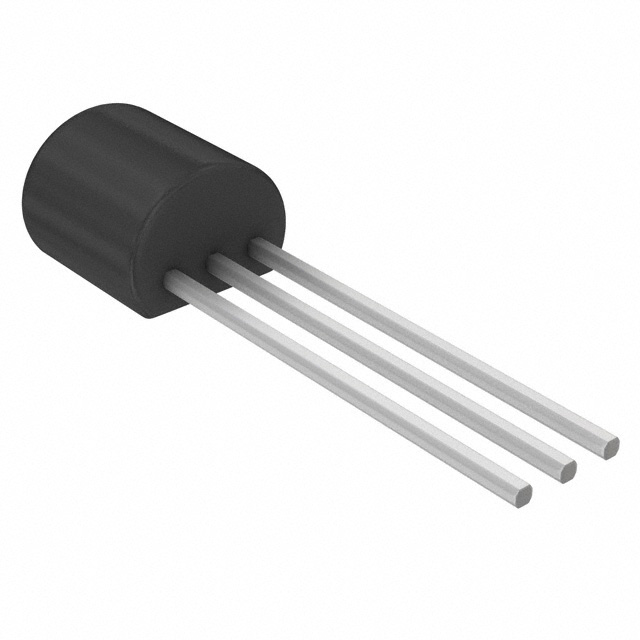
The 2N5089TAR is an NPN bipolar junction transistor manufactured by onsemi, designed for general-purpose switching and amplification applications. This device features a maximum collector current of 100 mA, collector-emitter breakdown voltage of 25 V, and maximum power dissipation of 625 mW in a Through Hole TO-92-3 package.
The 2N5089TAR is classified as obsolete. Locating equivalent substitute parts is necessary to maintain design continuity and ensure component availability for new production runs, repairs, and system upgrades where this transistor is specified.
Substiute Parts
Key Parameters
| Parameter | Value | Unit |
|---|---|---|
| Transistor Type | NPN | — |
| Current - Collector (Ic) (Max) | 100 | mA |
| Voltage - Collector Emitter Breakdown (Max) | 25 | V |
| Power - Max | 625 | mW |
| Frequency - Transition | 50 | MHz |
| Operating Temperature Range | -55 to 150 | °C |
| Mounting Type | Through Hole | — |
| Package / Case | TO-92-3 | — |
Substitute Part Grouping Explanation
Substitution of the 2N5089TAR is determined by compatibility across the following critical parameters:
Transistor Type: Both the main part and substitute must be NPN configuration to maintain circuit polarity and biasing requirements.
Package / Case: The TO-92-3 package is mandatory for mechanical and thermal compatibility with existing PCB layouts and through-hole mounting infrastructure.
Operating Temperature Range: The substitute must support the full operating temperature range of -55°C to 150°C to ensure reliable operation across all specified environmental conditions.
Maximum Power Dissipation: The substitute must equal or exceed 625 mW to handle the thermal load without exceeding junction temperature limits.
Electrical Ratings: The substitute must meet or exceed the collector current (Ic), collector-emitter breakdown voltage (Vce(BR)CEO), and transition frequency specifications to ensure functional compatibility within the circuit design.
The 2N3904BU qualifies as a substitute because it maintains NPN configuration, TO-92-3 package compatibility, identical maximum power dissipation, and full operating temperature range alignment. The 2N3904BU exceeds the electrical performance requirements of the 2N5089TAR across all critical parameters.
Parameter Comparison
| Parameter | 2N5089TAR | 2N3904BU | Unit |
|---|---|---|---|
| Manufacturer | onsemi | onsemi | — |
| Product Status | Obsolete | Active | — |
| Transistor Type | NPN | NPN | — |
| Current - Collector (Ic) (Max) | 100 | 200 | mA |
| Voltage - Collector Emitter Breakdown (Max) | 25 | 40 | V |
| Vce Saturation (Max) | 500 mV @ 1 mA, 10 mA | 300 mV @ 5 mA, 50 mA | — |
| Power - Max | 625 | 625 | mW |
| Frequency - Transition | 50 | 300 | MHz |
| Operating Temperature Range | -55 to 150 | -55 to 150 | °C |
| Mounting Type | Through Hole | Through Hole | — |
| Package / Case | TO-92-3 | TO-92-3 | — |
| REACH Status | REACH Unaffected | REACH Unaffected | — |
| ECCN | EAR99 | EAR99 | — |
Engineering Selection Recommendations
The 2N3904BU is an active product manufactured by onsemi and serves as a direct substitute for the obsolete 2N5089TAR. Both devices are REACH Unaffected and classified under ECCN EAR99, ensuring consistent regulatory compliance.
The 2N3904BU provides enhanced electrical performance relative to the 2N5089TAR. The substitute offers doubled maximum collector current (200 mA versus 100 mA), increased collector-emitter breakdown voltage (40 V versus 25 V), and significantly higher transition frequency (300 MHz versus 50 MHz). These performance improvements ensure the 2N3904BU operates within the design envelope of circuits originally specified for the 2N5089TAR.
Both devices maintain identical maximum power dissipation (625 mW) and operating temperature range (-55°C to 150°C), ensuring thermal and environmental compatibility. The TO-92-3 package is common to both parts, eliminating the need for PCB layout modifications.
The 2N3904BU is currently in active production with substantial inventory availability (22,060 pieces), providing reliable long-term supply compared to the obsolete 2N5089TAR status.
Frequently Asked Questions (FAQ)
Q: Can the 2N3904BU directly replace the 2N5089TAR in existing circuits?
A: Yes. The 2N3904BU is mechanically and electrically compatible with the 2N5089TAR. Both devices use the TO-92-3 package, support identical operating temperature ranges, and share the same maximum power dissipation rating. The 2N3904BU exceeds the electrical specifications of the 2N5089TAR, ensuring operation within the original design parameters.
Q: What are the key differences between these two transistors?
A: The 2N3904BU provides superior electrical performance. Maximum collector current is doubled (200 mA versus 100 mA), collector-emitter breakdown voltage is increased (40 V versus 25 V), and transition frequency is significantly higher (300 MHz versus 50 MHz). These enhancements make the 2N3904BU suitable for higher-speed and higher-current applications while remaining compatible with designs originally specified for the 2N5089TAR.
Q: Are there any package or mounting considerations when substituting these parts?
A: No. Both the 2N5089TAR and 2N3904BU use the TO-92-3 Through Hole package with identical lead configuration. No PCB modifications, rework, or mounting changes are required for substitution.
Q: What is the product status difference between these transistors?
A: The 2N5089TAR is classified as obsolete, indicating discontinued production and limited availability. The 2N3904BU is an active product in current production with substantial inventory. Substitution to the 2N3904BU ensures long-term component availability and supply chain continuity.
Q: Do both transistors meet the same regulatory and compliance standards?
A: Yes. Both the 2N5089TAR and 2N3904BU are REACH Unaffected and classified under ECCN EAR99. Regulatory compliance remains consistent across both parts, with no additional certification or approval requirements for substitution.
Q: Is the 2N3904BU suitable for low-frequency applications originally designed for the 2N5089TAR?
A: Yes. The 2N3904BU operates across the full frequency spectrum from DC to its maximum transition frequency of 300 MHz. Applications operating at or below the 2N5089TAR transition frequency of 50 MHz are fully supported by the 2N3904BU without performance degradation.
Alternative Parts

SJ6012L2TP
Littelfuse Inc.
6 Alternative Parts

JMK107BBJ476MA-RE
Taiyo Yuden
10 Alternative Parts

GMK107BBJ475MA-T
Taiyo Yuden
5 Alternative Parts
SJ6020N2ARP
Littelfuse Inc.
3 Alternative Parts
SJ6025R2ATP
Littelfuse Inc.
4 Alternative Parts

2474-05L
API Delevan Inc.
1 Alternative Parts

4590R-684K
API Delevan Inc.
1 Alternative Parts

CM6560R-334
API Delevan Inc.
1 Alternative Parts

CM6460-104
API Delevan Inc.
1 Alternative Parts

5526-12
API Delevan Inc.
1 Alternative Parts