


Request Quote
(Ships tomorrow)
2N5088TA Equivalent & Substitute Parts
Part Overview
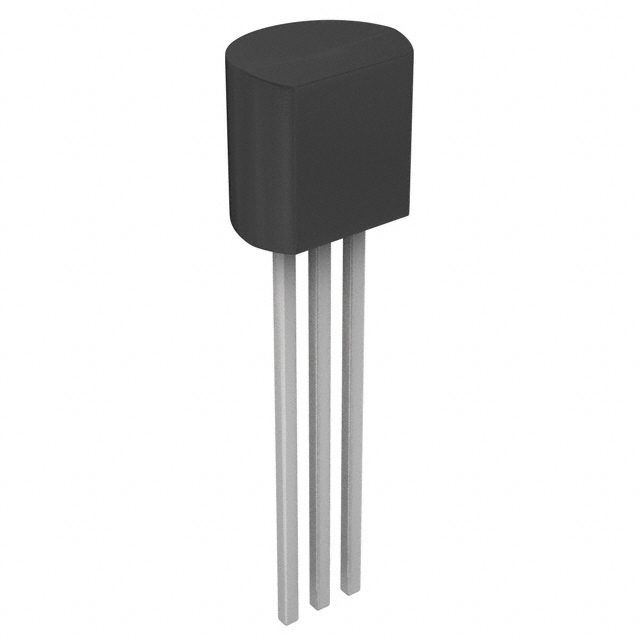
The 2N5088TA is an NPN bipolar junction transistor manufactured by onsemi, rated for 30 V collector-emitter breakdown voltage and 100 mA maximum collector current. This device is packaged in a TO-92-3 through-hole configuration and is classified as obsolete. The 2N5088TA has been superseded by active production alternatives that maintain electrical compatibility within specified parameter ranges. Identifying equivalent substitutes is necessary to ensure continued design support and component availability for applications currently utilizing this transistor.
Substiute Parts
Key Parameters
| Parameter | Value | Unit |
|---|---|---|
| Transistor Type | NPN | — |
| Voltage - Collector Emitter Breakdown (Max) | 30 | V |
| Current - Collector (Ic) (Max) | 100 | mA |
| Vce Saturation (Max) @ Ib, Ic | 500 mV @ 1 mA, 10 mA | — |
| Current - Collector Cutoff (Max) | 50 | nA |
| DC Current Gain (hFE) (Min) @ Ic, Vce | 300 @ 100 µA, 5 V | — |
| Power - Max | 625 | mW |
| Frequency - Transition | 50 | MHz |
| Operating Temperature | −55 to 150 | °C |
| Mounting Type | Through Hole | — |
| Package / Case | TO-92-3 | — |
Substitute Part Grouping Explanation
Substitute parts for the 2N5088TA are classified into two categories based on electrical parameter compatibility:
Direct Substitutes maintain all critical electrical specifications including collector current rating, collector-emitter breakdown voltage, saturation voltage, current gain, and transition frequency. These parts are pin-compatible and functionally equivalent within the same application context.
Similar Substitutes share the same transistor type (NPN), package configuration (TO-92-3), and mounting method (through hole) but may differ in one or more electrical parameters. These parts are suitable for applications where the specified parameter differences do not impact circuit performance.
The key parameters determining substitution eligibility are:
- Transistor Type (NPN)
- Voltage - Collector Emitter Breakdown (Max)
- Current - Collector (Ic) (Max)
- Vce Saturation (Max)
- DC Current Gain (hFE) (Min)
- Power - Max
- Frequency - Transition
- Package / Case (TO-92-3)
- Mounting Type (Through Hole)
Parameter Comparison
| Parameter | 2N5088TA (Main) | 2N5088 PBFREE (Direct) | LP395Z/LFT1 (Similar) | LP395Z/NOPB (Similar) |
|---|---|---|---|---|
| Manufacturer | onsemi | Central Semiconductor Corp | Texas Instruments | Texas Instruments |
| Transistor Type | NPN | NPN | NPN | NPN |
| Voltage - Collector Emitter Breakdown (Max) | 30 V | 30 V | 36 V | 36 V |
| Current - Collector (Ic) (Max) | 100 mA | 50 mA | — | — |
| Vce Saturation (Max) @ Ib, Ic | 500 mV @ 1 mA, 10 mA | 500 mV @ 1 mA, 10 mA | — | — |
| Current - Collector Cutoff (Max) | 50 nA | 50 nA | — | — |
| DC Current Gain (hFE) (Min) @ Ic, Vce | 300 @ 100 µA, 5 V | 300 @ 100 µA, 5 V | — | — |
| Power - Max | 625 mW | 625 mW | — | — |
| Frequency - Transition | 50 MHz | 50 MHz | — | — |
| Operating Temperature | −55 to 150 °C | −65 to 150 °C | 0 to 125 °C | 0 to 125 °C |
| Package / Case | TO-92-3 | TO-92-3 | TO-92-3 | TO-92-3 |
| Mounting Type | Through Hole | Through Hole | Through Hole | Through Hole |
| Product Status | Obsolete | Active | Active | Active |
| RoHS Status | — | ROHS3 Compliant | ROHS3 Compliant | ROHS3 Compliant |
Engineering Selection Recommendations
2N5088 PBFREE is the primary direct substitute for the 2N5088TA. This part is manufactured by Central Semiconductor Corp and maintains identical electrical specifications for saturation voltage, current gain, power dissipation, and transition frequency. The maximum collector current is rated at 50 mA compared to 100 mA for the 2N5088TA; applications requiring the full 100 mA rating must account for this reduction. The 2N5088 PBFREE is ROHS3 compliant and carries active product status, ensuring long-term availability. The operating temperature range extends to −65 °C, providing enhanced low-temperature performance compared to the original part.
LP395Z/LFT1 and LP395Z/NOPB are similar substitutes manufactured by Texas Instruments. Both devices share the TO-92-3 package and NPN transistor type. The collector-emitter breakdown voltage is rated at 36 V, exceeding the 30 V specification of the 2N5088TA. Complete electrical specifications for saturation voltage, current gain, transition frequency, and maximum collector current are not provided for these parts. Both LP395 variants are ROHS3 compliant and carry active product status. The operating temperature range is limited to 0 to 125 °C, which is narrower than the 2N5088TA specification. These parts are suitable for applications where the higher voltage rating and reduced temperature range do not present constraints.
Selection between direct and similar substitutes depends on application requirements for collector current capacity, operating temperature range, and voltage headroom. Direct substitutes provide the closest electrical match; similar substitutes offer enhanced voltage ratings and modern compliance certifications.
Frequently Asked Questions (FAQ)
Q: Can the 2N5088 PBFREE replace the 2N5088TA in all applications?
A: The 2N5088 PBFREE maintains electrical compatibility for saturation voltage, current gain, power dissipation, and transition frequency. The maximum collector current is reduced from 100 mA to 50 mA. Applications operating at collector currents below 50 mA are fully compatible. Applications requiring the full 100 mA rating require circuit redesign or alternative component selection.
Q: What is the difference between direct and similar substitutes?
A: Direct substitutes (2N5088 PBFREE) maintain all specified electrical parameters of the original part within the same rating envelope. Similar substitutes (LP395Z variants) share the same package and transistor type but differ in one or more electrical specifications, such as collector-emitter breakdown voltage or operating temperature range.
Q: Are the LP395Z variants pin-compatible with the 2N5088TA?
A: Yes. Both LP395Z/LFT1 and LP395Z/NOPB use the TO-92-3 package with identical pin configuration to the 2N5088TA. Physical installation is compatible. Electrical compatibility depends on application-specific requirements for voltage rating and operating temperature.
Q: What is the significance of the ROHS3 compliance designation?
A: ROHS3 compliance indicates the part meets Restriction of Hazardous Substances Directive requirements, restricting lead and other hazardous materials. All substitute parts listed are ROHS3 compliant, meeting modern environmental and regulatory standards.
Q: How does the operating temperature range affect substitution decisions?
A: The 2N5088TA operates from −55 to 150 °C. The 2N5088 PBFREE extends the low-temperature limit to −65 °C. The LP395Z variants are limited to 0 to 125 °C. Applications requiring operation below 0 °C must use the 2N5088TA or 2N5088 PBFREE. Applications with maximum temperature requirements above 125 °C must use the 2N5088TA or 2N5088 PBFREE.
Q: What does the 50 MHz transition frequency specification indicate?
A: Transition frequency (fT) defines the frequency at which the transistor's current gain drops to unity. A 50 MHz rating indicates the device is suitable for switching and amplification applications up to approximately 50 MHz. The LP395Z variants do not provide this specification; applications requiring confirmed transition frequency performance should use the 2N5088 PBFREE.
Q: Are there inventory considerations when selecting a substitute?
A: The 2N5088TA is obsolete with 919 units in stock. The 2N5088 PBFREE has 7553 units available. LP395Z/LFT1 has 6529 units, and LP395Z/NOPB has 4144 units. Long-term design support favors active production parts (all substitutes) over the obsolete original.
Alternative Parts

SJ6012L2TP
Littelfuse Inc.
6 Alternative Parts

JMK107BBJ476MA-RE
Taiyo Yuden
10 Alternative Parts

GMK107BBJ475MA-T
Taiyo Yuden
5 Alternative Parts
SJ6020N2ARP
Littelfuse Inc.
3 Alternative Parts
SJ6025R2ATP
Littelfuse Inc.
4 Alternative Parts

2474-05L
API Delevan Inc.
1 Alternative Parts

4590R-684K
API Delevan Inc.
1 Alternative Parts

CM6560R-334
API Delevan Inc.
1 Alternative Parts

CM6460-104
API Delevan Inc.
1 Alternative Parts

5526-12
API Delevan Inc.
1 Alternative Parts