




Request Quote
(Ships tomorrow)
Equivalent & Substitute Parts for 2N4923 NPN Bipolar Transistor
Part Overview
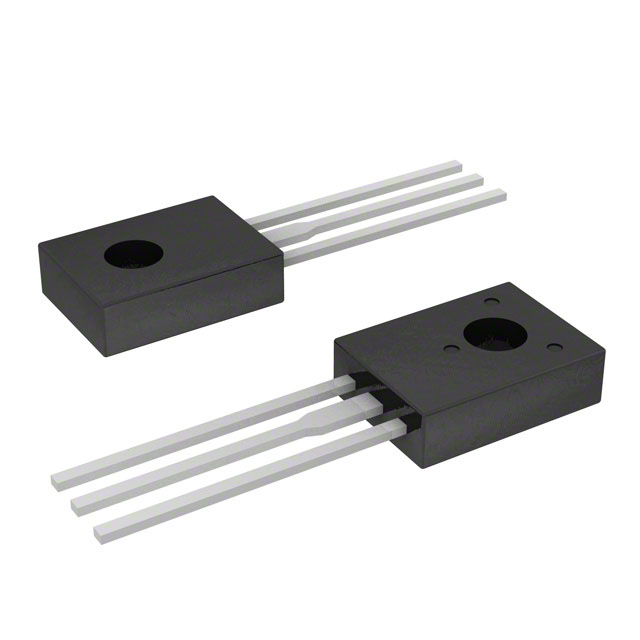
The 2N4923 is an NPN bipolar junction transistor rated for 80 V collector-emitter breakdown voltage and 1 A maximum collector current, designed for through-hole mounting in TO-126 package configuration. This device is classified as obsolete, which necessitates identification of equivalent and substitute components for ongoing design support and production requirements. The 2N4923 operates across a temperature range of -65°C to 150°C with a maximum power dissipation of 30 W and transition frequency of 3 MHz.
Substiute Parts
Key Parameters
| Parameter | Value | Unit |
|---|---|---|
| Transistor Type | NPN | — |
| Voltage - Collector Emitter Breakdown (Max) | 80 | V |
| Current - Collector (Ic) (Max) | 1 | A |
| Power - Max | 30 | W |
| Frequency - Transition | 3 | MHz |
| Operating Temperature Range | -65 to 150 | °C |
| Mounting Type | Through Hole | — |
| Package / Case | TO-126-3 | — |
| Vce Saturation (Max) @ Ib, Ic | 600 mV @ 100 mA, 1 A | — |
| DC Current Gain (hFE) (Min) @ Ic, Vce | 30 @ 500 mA, 1 V | — |
Substitute Part Grouping Explanation
Substitution of the 2N4923 is determined by strict adherence to the following electrical and mechanical parameters:
Primary Substitution Criteria:
- Transistor type must be NPN
- Voltage - Collector Emitter Breakdown (Max) must be ≥ 80 V
- Current - Collector (Ic) (Max) must be ≥ 1 A
- Mounting type must be Through Hole
- Package compatibility with TO-126 or TO-126-3 footprint
Direct Equivalent: The 2N4923G is a direct equivalent manufactured by onsemi. It maintains identical electrical specifications to the 2N4923 while offering active product status and RoHS3 compliance.
Similar Substitutes: Parts BD13910S, BD13910STU, BD13916STU, and BD237 are classified as similar substitutes. These devices exceed the minimum electrical requirements of the 2N4923 in collector current capacity (1.5 A to 2 A) and maintain the 80 V breakdown voltage specification. All similar substitutes are through-hole mounted and compatible with TO-126 package footprints. These parts are suitable for applications where the 2N4923 specifications represent minimum requirements and higher current capability is acceptable.
Parameter Comparison
| Parameter | 2N4923 | 2N4923G | BD13910S | BD13910STU | BD13916STU | BD237 |
|---|---|---|---|---|---|---|
| Manufacturer | onsemi | onsemi | Fairchild Semiconductor | onsemi | onsemi | STMicroelectronics |
| Product Status | Obsolete | Active | Active | Active | Active | Active |
| Transistor Type | NPN | NPN | NPN | NPN | NPN | NPN |
| Voltage - Collector Emitter Breakdown (Max) | 80 V | 80 V | 80 V | 80 V | 80 V | 80 V |
| Current - Collector (Ic) (Max) | 1 A | 1 A | 1.5 A | 1.5 A | 1.5 A | 2 A |
| Power - Max | 30 W | 30 W | 1.25 W | 1.25 W | 1.25 W | 25 W |
| Frequency - Transition | 3 MHz | 3 MHz | — | — | — | — |
| Operating Temperature (Max) | 150°C | 150°C | 150°C | 150°C | 150°C | 150°C |
| Mounting Type | Through Hole | Through Hole | Through Hole | Through Hole | Through Hole | Through Hole |
| Package / Case | TO-126-3 | TO-126-3 | TO-126-3 | TO-126-3 | TO-126-3 | SOT-32-3 |
| RoHS Status | Non-compliant | ROHS3 Compliant | — | ROHS3 Compliant | ROHS3 Compliant | ROHS3 Compliant |
| Vce Saturation (Max) @ Ib, Ic | 600 mV @ 100 mA, 1 A | 600 mV @ 100 mA, 1 A | 500 mV @ 50 mA, 500 mA | 500 mV @ 50 mA, 500 mA | 500 mV @ 50 mA, 500 mA | 600 mV @ 100 mA, 1 A |
| DC Current Gain (hFE) (Min) @ Ic, Vce | 30 @ 500 mA, 1 V | 30 @ 500 mA, 1 V | 63 @ 150 mA, 2 V | 63 @ 150 mA, 2 V | 100 @ 150 mA, 2 V | 25 @ 1 A, 2 V |
Engineering Selection Recommendations
For Direct Replacement (Identical Specifications): The 2N4923G is the recommended direct substitute for the obsolete 2N4923. Both devices share identical electrical specifications including 1 A maximum collector current, 30 W power dissipation, and 3 MHz transition frequency. The 2N4923G is manufactured by onsemi with active product status and RoHS3 compliance, providing long-term availability and regulatory alignment.
For Similar Substitution (Enhanced Specifications): The BD13910S, BD13910STU, and BD13916STU are suitable substitutes when higher collector current capacity (1.5 A) is acceptable within the application design. These devices maintain the 80 V breakdown voltage and through-hole TO-126 mounting compatibility. The BD13910STU and BD13916STU are supplied in tube packaging and carry RoHS3 compliance. Note that power dissipation is reduced to 1.25 W for these devices.
The BD237 is suitable for applications requiring 2 A collector current capacity with 25 W power dissipation. This device maintains 80 V breakdown voltage and through-hole mounting but uses SOT-32-3 package configuration. The BD237 carries RoHS3 compliance and offers the highest current capability among available substitutes.
Compliance Considerations: All active substitute parts listed carry RoHS3 compliance, addressing regulatory requirements for new designs. The original 2N4923 is RoHS non-compliant, making transition to compliant alternatives necessary for applications subject to RoHS directives.
Frequently Asked Questions (FAQ)
Q: Can the 2N4923G be used as a direct replacement for the 2N4923? A: Yes. The 2N4923G maintains identical electrical specifications including 1 A maximum collector current, 80 V breakdown voltage, 30 W power dissipation, and 3 MHz transition frequency. Both devices use TO-126-3 package configuration. The primary advantage of 2N4923G is active product status and RoHS3 compliance.
Q: What is the difference between the 2N4923 and BD13910S? A: The BD13910S has higher maximum collector current (1.5 A versus 1 A) but lower maximum power dissipation (1.25 W versus 30 W). Both maintain 80 V breakdown voltage and through-hole TO-126 mounting. The BD13910S is suitable for applications where the 2N4923 specifications represent minimum requirements.
Q: Are the BD13910STU and BD13916STU interchangeable? A: Both devices share identical electrical specifications for voltage (80 V) and current (1.5 A) ratings. The primary difference is DC current gain: BD13910STU has minimum hFE of 63 at specified conditions, while BD13916STU has minimum hFE of 100. Selection depends on gain requirements for the specific application.
Q: Can BD237 be used in place of 2N4923? A: BD237 is compatible from electrical standpoint (80 V breakdown, exceeds 1 A current requirement) and mounting type (through-hole). However, BD237 uses SOT-32-3 package instead of TO-126-3, requiring PCB layout modification. BD237 offers higher current capacity (2 A) and power dissipation (25 W).
Q: What packaging options are available for substitutes? A: The 2N4923G is supplied in bulk packaging. BD13910STU and BD13916STU are supplied in tube packaging. BD13910S is supplied in bulk packaging. BD237 is supplied in tube packaging. Packaging selection affects handling, storage, and assembly processes.
Q: Are all substitute parts RoHS compliant? A: The 2N4923G, BD13910STU, BD13916STU, and BD237 are RoHS3 compliant. The BD13910S RoHS status is not specified in available data. For applications requiring RoHS compliance, use 2N4923G, BD13910STU, BD13916STU, or BD237.
Q: What is the temperature operating range for substitute parts? A: All substitute parts operate to maximum junction temperature of 150°C, matching the 2N4923 specification. The 2N4923 minimum operating temperature is -65°C; substitute parts minimum operating temperature is not specified in available data.
Alternative Parts

SJ6012L2TP
Littelfuse Inc.
6 Alternative Parts

JMK107BBJ476MA-RE
Taiyo Yuden
10 Alternative Parts

GMK107BBJ475MA-T
Taiyo Yuden
5 Alternative Parts
SJ6020N2ARP
Littelfuse Inc.
3 Alternative Parts
SJ6025R2ATP
Littelfuse Inc.
4 Alternative Parts

2474-05L
API Delevan Inc.
1 Alternative Parts

4590R-684K
API Delevan Inc.
1 Alternative Parts

CM6560R-334
API Delevan Inc.
1 Alternative Parts

CM6460-104
API Delevan Inc.
1 Alternative Parts

5526-12
API Delevan Inc.
1 Alternative Parts