



Request Quote
(Ships tomorrow)
2N2102 Equivalent & Substitute Parts
Part Overview
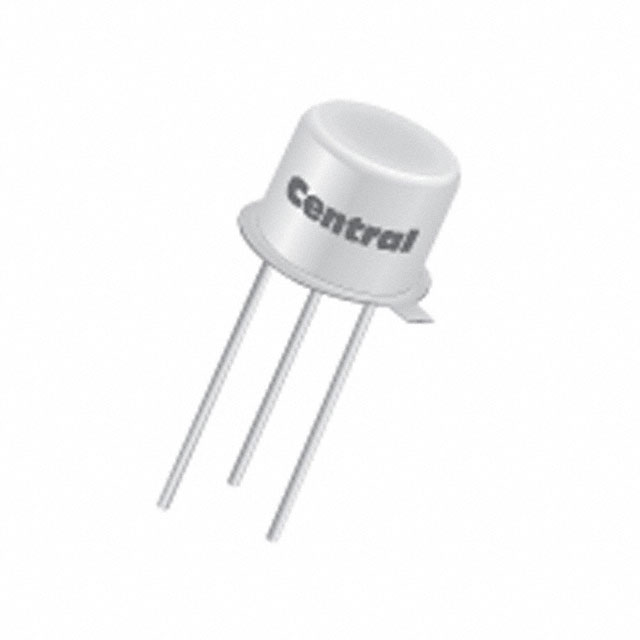
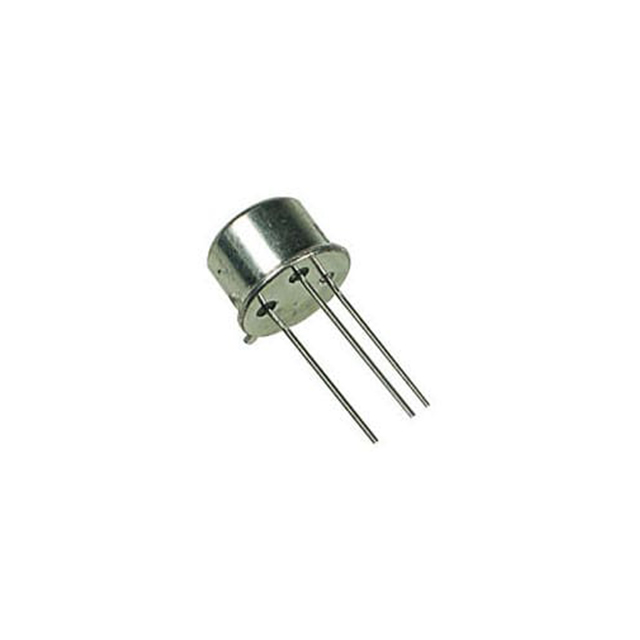
The 2N2102 is an NPN bipolar junction transistor (BJT) manufactured by STMicroelectronics, rated for 65 V collector-emitter breakdown voltage and 1 A maximum collector current. The device is packaged in a TO-39 metal can through-hole configuration with a maximum power dissipation of 1 W. The 2N2102 is classified as obsolete, necessitating identification of equivalent and substitute components for ongoing design requirements and production continuity.
Substiute Parts
Key Parameters
| Parameter | Value | Unit |
|---|---|---|
| Transistor Type | NPN | — |
| Voltage - Collector Emitter Breakdown (Max) | 65 | V |
| Current - Collector (Ic) (Max) | 1 | A |
| Power - Max | 1 | W |
| Vce Saturation (Max) @ Ib, Ic | 500mV @ 15mA, 150mA | — |
| Current - Collector Cutoff (Max) | 2 | nA |
| DC Current Gain (hFE) (Min) @ Ic, Vce | 40 @ 150mA, 10V | — |
| Mounting Type | Through Hole | — |
| Package / Case | TO-39-3 Metal Can | — |
| Operating Temperature (Max) | 175 | °C |
Substitute Part Grouping Explanation
Substitution of the 2N2102 is determined by the following critical electrical and mechanical parameters:
Primary Substitution Criteria:
- Transistor type (NPN vs. PNP polarity)
- Voltage rating (Vce breakdown minimum 65 V)
- Current rating (Ic maximum 1 A or greater)
- Power dissipation capability (1 W or greater)
- Package type (TO-39 through-hole metal can)
- DC current gain characteristics (hFE specifications)
Substitution Categories:
Direct Equivalents: Parts maintaining identical or superior electrical specifications with NPN polarity, TO-39 packaging, and matching voltage/current ratings.
Functional Alternatives: Parts with different transistor polarity (PNP) or package form factors that do not qualify as direct substitutes but may serve alternative circuit roles.
Enhanced Specifications: Parts exceeding the 2N2102 ratings in voltage, current, or power dissipation while maintaining NPN polarity and TO-39 packaging.
Parameter Comparison
| Part Number | Manufacturer | Transistor Type | Vce Breakdown (Max) | Ic (Max) | Power (Max) | Package | Product Status | RoHS Status |
|---|---|---|---|---|---|---|---|---|
| 2N2102 | STMicroelectronics | NPN | 65 V | 1 A | 1 W | TO-39 | Obsolete | ROHS3 Compliant |
| 2N2102 PBFREE | Central Semiconductor Corp | NPN | 65 V | 1 A | 1 W | TO-39 | Active | ROHS3 Compliant |
| 2N2102A | Microchip Technology | PNP | 65 V | 1 A | 5 W | TO-5 | Active | Not Specified |
| 2N2102S | Microchip Technology | NPN | Not Specified | Not Specified | Not Specified | Not Specified | Active | RoHS Non-Compliant |
| 2N3019S | Microchip Technology | NPN | 80 V | 1 A | 800 mW | TO-39 | Active | RoHS Non-Compliant |
Engineering Selection Recommendations
2N2102 PBFREE (Central Semiconductor Corp): This part qualifies as the primary direct substitute for the 2N2102. It maintains identical electrical specifications (65 V, 1 A, 1 W) with NPN polarity and TO-39 packaging. The part is active in production status and ROHS3 compliant, providing regulatory continuity. The PBFREE designation indicates lead-free manufacturing compliance.
2N3019S (Microchip Technology): This part functions as an enhanced specification alternative. It provides superior voltage rating (80 V versus 65 V) and maintains NPN polarity with TO-39 packaging and 1 A collector current. Power dissipation is rated at 800 mW, which is marginally lower than the 2N2102 (1 W). The part is active in production. RoHS non-compliance status requires evaluation against project requirements.
2N2102A (Microchip Technology): This part is not suitable as a direct substitute. Although it maintains 65 V and 1 A ratings, it is a PNP transistor with TO-5 packaging, representing a different polarity and form factor. This part is applicable only in circuit designs requiring PNP functionality.
2N2102S (Microchip Technology): This part lacks sufficient specification data for substitution evaluation. Critical electrical parameters are not provided in the available documentation. RoHS non-compliance status is noted.
Frequently Asked Questions (FAQ)
Q: Can the 2N2102 PBFREE directly replace the 2N2102 in existing designs?
A: Yes. The 2N2102 PBFREE maintains identical electrical specifications (65 V Vce breakdown, 1 A Ic, 1 W power dissipation) and NPN polarity. Both devices use TO-39 through-hole packaging. The PBFREE variant is manufactured with lead-free processes and is ROHS3 compliant.
Q: What is the difference between the 2N2102 and 2N3019S?
A: The 2N3019S provides enhanced voltage rating (80 V versus 65 V) while maintaining 1 A collector current and NPN polarity. Both use TO-39 packaging. Power dissipation differs slightly (800 mW versus 1 W). The 2N3019S is suitable for applications requiring higher voltage headroom.
Q: Why is the 2N2102A not a suitable substitute?
A: The 2N2102A is a PNP transistor, whereas the 2N2102 is NPN. Polarity reversal requires circuit redesign. Additionally, the 2N2102A uses TO-5 packaging instead of TO-39, affecting mechanical compatibility and thermal characteristics.
Q: What does PBFREE designation indicate?
A: PBFREE indicates lead-free manufacturing compliance. The 2N2102 PBFREE is manufactured without lead-based solder, meeting environmental and regulatory requirements including ROHS3 standards.
Q: Is the 2N2102S a viable substitute?
A: The 2N2102S cannot be evaluated as a substitute due to incomplete specification data. Critical electrical parameters including voltage rating, current rating, and power dissipation are not documented. Consultation with the manufacturer is required for detailed specifications.
Q: What are the key parameters for substitution compatibility?
A: Substitution compatibility is determined by transistor polarity (NPN), voltage rating (minimum 65 V Vce breakdown), current rating (minimum 1 A Ic), power dissipation (minimum 1 W), and package type (TO-39 through-hole). Deviations in any parameter require circuit-level evaluation.
Q: Are there RoHS compliance considerations for substitute selection?
A: Yes. The 2N2102 PBFREE is ROHS3 compliant, providing regulatory continuity. The 2N3019S is RoHS non-compliant. Project requirements and regulatory obligations determine whether RoHS compliance is mandatory for substitute selection.
Alternative Parts

SJ6012L2TP
Littelfuse Inc.
6 Alternative Parts

JMK107BBJ476MA-RE
Taiyo Yuden
10 Alternative Parts

GMK107BBJ475MA-T
Taiyo Yuden
5 Alternative Parts
SJ6020N2ARP
Littelfuse Inc.
3 Alternative Parts
SJ6025R2ATP
Littelfuse Inc.
4 Alternative Parts

2474-05L
API Delevan Inc.
1 Alternative Parts

4590R-684K
API Delevan Inc.
1 Alternative Parts

CM6560R-334
API Delevan Inc.
1 Alternative Parts

CM6460-104
API Delevan Inc.
1 Alternative Parts

5526-12
API Delevan Inc.
1 Alternative Parts