


Request Quote
(Ships tomorrow)
Renesas Electronics 271PGLF Clock/Frequency Synthesizer Equivalent & Substitute Parts
Part Overview
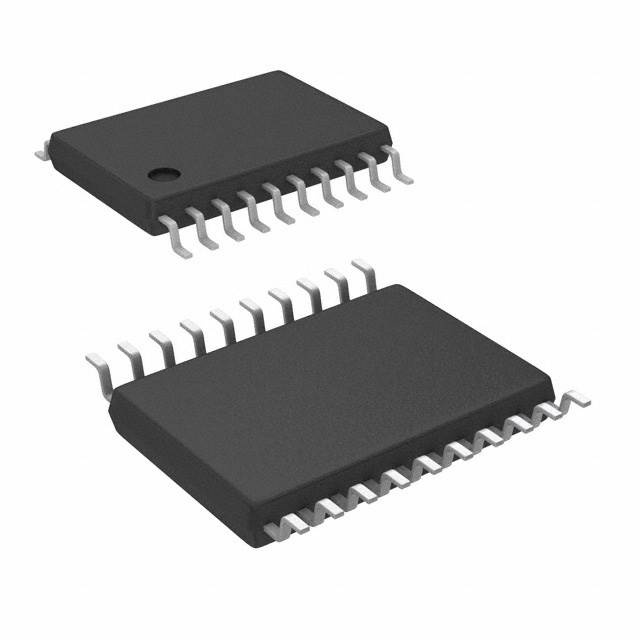
The Renesas Electronics 271PGLF is a Clock/Frequency Synthesizer and Fanout Buffer (Distribution) IC operating at a maximum frequency of 200MHz in a 20-TSSOP surface mount package. This component features integrated Phase-Locked Loop (PLL) with bypass capability, crystal input support, and CMOS output configuration with a 1:6 input-to-output ratio.
The 271PGLF is classified as an obsolete product. Identifying suitable substitute components is necessary to maintain design continuity and ensure availability for new production runs or system updates where this legacy device is no longer readily procurable through standard distribution channels.
Substiute Parts
Key Parameters
| Parameter | Value |
|---|---|
| Manufacturer | Renesas Electronics Corporation |
| Category | Clock/Timing |
| Type | Clock/Frequency Synthesizer, Fanout Buffer (Distribution) |
| Series | VersaClock® |
| Frequency - Max | 200MHz |
| PLL Configuration | Yes with Bypass |
| Input Type | Crystal |
| Output Type | CMOS |
| Number of Circuits | 1 |
| Ratio - Input:Output | 1:6 |
| Differential - Input:Output | No/No |
| Divider/Multiplier | Yes/Yes |
| Voltage - Supply | 3.135V ~ 3.465V |
| Operating Temperature | 0°C ~ 70°C |
| Mounting Type | Surface Mount |
| Package / Case | 20-TSSOP (0.173", 4.40mm Width) |
| Moisture Sensitivity Level (MSL) | 1 (Unlimited) |
| REACH Status | REACH Unaffected |
| ECCN | EAR99 |
| HTSUS | 8542.39.0001 |
Substitute Part Grouping Explanation
Substitution of the 271PGLF is determined by strict equivalence across the following critical parameters:
Electrical Compatibility:
- Maximum frequency: 200MHz
- PLL with bypass capability
- Input support for crystal sources
- CMOS output configuration
- 1:6 input-to-output ratio
- Divider and multiplier functionality
- Supply voltage range: 3.135V ~ 3.465V
- Operating temperature range: 0°C ~ 70°C
Mechanical Compatibility:
- Package type: 20-TSSOP (0.173", 4.40mm Width)
- Surface mount mounting type
- Moisture sensitivity level: 1 (Unlimited)
Regulatory Compliance:
- REACH Unaffected status
- ECCN: EAR99
- HTSUS: 8542.39.0001
The substitute part must maintain all electrical specifications, identical package footprint, and equivalent regulatory classification to ensure direct replacement capability without design modification.
Parameter Comparison
| Parameter | 271PGLF (Main Part) | 291PGLFT (Substitute) |
|---|---|---|
| Manufacturer | Renesas Electronics Corporation | Renesas Electronics Corporation |
| Category | Clock/Timing | Clock/Timing |
| Series | VersaClock® | VersaClock® |
| Product Status | Obsolete | Active |
| Type | Clock/Frequency Synthesizer, Fanout Buffer (Distribution) | Clock/Frequency Synthesizer |
| PLL Configuration | Yes with Bypass | Yes with Bypass |
| Input Type | Crystal | Clock, Crystal |
| Output Type | CMOS | CMOS |
| Number of Circuits | 1 | 1 |
| Ratio - Input:Output | 1:6 | 1:6 |
| Differential - Input:Output | No/No | No/No |
| Divider/Multiplier | Yes/Yes | Yes/Yes |
| Frequency - Max | 200MHz | 200MHz |
| Voltage - Supply | 3.135V ~ 3.465V | 3.135V ~ 3.465V |
| Operating Temperature | 0°C ~ 70°C | 0°C ~ 70°C |
| Mounting Type | Surface Mount | Surface Mount |
| Package / Case | 20-TSSOP (0.173", 4.40mm Width) | 20-TSSOP (0.173", 4.40mm Width) |
| Moisture Sensitivity Level (MSL) | 1 (Unlimited) | 1 (Unlimited) |
| REACH Status | REACH Unaffected | REACH Unaffected |
| ECCN | EAR99 | EAR99 |
| HTSUS | 8542.39.0001 | 8542.39.0001 |
Engineering Selection Recommendations
The Renesas Electronics 291PGLFT serves as the direct substitute for the obsolete 271PGLF. Both components are manufactured by Renesas Electronics within the VersaClock® product family and maintain identical electrical specifications, package footprint, and regulatory compliance status.
The 291PGLFT is classified as an active product with current manufacturing support and availability through distribution channels. This substitution is supported by:
- Identical maximum operating frequency of 200MHz
- Matching supply voltage range of 3.135V ~ 3.465V
- Equivalent operating temperature range of 0°C ~ 70°C
- Identical 20-TSSOP package configuration
- Matching PLL with bypass architecture
- Equivalent input-to-output ratio of 1:6
- Identical divider and multiplier capabilities
- Matching REACH Unaffected and EAR99 regulatory classifications
- RoHS3 compliance certification on the substitute part
The 291PGLFT provides enhanced input flexibility by supporting both clock and crystal input sources, compared to the 271PGLF which supports crystal input only. This expanded input capability does not affect substitution compatibility and may provide additional design flexibility in new implementations.
Frequently Asked Questions (FAQ)
Q: Can the 291PGLFT be used as a direct replacement for the 271PGLF without PCB modifications?
A: Yes. Both components share identical electrical specifications, supply voltage requirements, operating temperature range, and 20-TSSOP package footprint. Direct substitution on existing PCB layouts is supported without design changes.
Q: What is the primary difference between the 271PGLF and 291PGLFT?
A: The 291PGLFT accepts both clock and crystal input sources, whereas the 271PGLF accepts crystal input only. All other electrical and mechanical parameters are equivalent. The 291PGLFT is an active product with current manufacturing support, while the 271PGLF is obsolete.
Q: Are there any compliance or regulatory differences between these parts?
A: Both components maintain identical REACH Unaffected status and EAR99 ECCN classification. The 291PGLFT carries RoHS3 compliance certification. Both components have MSL rating of 1 (Unlimited).
Q: What is the significance of the 1:6 input-to-output ratio?
A: This ratio indicates that the device distributes one input signal to six output circuits. Both the 271PGLF and 291PGLFT maintain this configuration, ensuring functional equivalence in fanout buffer applications.
Q: Is the PLL bypass feature available on both parts?
A: Yes. Both the 271PGLF and 291PGLFT include PLL with bypass capability, allowing operation in either synthesized or pass-through modes.
Q: What supply voltage must be applied to either component?
A: Both components require a supply voltage within the range of 3.135V to 3.465V. This narrow voltage specification must be maintained for proper operation.
Alternative Parts

SJ6012L2TP
Littelfuse Inc.
6 Alternative Parts

JMK107BBJ476MA-RE
Taiyo Yuden
10 Alternative Parts

GMK107BBJ475MA-T
Taiyo Yuden
5 Alternative Parts
SJ6020N2ARP
Littelfuse Inc.
3 Alternative Parts
SJ6025R2ATP
Littelfuse Inc.
4 Alternative Parts

2474-05L
API Delevan Inc.
1 Alternative Parts

4590R-684K
API Delevan Inc.
1 Alternative Parts

CM6560R-334
API Delevan Inc.
1 Alternative Parts

CM6460-104
API Delevan Inc.
1 Alternative Parts

5526-12
API Delevan Inc.
1 Alternative Parts