


Request Quote
(Ships tomorrow)
Renesas Electronics 251PMILF Clock/Frequency Synthesizer Equivalent & Substitute Parts
Part Overview
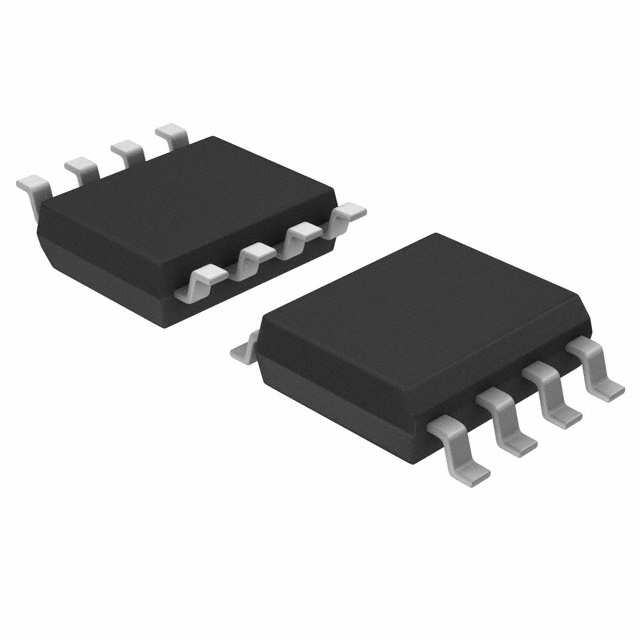
The Renesas Electronics 251PMILF is a Clock/Frequency Synthesizer with Spread Spectrum Clock Generator functionality, designed for 200MHz maximum frequency operation in 8-SOIC surface mount packaging. This component is classified as obsolete product status, necessitating identification of functionally equivalent alternatives for ongoing design requirements and production continuity. The part operates within a 3.15V to 3.45V supply voltage range and supports both clock and crystal inputs with CMOS output configuration.
Substiute Parts
Key Parameters
| Parameter | Value |
|---|---|
| Manufacturer Part Number | 251PMILF |
| Manufacturer | Renesas Electronics Corporation |
| Category | Clock/Timing |
| Type | Clock/Frequency Synthesizer, Spread Spectrum Clock Generator |
| Frequency - Max | 200MHz |
| Voltage - Supply | 3.15V ~ 3.45V |
| Operating Temperature | -40°C ~ 85°C |
| Package / Case | 8-SOIC (0.154", 3.90mm Width) |
| Mounting Type | Surface Mount |
| PLL | Yes |
| Input | Clock, Crystal |
| Output | CMOS |
| Number of Circuits | 1 |
| Ratio - Input:Output | 1:1 |
| Divider/Multiplier | Yes/No |
| RoHS Status | ROHS3 Compliant |
| Product Status | Obsolete |
Substitute Part Grouping Explanation
Substitution of the 251PMILF requires evaluation against the following critical parameters that define functional equivalence:
- Frequency capability: Maximum operating frequency must meet or exceed 200MHz
- PLL functionality: Phase-locked loop support for clock synthesis
- Input support: Clock and/or crystal input capability
- Output type: CMOS or compatible logic level output
- Supply voltage compatibility: Operating voltage range must accommodate system requirements
- Operating temperature range: Must support -40°C to 85°C minimum
- Regulatory compliance: RoHS3 compliance and REACH unaffected status
The identified substitute part 5L35021B-000NDGI from Renesas Electronics Corporation meets these core functional requirements while operating in an active product status, providing design continuity and long-term availability assurance.
Parameter Comparison
| Parameter | 251PMILF (Main Part) | 5L35021B-000NDGI (Substitute) |
|---|---|---|
| Manufacturer | Renesas Electronics Corporation | Renesas Electronics Corporation |
| Category | Clock/Timing | Clock/Timing |
| Type | Clock/Frequency Synthesizer, Spread Spectrum Clock Generator | Clock Generator |
| Frequency - Max | 200MHz | 250MHz |
| Voltage - Supply | 3.15V ~ 3.45V | 1.71V ~ 1.89V |
| Operating Temperature | -40°C ~ 85°C | -40°C ~ 85°C (TA) |
| Mounting Type | Surface Mount | Surface Mount |
| PLL | Yes | Yes |
| Input | Clock, Crystal | Clock, Crystal |
| Output | CMOS | LP-HCSL, LVCMOS |
| Number of Circuits | 1 | 1 |
| Ratio - Input:Output | 1:1 | 1:3 |
| Divider/Multiplier | Yes/No | Yes/No |
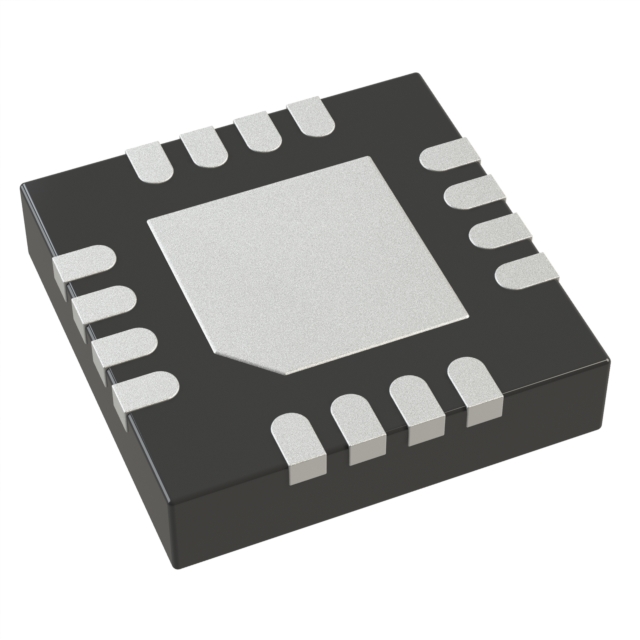
| Package / Case | 8-SOIC (0.154", 3.90mm Width) | 20-VFQFN Exposed Pad |
| RoHS Status | ROHS3 Compliant | Not specified in data |
| Product Status | Obsolete | Active |
Engineering Selection Recommendations
The 5L35021B-000NDGI qualifies as a functional substitute based on the following engineering criteria:
Product Status Advantage: The substitute part maintains active product status with Renesas Electronics Corporation, ensuring continued availability, manufacturing support, and technical documentation access. The main part 251PMILF is classified as obsolete, creating supply chain risk and limiting design support options.
Regulatory Compliance: Both parts maintain REACH unaffected status and EAR99 ECCN classification, supporting equivalent regulatory positioning for export and environmental compliance requirements.
Functional Capability: The substitute part exceeds the frequency specification of the main part (250MHz versus 200MHz maximum), provides equivalent PLL functionality, and supports identical input types (clock and crystal). Output configuration differs with the substitute offering LP-HCSL and LVCMOS options in addition to CMOS compatibility.
Critical Design Consideration: Supply voltage ranges differ significantly between the parts. The main part operates at 3.15V to 3.45V, while the substitute operates at 1.71V to 1.89V. System power supply architecture must accommodate this voltage differential or require voltage regulation modifications.
Package Transition: The substitute part transitions from 8-SOIC to 20-VFQFN Exposed Pad packaging, requiring PCB layout redesign and footprint modification. Pin configuration and functional mapping must be verified against detailed datasheets prior to implementation.
Frequently Asked Questions (FAQ)
Q: Can the 5L35021B-000NDGI directly replace the 251PMILF without circuit modifications?
A: Direct replacement is not possible due to package differences (8-SOIC versus 20-VFQFN), supply voltage range differences (3.15V-3.45V versus 1.71V-1.89V), and different input-to-output ratios (1:1 versus 1:3). PCB layout redesign and power supply circuit modifications are required.
Q: What are the key electrical differences between these parts?
A: The substitute part operates at significantly lower supply voltage (1.71V-1.89V versus 3.15V-3.45V), provides higher maximum frequency capability (250MHz versus 200MHz), supports different output logic levels (LP-HCSL and LVCMOS versus CMOS only), and implements a 1:3 input-to-output ratio compared to the 1:1 ratio of the main part.
Q: Are both parts RoHS3 compliant?
A: The main part 251PMILF is confirmed ROHS3 compliant. RoHS3 compliance status for the substitute part 5L35021B-000NDGI is not specified in the provided data and should be verified through the manufacturer's current datasheet.
Q: What is the impact of the different input-to-output ratios?
A: The main part implements a 1:1 ratio (single output frequency matching input), while the substitute implements a 1:3 ratio (three output frequencies from single input). This affects clock distribution architecture and may require system-level timing redesign.
Q: How does the package change affect implementation?
A: The transition from 8-SOIC to 20-VFQFN requires complete PCB footprint redesign, different trace routing considerations due to increased pin count (8 versus 20 pins), and modified thermal management approach with the exposed pad configuration of the QFN package.
Alternative Parts

SJ6012L2TP
Littelfuse Inc.
6 Alternative Parts

JMK107BBJ476MA-RE
Taiyo Yuden
10 Alternative Parts

GMK107BBJ475MA-T
Taiyo Yuden
5 Alternative Parts
SJ6020N2ARP
Littelfuse Inc.
3 Alternative Parts
SJ6025R2ATP
Littelfuse Inc.
4 Alternative Parts

2474-05L
API Delevan Inc.
1 Alternative Parts

4590R-684K
API Delevan Inc.
1 Alternative Parts

CM6560R-334
API Delevan Inc.
1 Alternative Parts

CM6460-104
API Delevan Inc.
1 Alternative Parts

5526-12
API Delevan Inc.
1 Alternative Parts